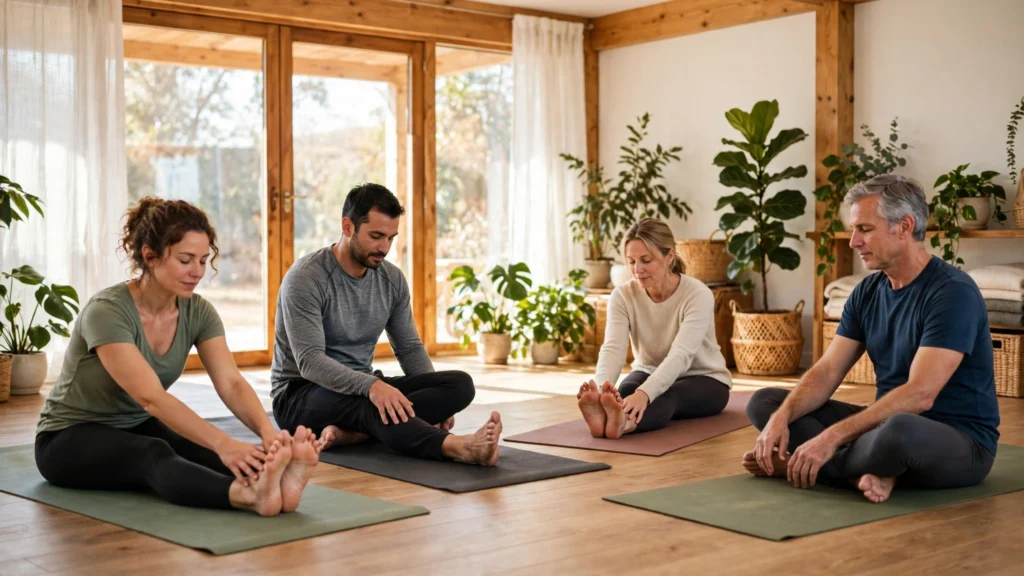
Nobody joins a yoga studio the way they buy a product. They search with a mix of hope and hesitation: “yoga classes near me,” “beginner yoga Brampton,” “hot yoga for beginners” — then they compare class styles, schedules and teachers across three studios, and book a trial at the one that feels most welcoming. Some are chasing flexibility or strength; others are looking for a calmer hour in a loud week. The studio that answers their exact question wins them.
This guide covers SEO for yoga studios in 2026: how class-style and level pages decide trial bookings, how teacher profiles quietly outrank studio brands, and how to turn your Google Business Profile into a steady flow of new members each registration season.
1. Start with the map: trial decisions happen on your profile
The shortlist for a yoga studio forms on Google, mostly on a phone in the evening after a long day. Your Google Business Profile is where your studio makes or misses that shortlist:
- Categories: “Yoga studio” as primary, with “Meditation centre” or “Pilates studio” added only where they accurately describe what you offer.
- Class styles named individually: hot yoga, vinyasa, yin, prenatal, restorative, beginner — listed as services, so you appear for the style search, not only “yoga near me.”
- Photos of real classes: your room, your teachers, your students mid-practice. People are trusting you with their body and their stress; show them a real, calm, well-kept space, not a logo.
- Trial path in one tap: booking link or phone current, and the trial or intro offer stated identically on your profile and your website.
- Schedule that matches real life: early-morning, lunch-hour and evening class times stated accurately — for yoga studios, when you teach is a ranking feature, because it’s when people search.

2. Class-style and level pages: how students actually search
Nobody searches for “yoga services.” They search by style and by level. Build for both:
- Style pages: hot yoga, vinyasa flow, yin, restorative, prenatal and whatever else you genuinely teach — what a class feels like, how hot the room gets, what to bring, and who it suits.
- Level pages: true beginner, gentle and all-levels, intermediate and advanced — written without jargon, so a first-timer can tell at a glance where they belong.
- Prenatal and postnatal pages: written with care and clear safety notes — trimester guidance, what the teacher is trained in, and how classes adapt as the pregnancy progresses.
- Specialty pages: yoga for back care, yoga for athletes, chair yoga and seniors’ classes, where you genuinely offer them — each one captures a search your generic competitors never see.
Each page carries pricing or how pricing works, the class schedule, and the trial next step. It’s the same page-per-search discipline behind our guide to SEO for martial arts studios — people comparing local movement classes reward the studio that answers their exact question, for their exact body, first.
Don’t overlook the membership side, either. Intro offers, class packs and unlimited memberships are searched separately, often by the most committed — and profitable — students. If your studio offers them, each deserves at least a strong section with prices and who it’s for. Membership pages also solve a newcomer’s quiet worry about whether they’ll stick with it: a clear path from trial to first pack to membership, described in those words, on the page is honest marketing.
3. Teacher profiles: the pages that actually close memberships
Students don’t join a studio; they join a teacher. Give every teacher a real profile: photo, training and certifications in plain language, styles and levels taught, teaching style, and the students they suit best. These profiles rank for teacher-name searches as word of mouth spreads, they convert hesitant first-timers better than any studio overview, and they make your studio’s quality legible to search engines and AI tools alike — names, styles and credentials in text are exactly what gets summarised and recommended. A studio that hides its teachers behind a group photo is keeping its best content in the staff room.
Profiles carry a second, quieter benefit: fit. A student who reads that one teacher specialises in gentle, slow-paced beginners while another leads strong, sweaty vinyasa self-selects correctly — which means your trials convert better, your early drop-offs fall, and your reviews improve, because mismatch is the hidden cause of all three. Describe teaching styles honestly, including the demanding, disciplined ones; the right student reads rigour as a feature.
What this looks like in Brampton
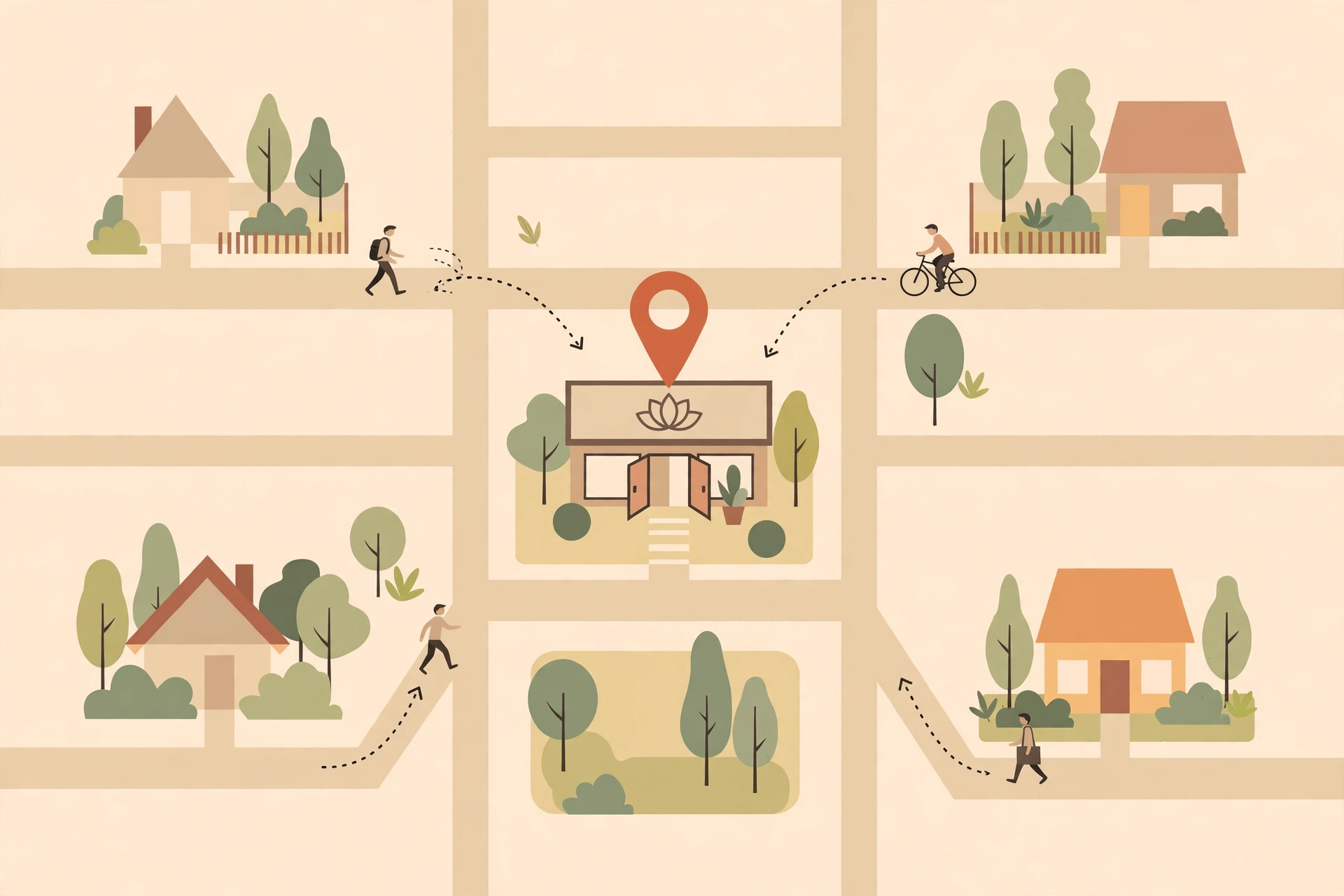
Brampton’s yoga studios serve one of the youngest, fastest-growing cities in Canada, where classes draw from Springdale, Castlemore, Fletcher’s Meadow, Mount Pleasant and Bramalea — and where demand spans the full range, from hot yoga and power vinyasa for young professionals to gentle, chair and seniors’ classes for an older crowd. Families and shift workers search at odd hours, and the city’s cultures shape demand too, with students looking for women-only classes, prenatal sessions and teachers who understand their traditions. A studio that publishes honest pages for the styles and levels it truly teaches captures searches its generic competitors never see.
The calendar is the strategy: the January resolution surge, the September back-to-routine wave, the pre-summer push, and the quiet months where workshops and specialty series catch students trying something new. Brampton residents ask other residents first — community and workplace networks are powerful here — and reviews that name the teacher and the class (“beginner hot yoga with Ms. A, welcoming and well-paced”) are the deciding evidence for the next person on the street.
4. Reviews: read like references, because they are
Yoga is a weekly habit and a personal one, and students vet accordingly. They read for warmth, clean facilities, class pacing, and whether beginners genuinely feel welcome. The asking moments are after a first trial, a workshop, or a membership milestone, when the glow is fresh: a short message with a one-tap link, timed to the end of class. Reviews naming the teacher, style and level answer the next student’s precise questions. Reply warmly and briefly to every one; your tone in replies is read as your studio’s culture, by people deciding whether to trust you with their Tuesday evenings for the next year.
5. AI search: the student’s research assistant
Students increasingly start with an AI tool: “is hot yoga good for beginners,” “yoga or pilates for back pain,” “yoga classes near me with trial classes.” The answers are assembled from complete, consistent content — style pages with honest difficulty and room-temperature detail, teacher credentials in text, fees and trial terms stated identically on your site, profile and directories. Studios with real pages get summarised accurately and recommended by style and neighbourhood; studios with a one-page site leave the assistant nothing accurate to say, and it says something about a competitor instead. The same logic applies to the questions students ask each other — “which studio is best for a stiff beginner” or “where can I do prenatal yoga near me” — and the studio whose pages answer those questions in plain words is the one that gets named.
6. Your website: built to book trial classes
A yoga studio website has one job — move a visitor from comparing to a booked trial:
- Trial booking in one tap: visible on every page, working on a phone in under a minute, with first-class questions answered on the spot (what to bring, what to wear, whether mats are provided).
- Pricing without fog: full rates, or at minimum the structure — drop-in versus packs versus membership, intro offers described honestly. Price surprises are the leading cause of no-shows and bad reviews.
- Teacher profiles linked from every style page: the student researching yin should meet your yin teachers in one click.
- Schedules that respect reality: class times and teacher changes updated promptly; a stale schedule quietly reads as a disorganised studio.
7. The registration rhythm that keeps studios full
Yoga SEO runs on the calendar. December: intro offers, beginner series and profile posts live before the January surge. January: review asks after the first trial classes settle in; spring series content ready before the weather turns. Spring: workshop and prenatal content published early; summer schedules live before holidays scatter attendance. Autumn: back-to-routine registration opened while motivation is high. Studios that run this calendar spend January teaching, not wondering where the enquiries went.
8. What to measure so you know it’s working
Measure trials and memberships per style: trial bookings from each class-style page, your visibility for “[style] yoga near me” and “yoga classes [your area],” and teacher-level demand — a waitlisted teacher is a signal to feature, not hide. Track trial-to-membership by style for a season and you’ll see which searches bring students who stay for years. Retention is the metric underneath all of it: SEO that fills trials with well-matched students shows up in January as a full studio, not a full inquiry inbox.
Geography is the other quiet signal. Students will cross a city for an exceptional teacher but not for an ordinary class, so note which neighbourhoods your students actually travel from — then let your pages and reviews speak to those areas by name.
9. Mistakes that quietly cost yoga studios their January
The recurring ones: one generic “classes” page for every style and level, so specific searches land nowhere. Teachers unnamed and unprofiled on a purchase students make entirely on the teacher. Pricing hidden or vague, breeding the no-shows and reviews studios fear. Trial offers that exist in conversation but nowhere online. A January surge met with December’s outdated schedule. And silence between seasons — no new photos, reviews or posts — so each registration season starts from zero against studios that never stopped.
Frequently Asked Questions (FAQ)
How do yoga studios rank for “yoga classes near me”?
With a complete Google Business Profile — class styles listed individually, real class photos and steady reviews — backed by a dedicated page for each style and level, each with pricing guidance, teacher profiles and a trial booking path.
Does each class style really need its own page?
Yes. Students search by style and by level (“hot yoga for beginners,” “prenatal yoga near me”). A page written for that exact search ranks for it and converts far better than one combined classes page.
Should yoga teachers have individual profiles?
Absolutely. Students choose the teacher, not the room. Profiles with training, styles and teaching style rank for name searches, convert hesitant first-timers, and anchor a student’s loyalty to your studio.
When should a yoga studio publish registration content?
Before each surge: January content live in December, September registration before the summer ends, spring series by early spring. Visibility takes weeks to build; publishing during the surge misses it.
How do yoga studios get reviews that help?
Ask at peak glow — after a first trial, a workshop, or a membership milestone — with a one-tap link, and make it easy for students to name the teacher and class style. Reply warmly to all of them, and never buy reviews.
Get a free SEO audit of your website
A 120 point crawl, a competitor gap map and a 90 day roadmap, ready in 48 hours. Free, with no obligation.

SEOelinks is a Brampton-based SEO agency helping service businesses across Canada and worldwide win organic search. Our strategists publish the same field-tested playbooks on technical SEO, local visibility and AI search that we run for clients every day.
More about SEOelinks →