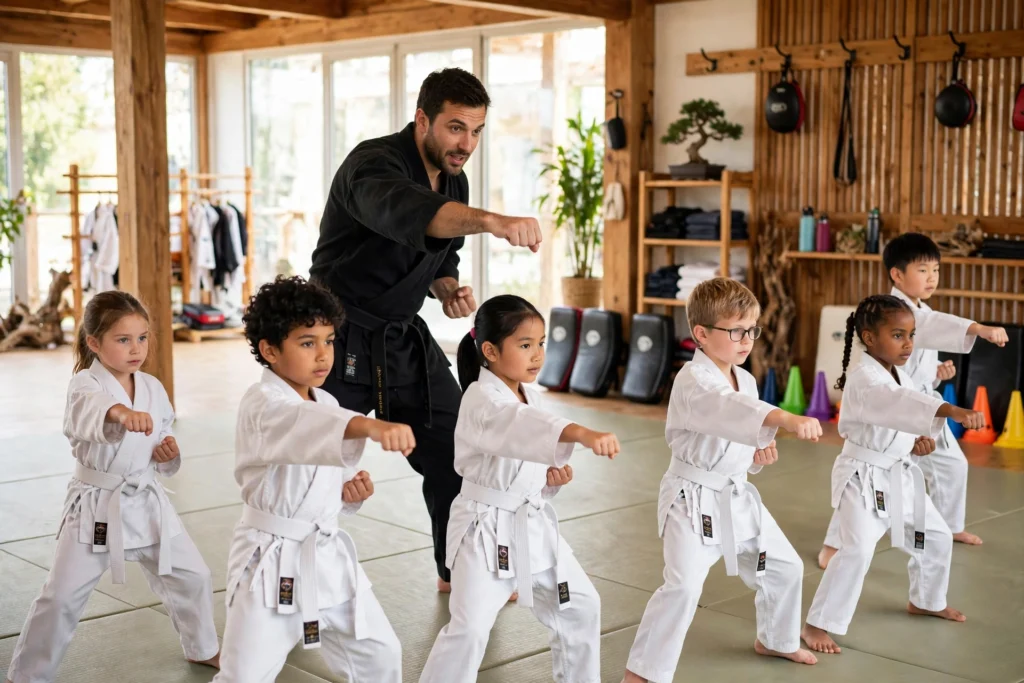
Nobody joins a martial arts studio because of an ad they half-saw. They join because a parent searched “karate classes for kids near me” after a rough week at school, or an adult finally typed “BJJ near me” or “self-defence classes” after thinking about it for months. Those searches are local, specific and ready to act — and the studio that shows up, looks safe and makes booking a trial effortless is the one that fills the class.
This guide covers SEO for martial arts studios in 2026: winning the map pack, building class pages that match how parents and adults actually search, and turning local visibility into booked trial classes — the one conversion that decides whether a studio grows.
1. Start with the map: trials are booked locally
Martial arts is a weekly habit, so distance decides everything. Almost nobody drives forty minutes each way to a Tuesday class, which is why Google shows the map pack for nearly every studio search. Your Google Business Profile is your main recruitment tool — treat it that way.
- Categories: “Martial Arts School” as primary. Add your disciplines where they exist as categories — “Karate School,” “Taekwondo School,” “Jiu-jitsu School” or similar — because parents and adults search by discipline, not by the umbrella term.
- Services for every program: list kids classes, adult classes, self-defence, private lessons and any discipline you teach as separate services, so your profile can match the exact search.
- Schedule on the profile: keep your class schedule current and easy to find. A parent comparing three studios at 9 p.m. shortlists the one whose times she can actually see.
- Photos of real classes: your mats, your instructors, your students training (with permission). Parents are judging safety and atmosphere from these photos before anything else.
- A trial offer, stated plainly: if you offer a free or low-cost trial class, say so on your profile and site, with how to book it. “Trial class” is what searchers are hoping to find.

2. One page per class type: match the search, not your timetable
Studios often publish one “programs” page listing everything. Searchers don’t think that way. A parent searches for kids classes; an adult searches for their discipline; a woman searching self-defence classes is looking for something different again. Each audience needs its own page, written for its own questions:
- Kids classes: speak to parents — ages and class groupings, how beginners are introduced, how discipline and respect are taught, what the first class is like, and how you handle a nervous child. Parents are choosing a place they trust with their kid, not buying a workout.
- Adult classes: speak to the adult — fitness, stress relief, learning a real skill, and training alongside other beginners rather than being thrown in with competitors. Most adults fear looking foolish in week one; say how your studio prevents that.
- Self-defence: its own page, with its own tone: practical, calm, clearly described — who it’s for, what a session covers, and no hype or scare tactics. This search often follows a specific worry, so clarity converts.
- Discipline pages: if you teach Brazilian jiu-jitsu, karate, taekwondo, Muay Thai or another discipline, give the ones you genuinely offer their own pages — people search by the art they want to learn, and a studio that teaches it should say so in detail, not in a passing mention.
Every class page should end at the same place: book a trial. One clear button, one short form, and a note on what happens next (“we’ll confirm your spot and tell you what to wear”). Parents researching activities often compare studios alongside other local options for their children — if your family is weighing several, our guide to SEO for daycares shows the same parent-first thinking from the childcare side.
3. Answer the parent questions honestly
Parents arrive with a short list of concerns, and the studios that answer them plainly — on the site, not just at the front desk — win the enquiry. Is it safe? Describe supervision, class sizes, instructor qualifications and how contact is introduced gradually for children. Will it help with confidence or bullying? Many parents hope training supports confidence, focus and standing up for themselves; describe what your classes actually teach and how instructors handle those conversations, without promising outcomes no one can guarantee. What does it cost? Publish your pricing, or at least a clear starting point and what the trial includes — studios that hide prices lose parents who assume the worst. What if my child wants to quit after a month? Fair contract and pause terms, stated openly, remove the biggest reason parents delay signing up at all. Honest answers don’t just convert better; they’re exactly the specific, quotable text that search engines and AI tools surface.
What this looks like in Brampton
Brampton is a young, fast-growing city full of families, and that shapes studio demand. Parents in neighbourhoods like Springdale, Castlemore, Bramalea, Heart Lake and Mount Pleasant search each September — and again every January — for activities within a short drive of home or school. Studios near clusters of schools and community centres sit in the middle of that demand, but only the ones whose profiles and class pages clearly say which ages they teach, where they are and when classes run will capture it.
The local detail matters in the content, too. Pages that mention after-school pickup areas, weekend family classes and schedules that work around Brampton’s commuting reality — many parents are on the 410 or the GO train until early evening — read as written for this city, because they are. Reviews help most when they carry the same texture: a parent in Fletcher’s Meadow describing a shy child’s first belt test, an adult student mentioning the early-morning class before the commute. That is the material a chain gym’s national page can never produce, and it is what local rankings reward.

4. Reviews: two audiences, one habit
A studio has two review voices, and it needs both. Parents write the reviews other parents trust — about instructors who know their child’s name, a safe and welcoming room, a child who looks forward to class. Adult students write about coaching quality, training partners and finally sticking with something. Ask both groups at the natural moments: after a child’s first belt grading, after an adult’s first month, after a trial converts to a membership. A short message with a direct link is enough; do it within days, while the feeling is fresh.
Reply to every review. Thank parents specifically, welcome newcomers by program, and handle the rare unhappy review calmly and briefly — every reply is read by the next parent doing due diligence. Reviews mentioning the program and neighbourhood (“kids karate in Springdale,” “Muay Thai classes before work”) quietly reinforce exactly the searches you want to win.
5. AI search and the parent’s shortlist
Parents increasingly ask AI tools “what’s a good martial arts studio near me for a shy seven-year-old?” or “where can adults learn BJJ as complete beginners around here?” AI answers are built from specific, consistent text: the ages you teach, the disciplines you offer, your schedule, your trial policy — stated plainly on your own pages and matching your profile. A studio described only as “fitness and self-defence for all” gives an AI nothing to match a specific child or beginner to. A studio with a clear kids page, named disciplines and reviews that mention them gets recommended.
Keep the fundamentals consistent — same name, address and phone everywhere, schedule kept current, Search Console checked monthly to see which class searches are growing. This is the ongoing work we handle at SEOelinks, built in Brampton, Canada and serving clients worldwide: making a studio’s real programs easy for Google and AI answers to describe accurately, so the right families find the right class.
6. Your website: where searches become trial bookings
Rankings bring the visit; the website decides whether it becomes a mat booking. Studio sites usually fail on friction, not design:
- Trial booking above everything: a visible “Book a trial class” action on every page, one short form (name, phone, program, preferred day), and a fast confirmation. Every extra field costs bookings.
- Schedule and pricing in the open: a current timetable and honest pricing or starting prices. Parents plan around school, work and siblings’ activities — if they can’t check your times in thirty seconds, they check the next studio.
- Instructor pages: who teaches, their experience and qualifications, and a photo. Parents are entrusting you with their children and adults with their safety; anonymous studios feel risky.
- Fast, mobile and local: most research happens on a phone, often from a parking lot outside another activity. Pages must load quickly, tap-to-call must work, and your address and map should be unmissable.
7. The monthly rhythm that keeps it working
Studio demand runs on the family calendar, so work a few weeks ahead of it. Each month: build or refresh the page tied to the next intake — back-to-school content ready by mid-summer, January beginner content ready in December; add fresh photos from gradings and classes to your profile and site; send review requests to the month’s new members and grading families; post one profile update (a grading night, a new class time, a trial week); and check Search Console for which class and discipline searches are climbing. An hour a month keeps the pipeline steady, so September and January — your two biggest harvests — arrive to find you already visible.
8. What to measure so you know it’s working
Measure the chain, not vanity numbers: trial bookings first, then show-ups, then conversions to membership — a ranking that produces trials nobody attends points at your confirmation process, not your SEO. Track calls and direction requests from your profile, and your visibility for the handful of searches that fill classes: “martial arts near me,” your main disciplines plus your area, and “kids karate” or the equivalent for your biggest program. In Search Console, watch class pages gain impressions as September and January approach; if they aren’t climbing six weeks out, the pages need work while there’s still time. And ask every trial how they found you — within two intake seasons you’ll know exactly which pages earn their keep.
9. Mistakes that quietly cost studios their rankings
The usual ones: one combined “programs” page instead of a page per audience, so no page fully matches any search. Prices and schedule hidden behind “call for details,” which sends parents to the studio that publishes both. Photos that are all stock imagery of fighters, when parents are looking for a safe room full of smiling kids. Reviews left unanswered for months. Offering disciplines on the profile that you don’t actually teach — the fastest way to earn a disappointed review. And letting the website’s schedule drift out of date after a timetable change, so a family arrives for a class that no longer exists. None of these need money to fix — just the habit of keeping your online studio as tidy as your mats.
Frequently Asked Questions (FAQ)
What is the main goal of SEO for a martial arts studio?
Booked trial classes. Rankings and traffic only matter if they turn into trials, so every page — class pages, discipline pages, your profile — should make booking a first class the obvious, easy next step.
Should each class type have its own page?
Yes. Parents search for kids classes, adults search by discipline, and self-defence is its own search again. A dedicated page per audience lets you answer each group’s real questions and match each search properly.
Should a studio publish its prices online?
Publish pricing, or at least a clear starting point and what a trial includes. Parents comparing studios treat hidden prices as a warning sign, and transparent studios get the enquiry — and the search visibility that comes with detailed pages.
When is the best time to push studio marketing?
Ahead of the two natural intake waves: back-to-school in September and new-year starts in January. Have pages, photos and trial offers ready six to eight weeks earlier, because rankings and shortlists form before the rush.
How do martial arts studios get more reviews?
Ask at the moments people feel proud — after a child’s grading, after an adult’s first month, right after a trial converts. Send a short message with a direct link within days, and reply to every review you receive.
Get a free SEO audit of your website
A 120 point crawl, a competitor gap map and a 90 day roadmap, ready in 48 hours. Free, with no obligation.

SEOelinks is a Brampton-based SEO agency helping service businesses across Canada and worldwide win organic search. Our strategists publish the same field-tested playbooks on technical SEO, local visibility and AI search that we run for clients every day.
More about SEOelinks →