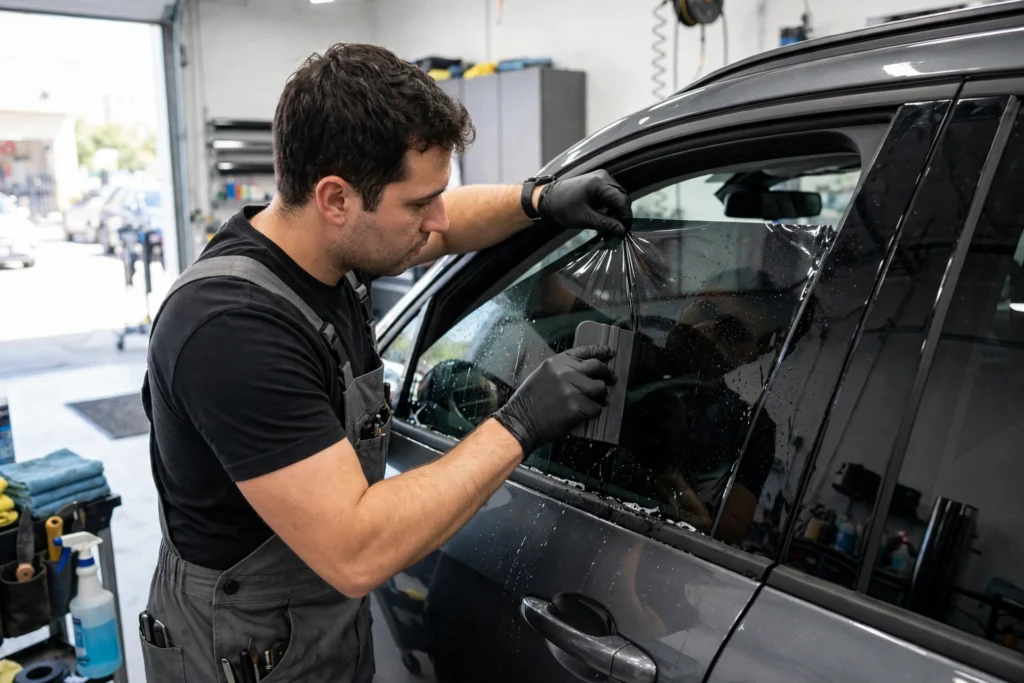
Nobody books a window tint on a whim. They notice the glare on the drive home, the heat building up in a parked car, the sun fading the furniture by the living-room window — and then they search “window tinting near me,” compare two or three local shops on their phone, and call the one whose finished work looks clean, dark and bubble-free. The decision is visual, practical and local: a customer choosing a shop they trust with their car, their home or their office.
This guide covers SEO for window tinting shops in 2026: how automotive, residential and commercial intent split into different searches, how film-type pages win the buyers who already know what they want, how honest guidance on tint limits builds the trust that closes the booking, and how a review asked for at the right moment keeps the phone ringing.
1. Start with the map: the tint job is won on your profile
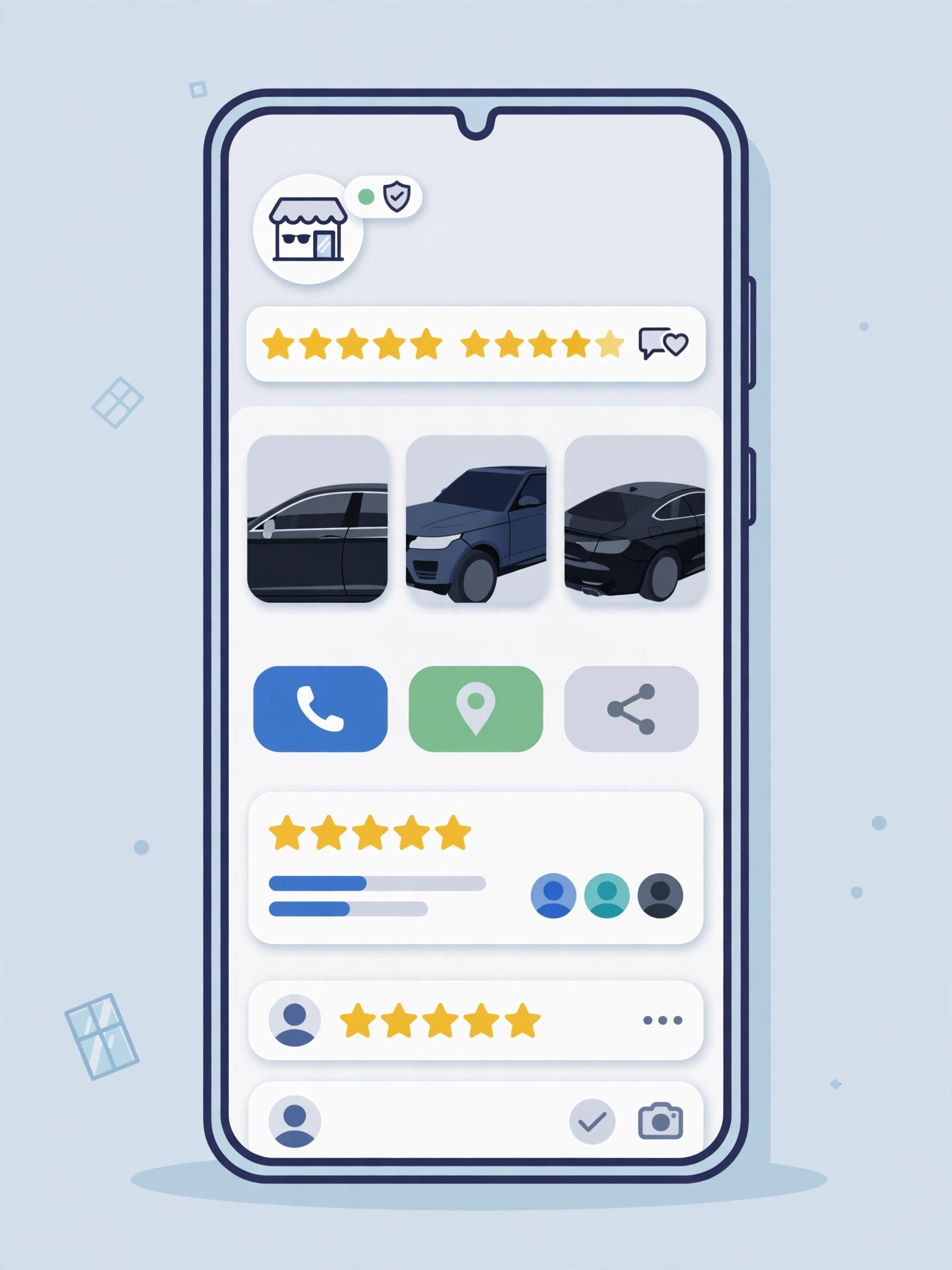
The shortlist for a tint shop forms on Google, mostly on a customer’s phone, in the minutes after they decide the glare has to go. Your Google Business Profile is where you make or miss that shortlist:
- Categories: “Window tinting service” as primary, with “Auto window tinting service” or “Window installation service” added only where you genuinely offer them.
- Services named the way customers search: car window tinting, ceramic tint, home window tinting, office and storefront tinting listed as distinct services, so you appear for each job type, not only “window tinting near me.”
- Photos from real jobs: finished cars in daylight, home windows with film applied, before-and-after pairs that show the difference. Nobody hires a tint shop on a logo; they hire on work they can see.
- Seasonal posts: summer heat and glare reminders, spring booking availability, and winter privacy and insulation notes, posted while the demand is live.
- Booking path in one tap: phone and quote-request link current, and the service area stated identically on your profile and your website.
2. Film-type pages: ceramic, carbon and dyed each earn their own search
A customer who has done even a little reading does not search for “window tint” — they search for the film. Ceramic, carbon and dyed are three different searches, three different budgets and three different sets of questions, and each deserves its own page:
- Ceramic pages: written to the buyer who wants the best heat rejection without going darker — how ceramic film blocks heat, why it costs more, and where it makes sense over carbon.
- Carbon pages: written to the buyer who wants a deep, matte look that will not fade — the colour stability, the glare reduction, and how it compares with dyed film.
- Dyed pages: written to the buyer who wants the look on a budget — what dyed film does well, how it ages, and when spending more is the honest advice.
- Comparison content: an honest ceramic-versus-carbon page that answers the exact question most buyers type before they ever call a shop.
Each page carries photos of real jobs in that film, care guidance for the first days after install, and the quote next step. It’s the same page-per-search discipline behind our guide to SEO for auto detailing shops — customers comparing local auto trades reward the shop that answers their exact question, for their exact vehicle, first.
Don’t blur the films on one page. A buyer weighing ceramic against carbon wants a straight answer, not a paragraph that mentions both and explains neither. Separate pages let each visitor — and each search — land exactly where they belong.
3. Automotive vs residential and commercial: two intents, two funnels
Window tinting is really two businesses sharing one skill. The driver searching for car tint wants it done this week, in a few hours, at a price they can compare in one call. The homeowner or office manager searching for window film wants a consultation, a site visit, and a quote they can show a partner or a landlord. One website trying to serve both with one page serves neither.
Split the funnels clearly. Automotive pages speak to the driver: vehicle types you tint, film options by shade, how long the job takes, and what to expect in the days after install. Residential and commercial pages speak to the property owner: heat and glare in south-facing rooms, privacy for street-level windows, UV protection for floors and furniture, and security film for storefronts. Each funnel gets its own quote form, because the questions are different — a car needs a make and model, a home needs window count and sizes, an office needs square footage and access hours.
The split also protects your reviews. A five-star review from a driver praising a same-day tint and a five-star review from a homeowner praising a careful whole-house install are both gold — but only if future customers can find the one that matches their job. Keep the two funnels visible from the homepage, and let each visitor follow the path built for them.
What this looks like in Brampton
Brampton’s tint demand follows its roads and its housing: drivers across Springdale, Castlemore, Fletcher’s Meadow, Mount Pleasant and Bramalea who want cooler cars for the summer commute, plus detached homes where the afternoon sun turns the living room into a greenhouse and storefronts along the main commercial streets that need privacy and glare control. The season is the strategy — enquiries surge as the heat arrives, and the shops that are visible and bookable before the first hot week fill their bays first.
Film choice is the local conversation: ceramic for drivers who want heat rejection without going darker, carbon for the deep matte look that holds its colour, dyed for buyers who want the appearance on a budget. Brampton customers ask neighbours first, and reviews that name the vehicle or the neighbourhood (“ceramic tint on my SUV in Castlemore, done the same day”) are the deciding evidence for the next car in the driveway.
4. Service-area pages: win one town at a time
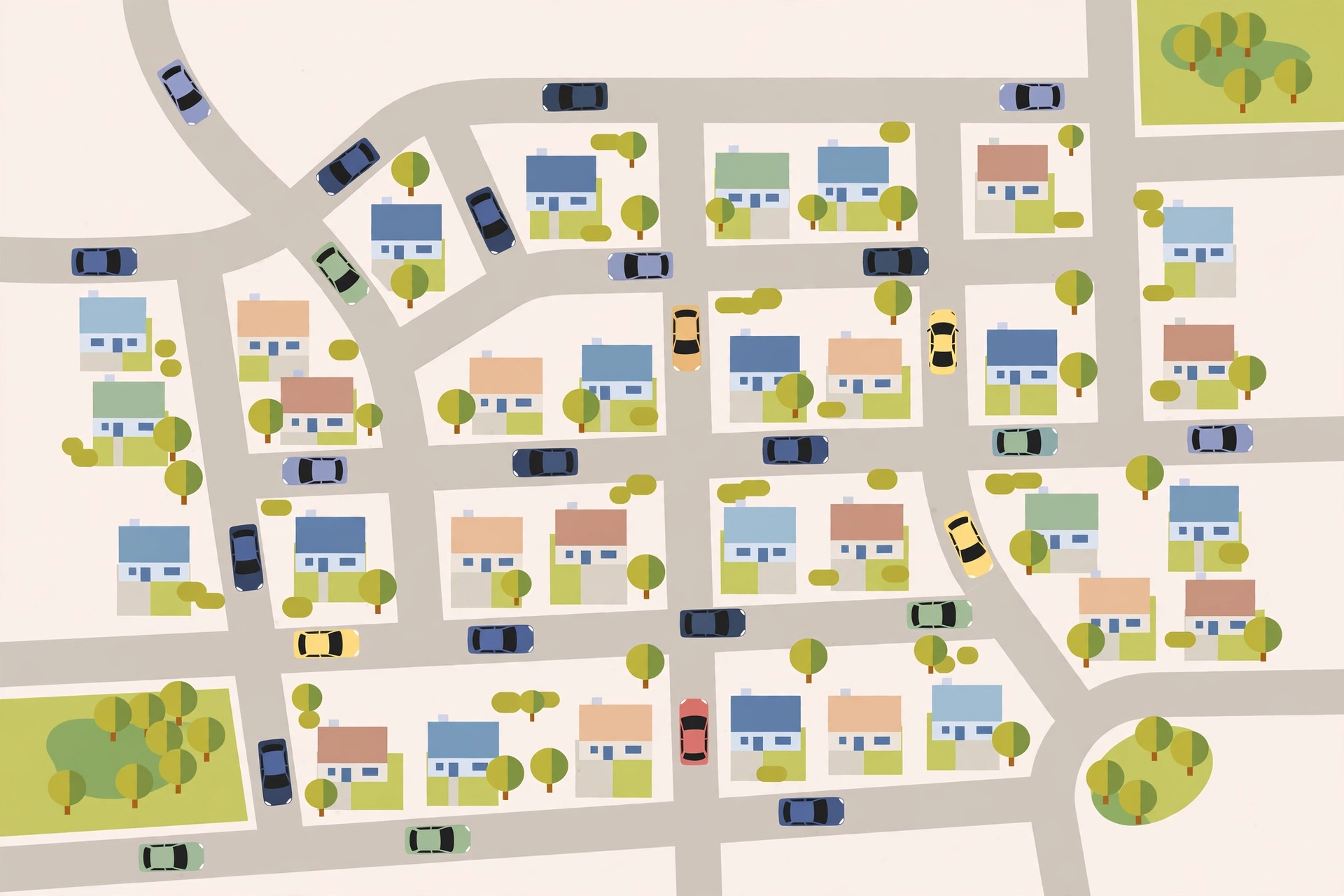
Tinting is a local search through and through, and the map is won town by town. A page for each town you genuinely serve — naming the neighbourhoods, the typical vehicles and homes there, and the tint work you do — ranks for “Brampton window tinting” while a single “areas we serve” list ranks for nothing. Keep each page honest and specific: the streets you work, the property types, a photo from a real job nearby. Thin pages copied town to town with only the name swapped do not rank and do not convert; one genuine page per town does both. Link each town page from your main service pages and your profile’s service area, so a visitor — and a search engine — can follow the map from your shop to their street.
5. AI search: the assistant recommending your shop
Customers increasingly start with an AI tool: “best window tinting near me,” “ceramic vs carbon tint,” “how long does car tinting take,” “is window tint legal on front windows.” The answers are assembled from complete, consistent content — film pages with honest guidance and what a job includes, your service area stated the same everywhere, and reviews that mention the town and the film. Shops with real pages get summarised accurately and recommended by neighbourhood; shops with a one-page site leave the assistant nothing accurate to say, and it says something about a competitor instead.
6. Your website: built to book the tint
A tint shop’s website has one job — move a visitor from comparing to a booked appointment:
- Quote in one tap: phone number and quote form visible on every page, working on a phone in under a minute, with the questions answered on the spot (vehicle or window count, film preference, target date).
- Pricing without fog: guidance by film type and job size, or at minimum how quotes work. Vague pricing is the leading cause of abandoned enquiries and haggling at the door.
- Gallery on every service page: the proof beside the pitch, not buried on a separate page nobody visits.
- Trust signals up front: warranty on the film and the install, stated plainly, because a tint job lives on the glass for years and customers know it.
7. Tint limits and trust signals: the guidance that closes
Tint limits are the question every car customer is quietly asking, and the shop that answers it plainly wins the booking. Rules on how dark front windows may be differ by province and state, and they change — so publish a clear, honest guide that explains the limits where you operate, that you will not install film that breaks them, and that you check the rules for the customer’s vehicle before the job starts. Never promise a shade you cannot legally install, and never leave the customer to discover the rules from a ticket.
The same honesty applies to the install itself. State the warranty in plain language, explain the curing period and the few days when the windows should stay up, and tell customers what a good install looks like when they inspect it. Homeowners comparing two quotes do not pick the cheaper one when the other explains the film, the limits and the guarantee. A short tint-limit guide for each area you serve is one of the highest-converting pages a tint shop can publish.
8. What to measure so you know it’s working
Measure booked jobs per film type and per town: quote requests from each film page, your visibility for “window tinting near me” and “window tinting Brampton,” and the split between automotive, residential and commercial enquiries. Track which pages bring the jobs that actually get booked — a ceramic tint enquiry that closes in one phone call is worth more than a dozen price shoppers who never book. Reviews are the metric underneath all of it: ask at job completion, while the customer is standing beside the finished car or the newly filmed windows, and the steady stream of fresh, specific reviews keeps the map ranking where the phone keeps ringing.
Seasonality is the other quiet signal. Note which weeks the summer surge actually starts in each town — then publish next year’s heat-season content two weeks earlier, and let your pages and reviews speak to those towns by name.
9. Mistakes that quietly cost tint shops the booking
The recurring ones: one generic “window tinting” page for ceramic, carbon and dyed, so film searches land nowhere. Automotive and home tint blurred together, so neither customer finds their own path. No gallery, so the pitch is words against a competitor’s portfolio of finished cars and windows. Tint limits never mentioned, so the customer books with the shop that explained them first. Prices hidden or vague, breeding abandoned enquiries. Reviews never asked for, so the profile goes quiet and the map ranking slides. And silence between seasons — no new photos, reviews or posts — so each summer starts from zero against shops that never stopped.
Frequently Asked Questions (FAQ)
How do window tinting shops rank for “window tinting near me”?
With a complete Google Business Profile — tint services listed separately, real job photos and steady reviews — backed by a dedicated page for each film type and each town served, each with pricing guidance and a one-tap quote path.
Should ceramic, carbon and dyed tint have separate pages?
Yes. Buyers compare films before they compare shops, and each film has different questions, costs and trade-offs. Separate pages rank for each film search and convert far better than one combined tinting services page.
Do tint shops need to explain tint limits on their website?
Yes. Customers worry about how dark their windows may legally be, and the shop that explains the local limits plainly — and refuses work that breaks them — earns the trust that closes the booking. A short tint-limit guide per area is one of the highest-converting pages a tint shop can publish.
When should a tint shop ask for a review?
At job completion, while the customer is looking at the finished work. A review requested in that moment — with a direct link sent by text — is far more likely to be written, and far more likely to mention the film, the vehicle and the town.
Do tint shops need separate pages for cars and homes?
Yes. A driver wants a same-week appointment and a price for their vehicle; a homeowner wants a consultation, a site visit and a quote for their windows. Separate funnels with their own quote forms convert both, where one shared page converts neither.
Get a free SEO audit of your website
A 120 point crawl, a competitor gap map and a 90 day roadmap, ready in 48 hours. Free, with no obligation.

SEOelinks is a Brampton-based SEO agency helping service businesses across Canada and worldwide win organic search. Our strategists publish the same field-tested playbooks on technical SEO, local visibility and AI search that we run for clients every day.
More about SEOelinks →