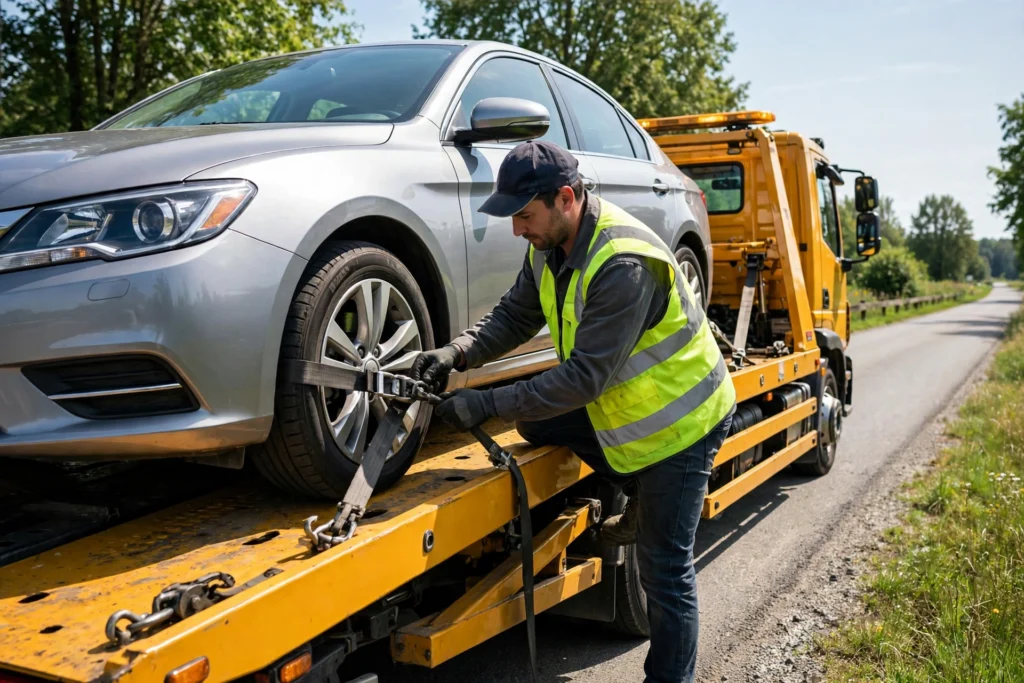
Breakdowns don’t book appointments. A dead battery in a plaza lot, a flat on the highway shoulder, a car that won’t start on the coldest morning of the year — the search is “tow truck near me,” made from a driver’s seat, often in bad weather, and the call goes to the first company that looks close, open and trustworthy. If your towing company isn’t that result, the job goes to a competitor or a call centre that will subcontract it back to someone like you, minus their cut.
This guide covers SEO for towing companies in 2026: how to win emergency roadside searches, how to set honest response areas that protect your reviews, and how to look like the professional operator you are in a trade where price scams have made drivers wary.
1. Start with the map: towing is won on your profile
Towing demand is almost entirely mobile, local and immediate, which puts your Google Business Profile at the centre of the business:
- Categories: “Towing service” as primary. Where Google offers related categories for roadside assistance or vehicle recovery that accurately describe your work, use them — and only those.
- Hours that tell the truth: if your trucks genuinely run 24/7, list it and staff it. If overnights are covered by an on-call driver with longer response, your site should say so honestly. Nothing earns a worse review than a “24 hour” listing that rings out at 3 a.m.
- Service area drawn for response time: list the towns and highway stretches you can reach quickly and reliably. A tow is a promise about minutes; claiming a huge area produces late arrivals, angry drivers and reviews that undo your ranking.
- Call button and accurate phone: on an emergency search, your profile’s whole job is to start a call in one tap. Make sure the number rings the phone that actually dispatches.
- Real photos: your trucks with their livery, your yard, your drivers in uniform, flatbeds and wheel-lifts at work. Real equipment photos are proof against the scam operators drivers have been warned about.
- Services listed individually: towing, boost and battery service, tire changes, lockouts, winching and recovery, long-distance and accident towing — each named, so you match the specific search.
2. Pages for each roadside job, written in the driver’s words
Stranded drivers don’t search for “towing services.” They search for their problem, and each problem deserves its own page:
- Towing: your core page — flatbed and wheel-lift, local and long-distance, how pricing is structured (hook-up, per-kilometre, after-hours), and what the driver should do while waiting safely.
- Roadside assistance: boosts, tire changes, fuel delivery and lockouts — the quick jobs that build your review count and your name in a neighbourhood.
- Accident and recovery: written calmly for people having a bad day: how you work with police and insurers, where the vehicle goes, and how storage and release work.
- Specialty moves: motorcycles, classics, equipment or underground-garage extractions, if you do them — specialist searches with specialist margins.
Every page carries the same essentials: your real response area, hours, what the service typically involves, and how pricing works. This is the same per-service foundation covered in our local SEO guide for small businesses — for towing it matters more than most trades, because the call almost always goes to the first page that answers clearly.
3. Trust: the deciding factor in a scam-wary trade
Drivers are routinely warned about tow operators who appear uninvited at accident scenes, quote one price and bill another, or hold vehicles against inflated storage fees. Legitimate companies win by being visibly different everywhere a driver checks: consistent name, phone and yard address across your site, profile and directories; clear explanation of how your pricing works before the hook-up; marked trucks and uniformed drivers in every photo; and reviews that mention places, times and fair dealing. Invoices and paperwork practices described on your site — written quotes, card payment, receipts — are marketing, whether you call it that or not. The operator who looks most accountable gets the call.
Commercial work deserves a mention here too, because it searches differently. Property managers, dealerships, fleets and parking operators don’t search in a panic — they compare providers, ask about contracts, response commitments and invoicing, and they read your pages like procurement documents. If you want that work, give it a page written like one: service levels you actually hold, coverage hours, how private-property and lot-clearing work is handled under local rules, and a contact path that reaches a person who can sign agreements. One calm, specific commercial page wins contracts that years of emergency calls won’t.
What this looks like in Brampton
Brampton keeps tow trucks busy around the clock. The 410, 407 and Queen Elizabeth Way corridors feed a constant stream of breakdowns and collisions; the big logistics and warehousing districts around Steeles, Airport Road and the city’s east end add commercial and truck-adjacent work; and neighbourhoods like Springdale, Castlemore, Bramalea and Mount Pleasant generate the daily rhythm of boosts, flats and no-starts from one of the youngest, most car-dependent populations in the GTA. Winter multiplies all of it — the first deep freeze and the first major snowfall are the two busiest auditions your company gets each year.
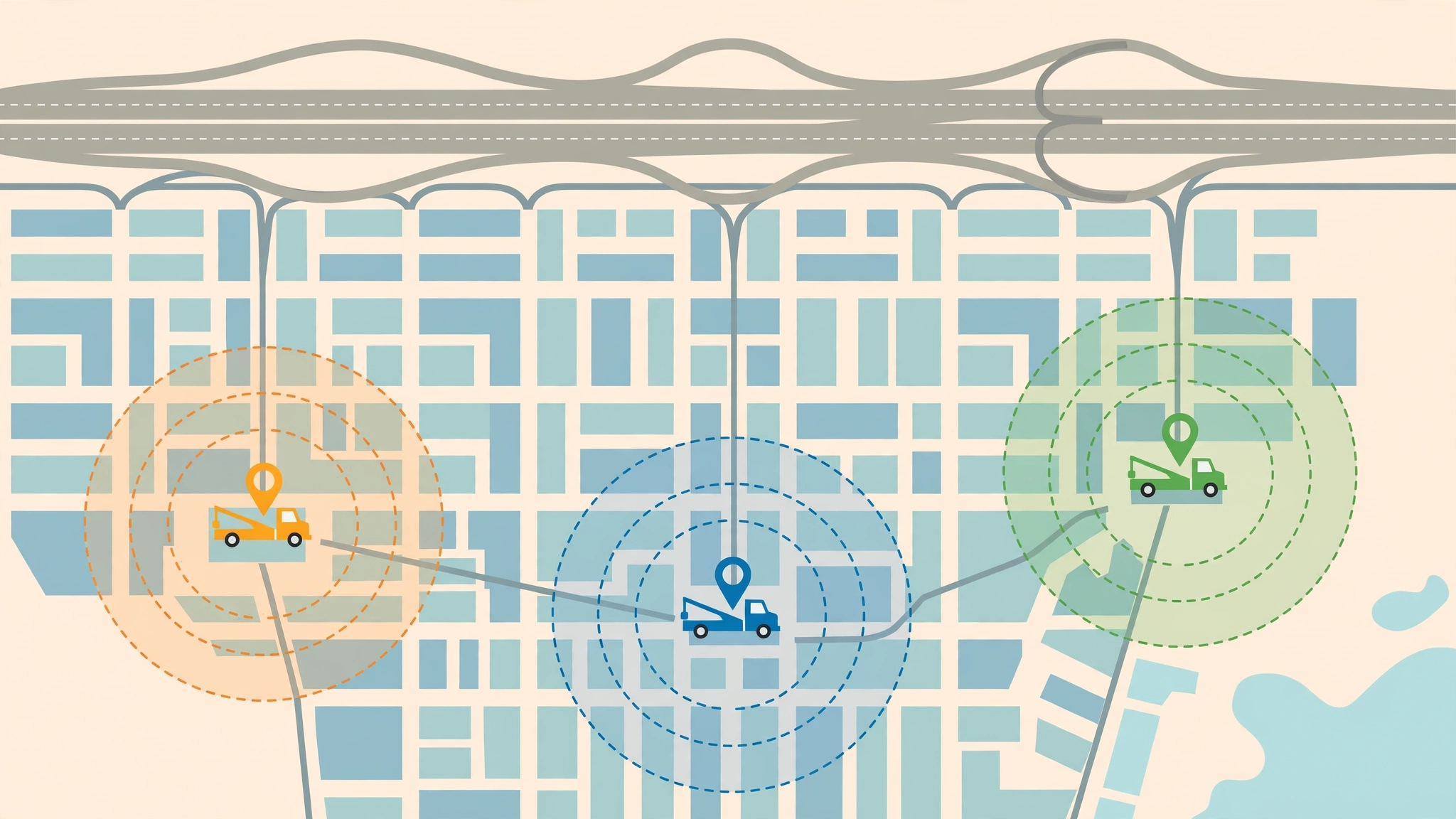
The discipline Brampton demands is honesty about geography. The city is wide and its highways jam exactly when calls spike; a response promise made from the wrong end of town becomes a one-star review by morning. Set response areas by where your trucks actually stage, say so on your pages, and let reviews that name neighbourhoods and arrival times do your ranking work. A company known to be fast in Bramalea and straight about price in Springdale builds the local record emergency search rewards.
4. Reviews: earned at the roadside, read at the roadside
Your next customer reads reviews from exactly the situation your last customer was in — stranded, stressed, deciding fast. Reviews that mention the hour, the place and the fairness of the bill (“battery died at the plaza at midnight, driver arrived when promised, price matched the quote”) are the strongest sales copy in the trade. Build the ask into the drop-off: once the car is safe and the driver is relieved, a short text link makes it easy. Answer reviews professionally, especially price complaints — explain calmly, once, without arguing. Future customers are reading your temperament as much as your stars.
One habit separates the companies that compound reviews from those that plateau: the ask is scripted into the job, not left to the driver’s memory. A text sent from dispatch when the drop-off completes — thanking the customer, linking directly to the review form — outperforms good intentions at 3 a.m. by a wide margin. Automate the ask, keep it human in tone, and the roadside gratitude your drivers already earn starts appearing where the next stranded driver can find it.
5. AI search and voice: the hands-free call for help
Drivers with a dead car increasingly ask a voice assistant or AI tool for “a tow truck near me” without touching a screen. Those answers come from consistent, specific facts: your hours, your services, your response area and your phone number, identical on your site, profile and directories. If your area is vague or your roadside services are never written down, the assistant recommends the company whose details are clear. Keeping those facts precise and consistent is quiet, unglamorous work — and it is also much of what we do at SEOelinks, built in Brampton, Canada and serving clients worldwide: making sure the operator who answers at 3 a.m. is the one the search results put first.
6. Your website: built for one tap from a driver’s seat
Your website’s emergency job is a phone call in seconds, on a phone, often in the rain:
- Tap-to-call always visible: a call button that stays on screen while scrolling, on every page. A stranded driver will not dig through a menu for your number.
- Speed over decoration: every extra second of load time is a driver calling the next listing. Light, fast pages win breakdowns.
- Pricing honesty in plain sight: how hook-up, distance and after-hours charges work, stated before they call. It prevents roadside disputes and marks you as the legitimate operator instantly.
- What to do while waiting: a short safety-and-steps section builds trust and keeps your page the one they stay on.
7. The monthly rhythm that keeps the trucks busy
Each month: add fresh photos of trucks, yard and recent job types to your profile, send review requests for completed calls, post one profile update (winter readiness before the cold, construction-season detour awareness, a new service area if you’ve genuinely expanded), and check Search Console for which services and areas are gaining searches. Quarterly, verify your hours, area and phone number are identical on every directory. Emergency demand never sleeps, but the companies that maintain their presence monthly are the ones still visible when it spikes.
8. What to measure so you know it’s working
Measure calls and jobs, not traffic: call volume from your profile and its insights, your visibility for “tow truck near me” and each roadside service in your area, and calls per service page. Note where jobs originate for a month or two — you’ll see which neighbourhoods and highway exits produce your work, whether your response area matches reality, and which quick jobs (boosts, tire changes) are feeding your review engine. If one service page earns calls out of proportion, it deserves the next investment of photos and detail.
9. Mistakes that quietly cost towing companies the best calls
The costly ones repeat across the trade: advertising 24-hour service you don’t consistently staff. A service area drawn for coverage instead of response time. No pricing explanation anywhere, so drivers assume the scam stories apply to you. One generic page for every service, so roadside and recovery searches land nowhere. A slow mobile site with the number buried. And inconsistent name, number or area across directories, blurring the local signal your ranking depends on. Real, fast and consistent beats big and vague at 3 a.m., every night of the year.
Frequently Asked Questions (FAQ)
How do towing companies rank for “tow truck near me”?
With a complete Google Business Profile — truthful 24/7 hours if you staff them, correct categories, an honest response area, marked-truck photos and steady reviews — backed by a fast mobile site with a visible call button and a page for each service.
How large should a towing company’s service area be?
As large as you can serve at the response times you promise — and no larger. Late arrivals from an oversized area generate the reviews that quietly destroy emergency rankings.
Should towing companies explain pricing on their website?
Yes — how hook-up, distance and after-hours charges work, in plain language. In a trade with a scam reputation, pricing clarity is a competitive advantage that wins calls before the phone rings.
Do towing companies need separate pages for roadside assistance?
Yes. Boosts, tire changes and lockouts are searched in the driver’s own words, and those quick jobs build the review volume that powers your main towing rankings.
How important are reviews for towing companies?
Decisive. In an emergency, reviews mentioning the place, the hour and a fair price are often the only comparison a driver makes. Ask at drop-off, reply professionally, and never buy them.
Get a free SEO audit of your website
A 120 point crawl, a competitor gap map and a 90 day roadmap, ready in 48 hours. Free, with no obligation.

SEOelinks is a Brampton-based SEO agency helping service businesses across Canada and worldwide win organic search. Our strategists publish the same field-tested playbooks on technical SEO, local visibility and AI search that we run for clients every day.
More about SEOelinks →