Most photographers find clients by word of mouth and Instagram. That works — until it doesn’t. Instagram doesn’t show your work to couples searching “wedding photographer near me” at midnight, and it doesn’t put your studio on the map when someone Googles “newborn photographer Brampton.” Search does. And unlike social feeds, search demand is intent: the person typing that query is already looking to book.
This guide covers photographer SEO the way it actually works in 2026 — local rankings, image optimization, portfolio content that pulls its weight, and the AI-search changes that matter for visual businesses.
1. Start with local SEO — it’s where photographers win
Photography is a local business. Clients search with a place attached: “wedding photographer [city],” “family photographer near me,” “maternity shoot [neighbourhood].” These location-specific queries convert far better than broad terms like “photographer,” because the searcher has already decided where they want the service.
Three things decide who ranks for them.
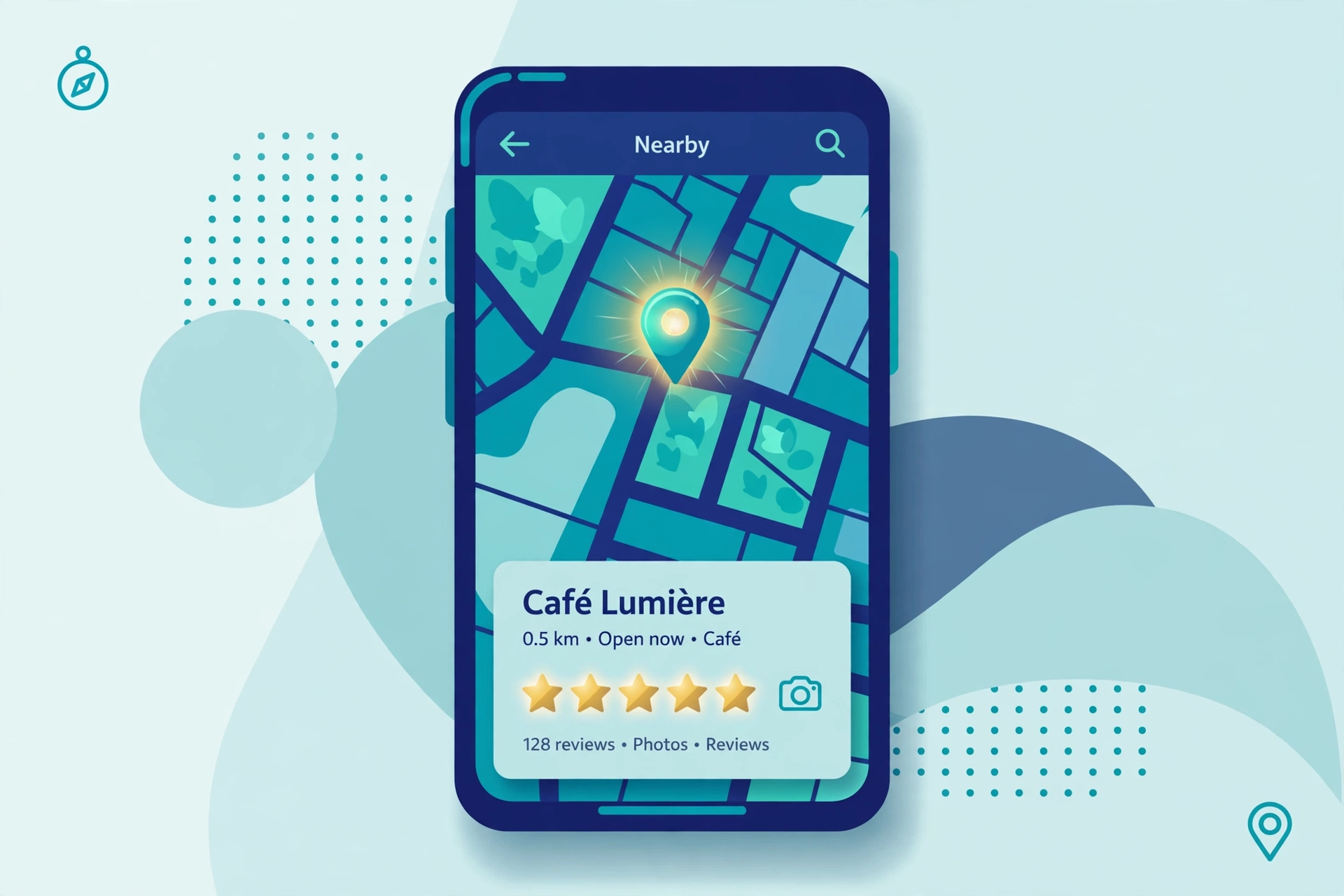
Google Business Profile: your most important listing
For a photographer serving local clients, a complete Google Business Profile often outranks a website for map and local-pack results. Treat it like your homepage for local search:
- Category: pick your actual specialty — “Wedding Photographer” or “Portrait Studio,” not just “Photographer.”
- Description: write the full description with your primary services and the areas you serve.
- Service area: list every city you cover, not only where you’re based.
- Photos: upload 20+ of your best portfolio shots directly to the profile — these show up in Maps and the local pack. Google asks for JPG or PNG between 10 KB and 5 MB, at least 720×720 px recommended (250×250 minimum), in focus and well lit, no heavy filters. Videos can be up to 30 seconds, 75 MB, 720p or higher.
- Posts: publish to your profile regularly — a recent session, a mini-session announcement, a seasonal offer. An active profile signals relevance.
- Reviews: request a review from every paid client, ideally within a day or two of delivery, with a direct link to your review page. Ask clients to mention the shoot type and location — “best newborn photographer in Mississauga” in review text is exactly the kind of keyword-rich social proof that helps local rankings.
One location page per service area
If you serve several cities, give each major one its own page — e.g. yoursite.com/wedding-photographer-brampton. Each page should have genuinely unique content (never the same template with the city name swapped), 10–15 portfolio images actually shot in that location with location-aware alt text, and mentions of specific venues, neighbourhoods and landmarks — those are the long-tail searches you’ll capture. Add LocalBusiness schema with the city in areaServed.
Citations and NAP consistency
Claim your listings on Yelp, Thumbtack, and your niche’s directories (The Knot, WeddingWire and Zola for wedding photographers). Your name, address and phone number must be identical everywhere — “Maria Rose Photography” on Google and “Maria Rose Photo” on Yelp reads as two different businesses to search engines. Also claim Apple Business Connect: it controls how your business appears in Apple Maps, Siri, Spotlight and Safari — every iPhone user in your market — and most competitors skip it.
2. Image SEO: the part most photographer sites get wrong
A portfolio site is made of images, and search engines need text to understand them. Every image on your site is a ranking opportunity most photographers leave on the table.
- Descriptive filenames: export from Lightroom with real names —
brampton-wedding-photographer-city-hall-ceremony.jpg, neverIMG_4829.jpg. Set up an export preset once and it happens automatically. - Alt text that describes the actual scene: “Bride and groom exchanging vows at a Brampton city hall wedding ceremony” beats “wedding photo” and is infinitely better than a camera filename. Include the venue or location, the style, and the moment.
- Compression without visible loss: hero images at several megabytes destroy mobile load times (and mobile is where your clients browse). Export WebP at quality ~80%, keep heroes under ~100 KB where possible, and lazy-load everything below the fold — but never lazy-load the hero.
- Structured data for images: ImageObject and CreativeWork schema help search engines (and AI search tools) attribute your photos correctly.
Keep client galleries public where possible. Galleries hidden behind login walls can’t be crawled — they carry zero SEO value. Password-protect only the delivery galleries; the portfolio and blog versions of the same shoots should be public.
3. Blog every shoot: your highest-converting content
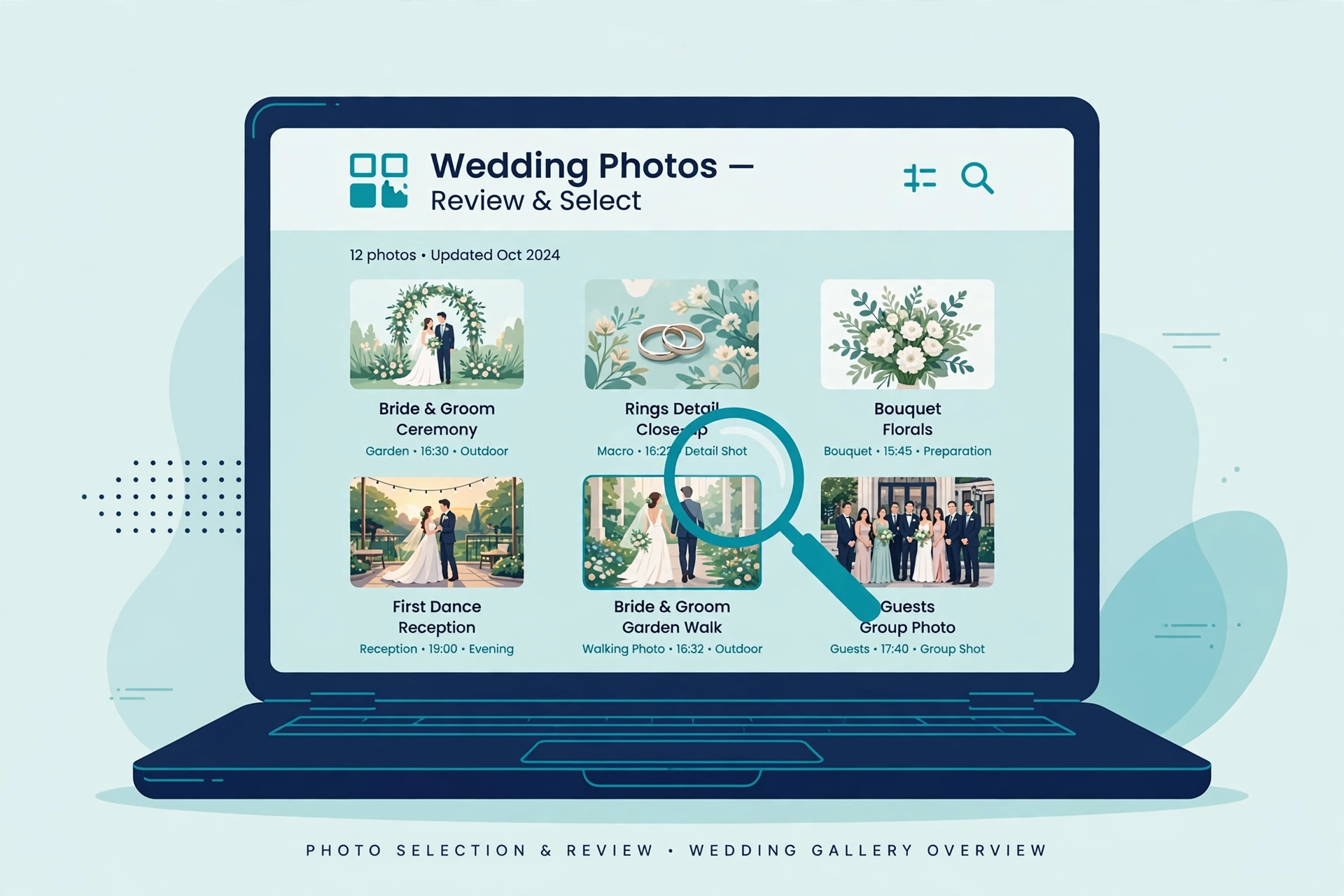
For wedding and portrait photographers, nothing converts like real session features. Each one is a page that can rank for the venue, the city, and the style — the exact things future clients search while planning.
- Title format:
[Couple's names] | [Venue], [City] Wedding— this captures “venue + city” searches from couples who haven’t chosen a photographer yet. - Publish within 4–8 weeks of the shoot, while the venue and vendors are still promoting it.
- Credit the full vendor team with links — planners, florists, venues. Vendors link back and add you to preferred-vendor lists: free local backlinks and referral traffic.
- Venue guides are the advanced version: “The Ultimate Guide to Wedding Photos at [Venue]” with sample galleries, lighting notes for that space, and permit info. One strong venue guide can outrank generic “wedding photographer [city]” pages.
Pin every blog post to Pinterest with a link to the specific post URL — not your homepage. For wedding photographers, Pinterest remains one of the highest-converting traffic sources, and pinning to the exact post keeps the link equity where it belongs.
4. Show up in AI search (2026 edition)
AI search tools — Google’s AI Overviews, ChatGPT, Perplexity — are changing discovery, and photographers need text for machines to cite. Audit your site with the images mentally removed: is there enough written content for an AI to know who you are, what you shoot, where you’re located, and why you’re credible?
- Rewrite your bio with specifics: location, specialty, years of experience, client types. Generic bios (“I love capturing moments”) give AI nothing to quote.
- Add FAQ sections to your homepage and service pages — 3–5 real client questions (“How far in advance should we book?”, “Do you travel?”, “What’s included in your packages?”). FAQ-formatted content is exactly what AI tools pull from, and with FAQ schema it also earns expandable results in classic search.
- Keep NAP, hours and services consistent across your site, GBP and directories — AI answers cite businesses whose details agree everywhere.
5. Technical basics that cost you clients when skipped
- Mobile first: test your site on your phone. Can a visitor tap your contact button without zooming? Most photography inquiries start on mobile.
- Speed: compress images, drop unused plugins, choose fast hosting. A slow gallery is an inquiry killer.
- Clear navigation: Home, Portfolio, Services, About, Contact — plus one obvious booking call-to-action visible on every page.
- Search Console: verify your domain. It’s the only source of truth for which searches bring you visitors and which pages earn clicks.
6. Reviews: the ranking signal you control
Reviews are the local signal that separates the map-pack from everyone else. What matters is a steady flow, not a burst: ask every client, make it one click with a direct link, and respond to every review. Aim for a steady cadence (a couple of new reviews a month) rather than twenty at once followed by silence — review recency is part of what keeps a profile ranking.
Frequently Asked Questions (FAQ)
How long does SEO take for a photographer?
Local SEO typically shows movement in 2–4 months: GBP optimization and review flow can lift map-pack visibility quickly, while location pages and blog content compound over 6–12 months.
Should photographers blog every wedding?
Yes — every wedding or major shoot is a blog post that can rank for the venue, city and style. Publish within 4–8 weeks and credit the full vendor team for backlinks.
What is the most important SEO factor for photographers?
A complete, active Google Business Profile with your correct specialty category, service area, 20+ portfolio photos and a steady flow of reviews — it’s the single highest-ROI move in local photographer SEO.
Do photographers need alt text on portfolio images?
Yes. Alt text and descriptive filenames are how search engines understand your images. Describe the actual scene — venue, location, style, moment — on every portfolio image.
Can AI search send clients to photographers?
Yes, if your site gives AI tools text to cite: a specific bio, location and service pages, FAQ sections, and consistent business details across your site, GBP and directories.

SEOelinks is a Brampton-based SEO agency helping service businesses across Canada and worldwide win organic search. Our strategists publish the same field-tested playbooks on technical SEO, local visibility and AI search that we run for clients every day.
More about SEOelinks →