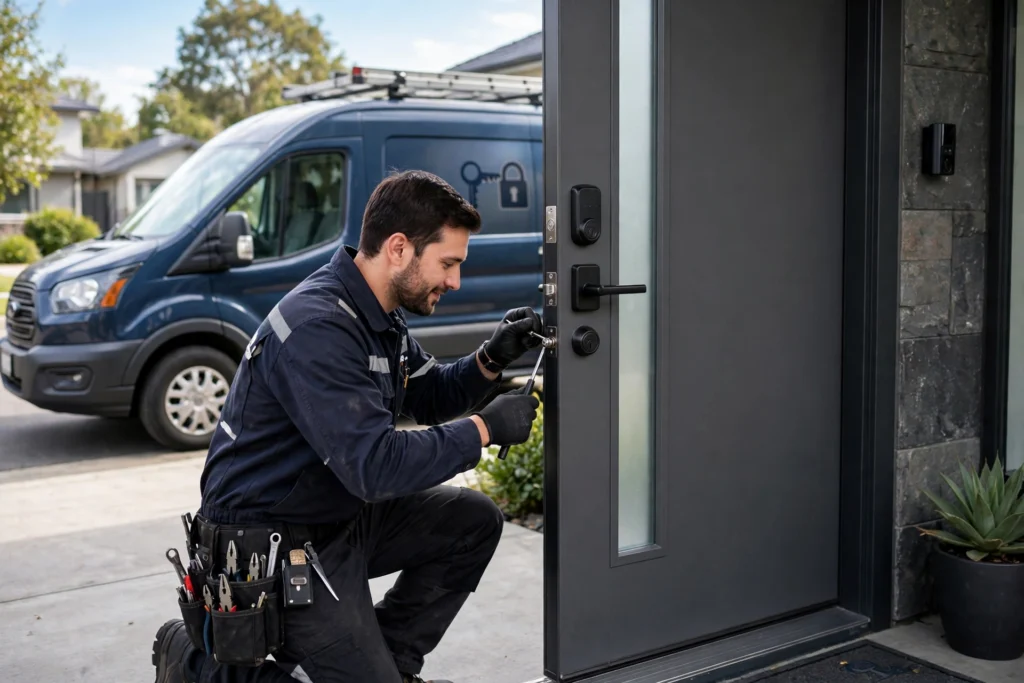
Few searches are as urgent as “locksmith near me” typed on a phone from a dark driveway, a locked car in a shopping plaza, or an office that won’t open on a Monday morning. There is no browsing, no shortlist, no second page — the customer calls the first business that looks real, local, open now and able to get there fast. If that isn’t you, the job, and usually a good price for urgent work, goes to whoever appears above you.
This guide covers SEO for locksmiths in 2026: how to win those emergency mobile searches, how to set up your Google Business Profile for 24/7 work, and how to prove — to Google and to customers — that you are a genuine local locksmith in a trade where scam listings have made everyone suspicious.
1. Start with the map: emergency searches are won on your profile
Locksmith demand is overwhelmingly mobile, local and immediate, which makes your Google Business Profile the single most important page you own. When someone is locked out, the map result with clear hours, a tap-to-call button and real reviews gets the job. Set the profile up for exactly that moment:
- Categories: “Locksmith” as primary. Add secondary categories only for work you truly do — for example automotive or emergency locksmith services where those categories are available and accurate.
- Hours that match your real service: if you genuinely answer and attend 24/7, list 24-hour hours. If nights are call-out only or a partner covers them, describe that honestly on your site. Nothing destroys trust — or invites a bad review — like a “24 hours” listing that rings out at 2 a.m.
- Call button and attributes: make sure the phone number is correct and answered, and complete every relevant attribute and service field Google offers. On an emergency search, your profile’s job is to get the call started in one tap.
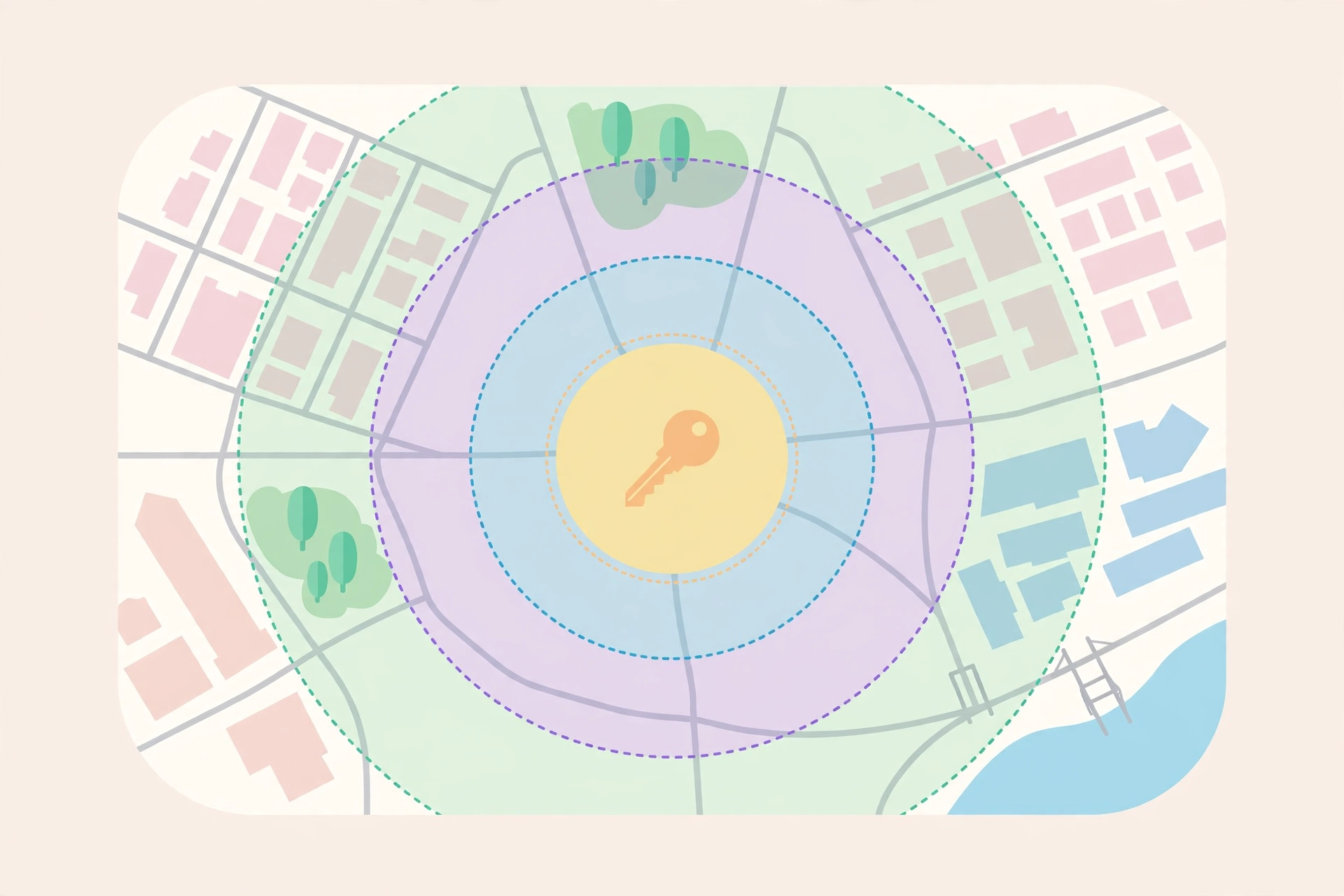
- Service area, set honestly: list the towns and areas you can actually reach quickly. Emergency work is a distance game — claiming a huge area you can’t serve fast produces late arrivals and angry reviews.
- Real photos: your van with its livery, your shop if you have one, you and your team in uniform, your key-cutting and programming equipment. Real photos are ranking content and anti-scam proof in one.
- Services listed individually: emergency lockout, residential, commercial and automotive work each named on the profile, so you match the specific search, not just the generic one.
2. Prove you’re a real local locksmith, not a lead-gen listing
Locksmithing has a well-known problem: national call-centre listings and lead generators that pretend to be local, quote one price on the phone and charge far more at the door. Customers know it, Google knows it, and it shapes what ranks and what converts. Your SEO advantage is to be visibly, verifiably real everywhere:
- A real identity: consistent business name, phone number and service area across your site, profile and directories. If you have a workshop or shop address, show it; if you’re mobile-only, say so plainly instead of borrowing an address.
- Proof on the page: photos of your actual van and team, your licence or insurance details where they apply in your area, and memberships or training you can back up. Specifics are what scam listings can’t copy.
- Honest pricing guidance: explain how pricing works — call-out, labour, parts, after-hours differences — even without a rigid price list. The businesses customers trust are the ones that explain the bill before the door is open.
- Reviews that mention real jobs: reviews naming the neighbourhood, the time of night and the problem solved are proof no template site can fake, and they reassure the next locked-out searcher instantly.
This local proof is the same foundation covered in our local SEO guide for small businesses — for locksmiths it matters twice over, because trust is the product as much as the lock work itself.
3. Separate pages for each job type, built for intent
“Locksmith near me” is only the headline search. Underneath it sit distinct jobs with distinct buyers, language and urgency — and each deserves its own page:
- Emergency lockout: your fastest page for your fastest job. What to expect, how to reach you now, what ID or proof of residence you may ask for, and how pricing works after hours. Written for someone stressed, cold and on a phone.
- Residential: lock changes for new homeowners, rekeying, lock upgrades, smart locks and break-in repairs. These buyers plan a little more and compare a little more — detail and reassurance win here.
- Commercial: master key systems, access control, panic hardware and lock maintenance for offices, shops and property managers. Different buyer, different vocabulary, longer relationship value — never bury it on the residential page.
- Automotive: car key replacement, fobs and transponder keys, and vehicle lockouts, with the makes and types you cover stated clearly. Drivers search by car problem, not by trade name, so write the page in their words.
Each page should carry the same essentials: areas served, hours, how to book or call, and proof you’re local. Thin pages that swap a keyword won’t rank — pages that genuinely answer that job’s questions will.
What this looks like in Brampton
Brampton runs around the clock, and so does its lock work. You have shift workers and commuters leaving before dawn from neighbourhoods like Springdale, Fletcher’s Meadow and Mount Pleasant, a huge stock of newer family homes in Castlemore, Credit Valley and Bramalea where lock changes and smart-lock installs follow every resale, and busy commercial strips and plazas that need a shop opened on time, every time. Lockouts at GO stations, plazas and big-box parking lots are a Brampton staple — automotive pages that name the areas you cover and how fast you can realistically get there speak directly to that moment.
The city’s size is the discipline: Brampton is wide, and a 2 a.m. promise made to Heart Lake from the far south end is a review waiting to go wrong. Set a service area you can honour at speed, say so on your pages, and let reviews confirm it. A locksmith known street by street — reliable in Bramalea, fast in Springdale, honest everywhere — builds exactly the local record that emergency search rewards.
4. Reviews: the deciding factor at 2 a.m.
When two profiles both say “open 24 hours,” the locked-out customer picks the one with more and better reviews — it’s the only quality check available at that speed. Build the habit around the job itself: once the door is open and the customer is relieved and grateful, that’s the moment to ask, with a short link sent by text before you leave. Reviews that mention the hour, the area and the fair price (“locked out at midnight in Mount Pleasant, arrived fast, charged what he quoted”) are the strongest conversion copy you will ever have.
Reply to reviews, especially any that question price or timing — calmly, factually, once. Future customers read your replies as a preview of how you’ll treat them. And never buy reviews or let a marketing service post them: in a trade already fighting a scam reputation, fake praise is a risk you cannot afford.
5. AI search and voice: the hands-free emergency
Locked-out customers increasingly don’t type at all — they ask a voice assistant or AI tool for “a locksmith near me open now.” Those answers are assembled from consistent, specific information: your hours, services, service area and phone number, stated identically on your site, profile and directories. If your hours disagree between listings, or your automotive work is never mentioned in text, the assistant can’t confidently recommend you for that job.
Keeping that information precise and consistent everywhere is unglamorous, and it is exactly what wins. This is the steady work we handle at SEOelinks, built in Brampton, Canada and serving clients worldwide: making sure the business that answers the phone at 2 a.m. is also the business the search results put first.
6. Your website: built for one tap and total clarity
Your website’s emergency job is conversion in seconds, on a phone, often in bad light and worse weather:
- Call button always visible: a tap-to-call button that stays on screen as the visitor scrolls, on every page. A locked-out customer will not hunt through a menu for your number.
- Speed above decoration: a fast, light mobile site beats a beautiful slow one every time. At emergency intent, every extra second of loading is a customer calling the next listing.
- Separate service pages: emergency, residential, commercial and automotive pages as covered above, each with its own areas, hours and next step — so the searcher lands on their exact problem, solved.
- Pricing honesty in plain sight: how call-out and after-hours pricing works, stated before they call. It filters out disputes and marks you instantly as the legitimate operator.
7. The monthly rhythm that keeps it working
Locksmith SEO holds up when it’s maintained monthly, not fixed once. Each month: add fresh photos of the van, team and recent job types to your profile, send review requests for the month’s completed jobs, post one profile update (a seasonal reminder — lock changes for new movers in spring, smart-lock upgrades, holiday-hours confirmation), and check Search Console for which service pages and towns are gaining searches. Quarterly, re-check that your hours, service area and phone number are identical on every directory that lists you. Small, regular upkeep keeps the emergency searches flowing to the phone you actually answer.
8. What to measure so you know it’s working
Measure what pays: calls from your Google profile (its insights show call volume and the searches that found you), your map visibility for “locksmith near me” and “emergency locksmith [your city],” and calls or form enquiries per service page — emergency should lead, with automotive and residential showing whether those pages are earning their keep. Track jobs, not just traffic: note how each caller found you for a month or two and patterns appear fast, including which neighbourhoods produce your best work and whether your service area should grow or shrink.
9. Mistakes that quietly cost locksmiths the best jobs
The expensive ones are familiar: claiming 24-hour service you don’t consistently staff. A service area drawn for coverage instead of speed. A borrowed or fake address to look “local” — a trust killer when discovered, and a suspension risk on Google. One generic page for every job type, so commercial and automotive searches land nowhere. Slow mobile pages with the phone number buried. And inconsistent name or number across directories, which blurs exactly the local signal emergency ranking depends on. Real, fast and consistent beats big and vague in this trade, every night of the week.
Frequently Asked Questions (FAQ)
How do I rank for “locksmith near me”?
With a complete Google Business Profile — accurate 24/7 hours if you truly offer them, correct categories, an honest service area, real photos and a steady flow of reviews — backed by a fast mobile website with a visible call button and separate pages for each service.
Should a locksmith list 24-hour hours?
Only if you genuinely answer and attend around the clock. Accurate hours protect your reviews and your ranking; advertising hours you don’t keep produces the worst reviews in the trade — from people locked out at night.
How do customers tell a real locksmith from a scam listing?
They look for a consistent local identity: real photos of a van and team, an honest service area, clear pricing guidance, licence or insurance details where applicable, and reviews that mention real neighbourhoods and real jobs. Make sure all of that is visible before they call.
Do locksmiths need separate pages for automotive and commercial work?
Yes. Those buyers search in different words, need different reassurance and are worth different amounts. A dedicated page for each job type ranks for its own searches and converts far better than one general services page.
How important are reviews for locksmiths?
Decisive. In an emergency, reviews are often the only comparison a customer makes between two “open now” listings. Ask after every completed job, reply professionally, and never buy them.
Get a free SEO audit of your website
A 120 point crawl, a competitor gap map and a 90 day roadmap, ready in 48 hours. Free, with no obligation.

SEOelinks is a Brampton-based SEO agency helping service businesses across Canada and worldwide win organic search. Our strategists publish the same field-tested playbooks on technical SEO, local visibility and AI search that we run for clients every day.
More about SEOelinks →