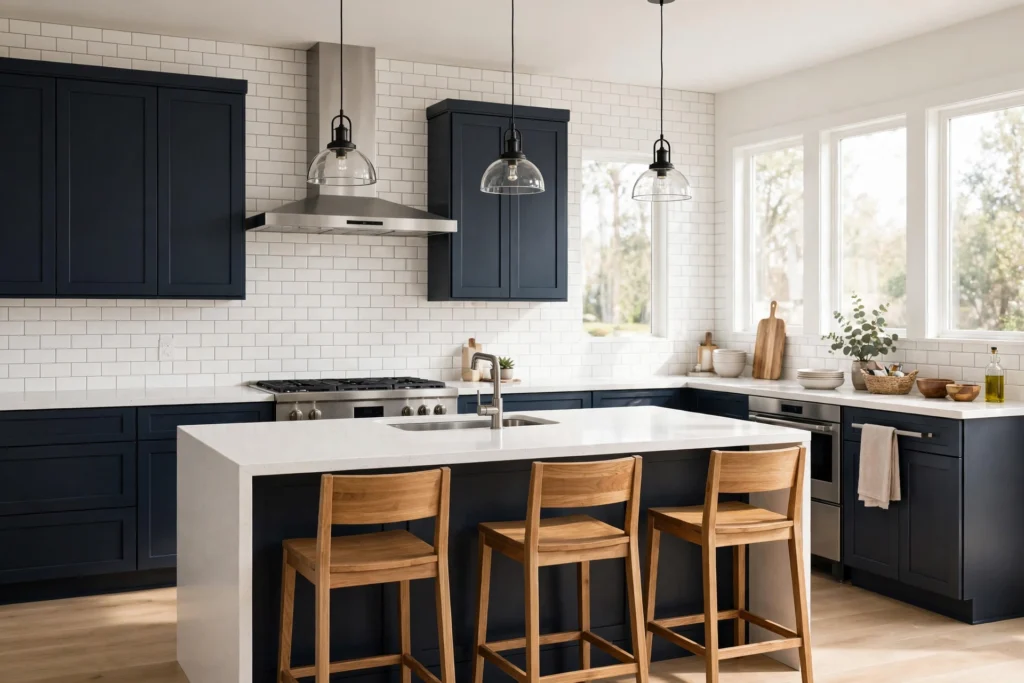
Nobody searches for a kitchen remodeler on a whim. They have cooked in the same kitchen for years — the cramped counters and tired cabinets — and one day they start picturing the replacement: a proper island, quartz counters, cabinets that close quietly and hold everything. Then they search “kitchen remodelers near me,” compare two or three local companies on their phone, and call the one whose past work looks like the kitchen they want. The decision is visual, expensive and local: a homeowner choosing a company they trust with the heart of the house.
This guide covers SEO for kitchen remodeling companies in 2026: how full-remodel-versus-refacing intent splits the searches that matter, how material pages for quartz, cabinets and backsplash win the enquiries that convert, how before-and-after galleries rank in image search, and how home-type service pages turn enquiries into signed renovations.
1. Start with the map: the remodel is won on your profile
The shortlist for a kitchen remodeler forms on Google, mostly on a homeowner’s phone in the evening, standing in the very kitchen they want to replace. Your Google Business Profile is where you make or miss that shortlist:
- Categories: “Kitchen remodeler” as primary, with “Cabinet maker” or “General contractor” added only where you genuinely offer them.
- Services named the way homeowners search: full kitchen renovations, cabinet refacing, quartz countertops, custom cabinets and backsplash installation listed as distinct services, so you appear for each project search, not only “kitchen remodelers near me.”
- Project photos from real jobs: finished kitchens in daylight, from more than one angle, showing the island, the counters and the details. Nobody hires a kitchen remodeler on a logo; they hire on work they can see.
- Review replies that show the work: answers that mention the project — the counters, the cabinets, the timeline — so the next homeowner sees their own kitchen in the review.
- Quote path in one tap: phone and quote-request link current, and the service area stated identically on your profile and your website.

2. Full remodel vs cabinet refacing: two budgets, two searches
A homeowner planning a full kitchen remodel and one wanting cabinet refacing are two different buyers with different budgets, and they type different searches. The remodel buyer searches for full renovations, layout changes and new kitchens; the refacing buyer searches for new cabinet doors, refacing costs and kitchen refreshes. Each deserves its own page:
- Full remodel pages: written to the homeowner changing the room — layout changes, moving the sink or stove, new flooring and lighting, from demolition to handover.
- Cabinet refacing pages: written to the homeowner keeping the boxes — new doors and drawer fronts, new hardware, and how much a kitchen can change without a single wall moving.
- Honest guidance on the split: when refacing is enough and when the layout is the problem, so the visitor trusts the advice before they ever call.
- Separate quote paths: the remodel quote asks about layout and appliances; the refacing quote asks about door styles and finishes. A quote request that arrives complete gets answered faster — and answered first.
Don’t blur the two projects on one page. A buyer weighing a full remodel against refacing wants a straight answer, not a paragraph that mentions both and explains neither. Separate pages let each visitor — and each search — land exactly where they belong.
3. Material pages: quartz, cabinets and backsplash each earn their own search
A kitchen is decided material by material, and each material is its own search. A quartz page, a cabinets page and a backsplash page each answer the questions a homeowner asks at a different stage — and each ranks for the searches a generic “kitchen remodeling” page never reaches:
- Quartz pages: written to the buyer choosing counters — the colours and patterns you install, how quartz handles heat and stains, and how it compares with granite and laminate.
- Cabinet pages: written to the buyer choosing storage — shaker, flat-panel and custom cabinets, soft-close hardware, and how the cabinet choice sets the kitchen’s whole look.
- Backsplash pages: written to the buyer finishing the room — subway tile, stone and slab backsplashes, and how the right backsplash ties counters and cabinets together.
- Comparison content: an honest quartz-versus-granite page that answers the exact question most homeowners type before they ever call a remodeler.
Each page carries photos of real work in that material, honest guidance, and the quote next step. It’s the same page-per-search discipline behind our guide to SEO for interior designers — homeowners comparing local trades reward the company that answers their exact question, for their exact project, first.
What this looks like in Brampton
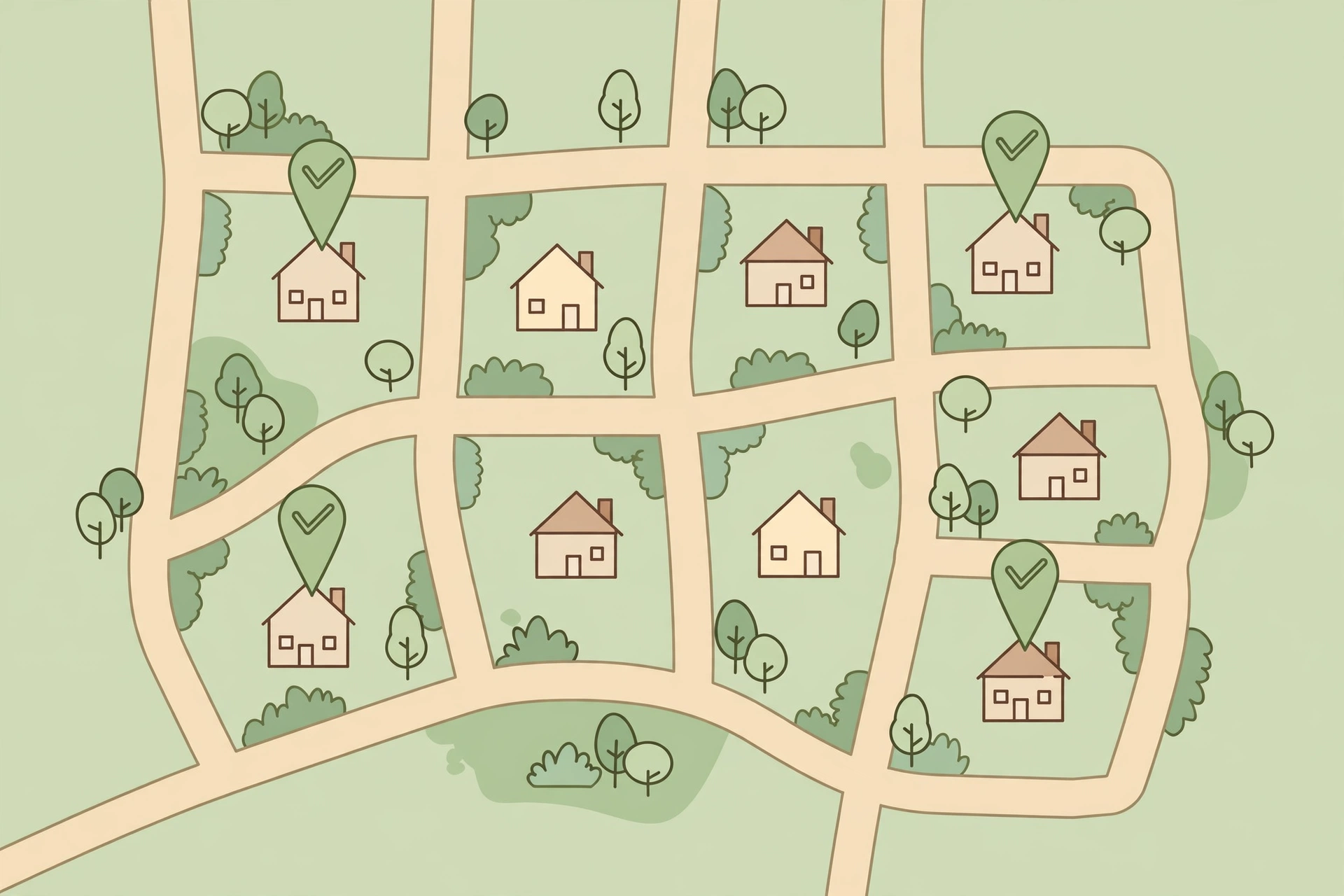
Brampton’s kitchen demand follows its housing: detached homes across Springdale, Castlemore, Fletcher’s Meadow, Mount Pleasant and Bramalea, where the kitchen is the room the whole family lives in, plus townhouses and semis where a smart layout makes a compact kitchen feel twice its size. Older homes in Bramalea bring the classic remodel — opening the wall to the dining room and replacing tired cabinets — while newer homes in Springdale and Castlemore bring island additions, quartz upgrades and pantry walls.
The local conversation is practical: timelines a family can live with when their only kitchen is out of action, and reviews that name the street or the neighbourhood (“new quartz kitchen in Mount Pleasant, finished on time”) are the deciding evidence for the next house on the street. Brampton homeowners ask neighbours first, and a remodeler whose name comes up on the street wins the enquiry before the search even starts.
4. Before-and-after galleries: the portfolio that ranks and converts
A kitchen is the most photogenic project a homeowner can commission, and the before-and-after pair is the pitch. A dated galley kitchen beside the same room opened up with an island and quartz counters, a dark cabinet run beside the same kitchen in warm white shaker — each pair shows the transformation, the craftsmanship and the standard in a single glance. Publish galleries from real jobs — wide shots, detail shots, before-and-after pairs — on your service pages, your profile and your social channels, with filenames and alt text naming material, style and town. These images rank in image search, they get shared by happy customers, and they answer the only question a hesitant homeowner really has: will my kitchen actually look like that?
Photo proof also protects you from the cheapest competitor. Anyone can claim beautiful kitchens; a gallery of fifty real renovations across houses, materials and budgets cannot be faked cheaply. Ask permission at the handover, photograph the kitchen in its best light, and build the gallery as you work — by the time the next homeowner searches, it is your best salesperson, working every hour your phone is not answered.
5. Service pages per home type: condos, semis, detached and townhouses
A kitchen remodel in a condo is not the same job as a kitchen remodel in a detached house, and the searches reflect it. Condo owners ask about building rules and elevator bookings; townhouse owners ask about compact layouts; detached-home owners ask about opening walls and adding islands. A page for each home type — naming the constraints, the typical kitchens and the projects you have done there — ranks for “[home type] kitchen remodel” while a single “kitchen remodeling” page ranks for none of them. Keep each page honest and specific, with a photo from a real build nearby. Thin pages copied type to type do not rank and do not convert; one genuine page per home type does both.
6. AI search: the assistant recommending your crew
Homeowners increasingly start with an AI tool: “best kitchen remodelers near me,” “quartz vs granite cost,” “how long does a kitchen remodel take,” “cabinet refacing vs replacing.” The answers are assembled from complete, consistent content — material pages with honest guidance, your service area stated the same everywhere, and reviews that mention the town and the material. Companies with real pages get summarised accurately and recommended by neighbourhood; companies with a one-page site leave the assistant nothing accurate to say.
7. Your website: built to book the quote
A kitchen remodeler’s website has one job — move a visitor from picturing the new kitchen to a booked quote:
- Quote in one tap: phone number and quote form visible on every page, working on a phone in under a minute, with the questions answered on the spot (full remodel or refacing, layout change or not, target start date).
- Pricing without fog: honest guidance on what a remodel and a refacing typically include, or at minimum how quotes work. Vague pricing is the leading cause of abandoned enquiries and haggling at the door.
- Gallery on every service page: the proof beside the pitch, not buried on a separate page nobody visits.
- Trust signals up front: insurance, warranty on workmanship, and a clear project timeline stated plainly, because a kitchen remodel is a disruption to daily life, not a purchase.
8. What to measure so you know it’s working
Measure signed renovations per material and per home type: quote requests from each material page, your visibility for “kitchen remodelers near me” and “kitchen remodelers Brampton,” and the split between full remodels and refacing jobs. Track which pages bring the renovations that actually get signed — a quartz enquiry that closes in one site visit is worth more than a dozen tyre-kicking enquiries. Referrals are the metric underneath all of it: SEO that fills the diary with customers whose neighbours then call shows up next year as a full schedule, not a full inbox.
Seasonality is the other quiet signal. Note which months the enquiry surge actually starts in each town — then publish next year’s content two weeks earlier, and let your pages and reviews speak to those towns by name.
9. Mistakes that quietly cost kitchen remodelers the job
The recurring ones: one generic “kitchen remodeling” page for full remodels, refacing, quartz and cabinets, so material searches land nowhere. No before-and-after gallery, so the pitch is words against a competitor’s portfolio. Home types ignored, so condo and townhouse searches land on a detached-house page. Prices hidden or vague, breeding abandoned enquiries. Timelines and disruption never mentioned, so the homeowner discovers the dust and the takeout weeks only after signing — or signs with the remodeler who explained it first. And silence between jobs — no new photos, reviews or posts — so each enquiry wave starts from zero.
Frequently Asked Questions (FAQ)
How do kitchen remodeling companies rank for “kitchen remodelers near me”?
With a complete Google Business Profile — material services listed separately, real project photos and steady reviews — backed by a dedicated page for each material, home type and town served, each with honest guidance and a one-tap quote path.
Should a full remodel and cabinet refacing have separate pages?
Yes. The remodel buyer and the refacing buyer have different budgets, different questions and different searches. Separate pages rank for each search and convert far better than one combined kitchen remodeling page.
Do quartz, cabinet and backsplash pages really bring enquiries?
They bring the best enquiries: homeowners who have already chosen their material and are now choosing the company. A visitor who lands on the exact quartz page they searched for is far closer to calling than one who lands on a generic services page.
Do before-and-after galleries really help kitchen remodelers rank?
They help everywhere it counts: they rank in image search, they raise click-through from your profile and pages, and they convert hesitant visitors who need to see the transformation before they believe the claim. Real photos from real jobs outperform stock photos every time.
How long does SEO take for a kitchen remodeling company?
Expect the first steady enquiry lift within a few months of publishing material pages and keeping the profile active, with the strongest results building over a year as reviews, galleries and town pages compound.
Get a free SEO audit of your website
A 120 point crawl, a competitor gap map and a 90 day roadmap, ready in 48 hours. Free, with no obligation.

SEOelinks is a Brampton-based SEO agency helping service businesses across Canada and worldwide win organic search. Our strategists publish the same field-tested playbooks on technical SEO, local visibility and AI search that we run for clients every day.
More about SEOelinks →