
When a family loses someone, the search that follows is unlike any other in local business. For more on this, see our guide to SEO for hospice care services. It’s made at 2 a.m. or from a hospital parking lot, under grief and time pressure, usually by someone who has never done this before. They type “funeral home near me” or “cremation services Brampton,” look at the map results, read a handful of reviews, and call the home that feels most trustworthy. There is no comparison-shopping phase. There is barely a second click.
That reality makes local SEO for funeral homes both simpler and more demanding than for most businesses. You can also find SEOelinks on DesignRush. Simpler, because a small set of signals decides almost everything. More demanding, because your website and profiles must communicate competence and compassion to a stranger in the worst week of their life — in about thirty seconds. This guide covers what actually moves the needle in 2026.
1. The map pack is the front door
For at-need searches, the three map results are effectively the whole market. Families rarely scroll past them. Google ranks them mainly on relevance, distance and prominence — and of those, the levers you control are relevance (a complete, correctly categorized profile) and prominence (reviews, citations, and your website’s authority).
Google Business Profile: complete means complete
- Categories: “Funeral Home” as primary. Add “Cremation Service,” “Funeral Director” and “Memorial Park” if they reflect real services — families search “cremation near me” separately, and it’s now the majority choice in much of Canada.
- Hours: if you answer phones 24/7, say so accurately. An at-need search at midnight filters for homes that appear open and reachable.
- Services listed individually: cremation, burial, pre-planning, visitation, repatriation, grief support. Each is a search in its own right.
- Photos: your chapel, visitation rooms, grounds and staff — bright, calm, real. Families are checking whether the space feels dignified before they ever call.
- Attributes and details: wheelchair accessibility, parking, languages spoken, faith traditions served. In diverse cities these details decide shortlists.
2. Reviews: the trust signal families actually use
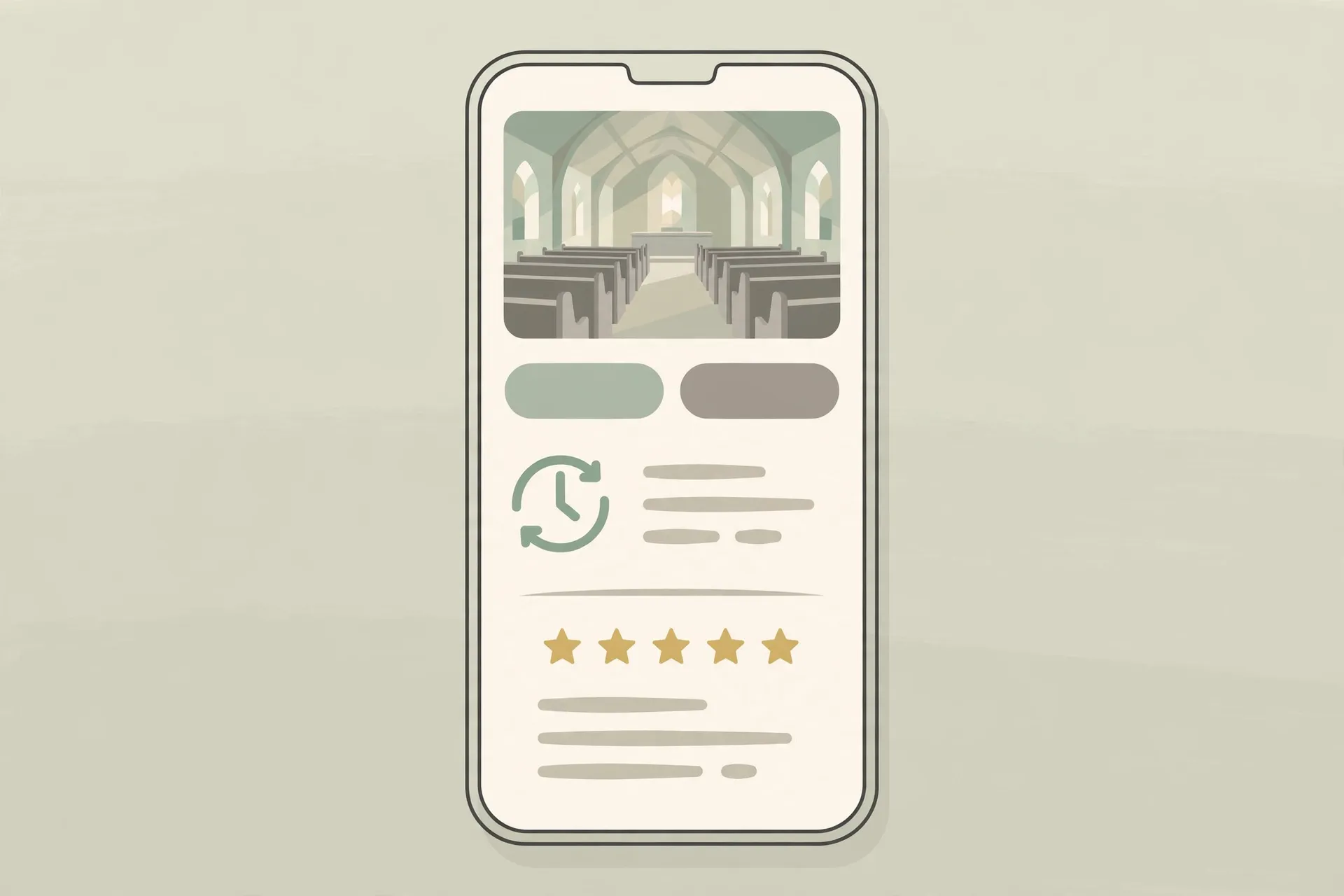
Before a family reads a word of your website, they’ve seen your star rating and review count. A home with 4.9 stars across eighty thoughtful reviews and a home with 4.2 stars across twelve are not perceived as close — even if their care is identical. Reviews are also a direct local ranking input: quantity, recency and your responses all count.
Asking must be handled with grace, and it can be. The approach that works for funeral homes:
- Timing: not at the arrangement conference. A gentle follow-up a few days after the service — a thank-you card or email with a review link — is both respectful and effective.
- Framing: “it helps other families know what to expect” works because it’s true, and grieving families often want their experience to help the next family.
- Respond to every review with warmth and brevity. Never reference specific arrangements or circumstances — privacy first, always. A thoughtful response to a critical review is read by every future family; answer it like that.
- Consistency over bursts: a steady few reviews a month signal an active, currently trusted home. Recency matters — families look for proof you’re caring for people now, not years ago.
3. Your website’s real job: answer a frightened person’s questions
Most funeral home websites are brochures written for nobody in particular. The searches families actually make are questions, often typed in plain distress: “what to do when someone dies at home,” “how much does cremation cost in Ontario,” “can we have a visitation before cremation,” “what happens at the crematorium.” Publish calm, clear pages that answer them:
- A first-steps guide: what to do in the first hours, who to call, what happens next, step by step. This page earns links, bookmarks and trust like nothing else on your site.
- Transparent pricing pages: cremation and burial costs explained plainly, with ranges. Families fear being sold to while grieving; published prices are the single strongest antidote, and “funeral costs Brampton” is a heavily searched phrase.
- Pre-planning pages: a separate journey for a separate searcher — someone planning their own funeral, calmly, months ahead. Different tone, different content, different keywords.
- Obituaries: publish them on your own site, well-structured with the person’s name in the title. Obituary searches bring a family’s entire network to your website, and obituary pages are frequently shared and linked.
- Faith and cultural service pages: if you serve specific traditions — Hindu, Sikh, Muslim, Catholic, Orthodox, secular celebrations of life — say so on dedicated pages that describe what you actually provide. These searches are highly specific and underserved.
What this looks like in Brampton
Brampton is one of Canada’s most multicultural cities, and funeral care here is correspondingly diverse. A large share of families need services shaped by faith tradition — Hindu cremations with specific rituals and timelines, Sikh services, Muslim burials where speed matters deeply, Christian visitations and celebrations of life. The homes that rank and get chosen are the ones whose websites describe, specifically and respectfully, how they serve each community — not a single line saying “all faiths welcome.”
Practical steps for a Brampton home: build genuine service pages for the traditions you serve, in the words families themselves search; list languages spoken on your profile and site; make sure your service area covers the whole city plus the surrounding corridor families actually live across — Mississauga, Vaughan, Caledon — because the person arranging is often searching from a different city than the deceased’s home. And invest in reviews steadily: in a city growing as fast as Brampton, many families have no inherited “our family uses this home” default. Google is the default now.
4. Citations, accuracy and the quiet technical layer
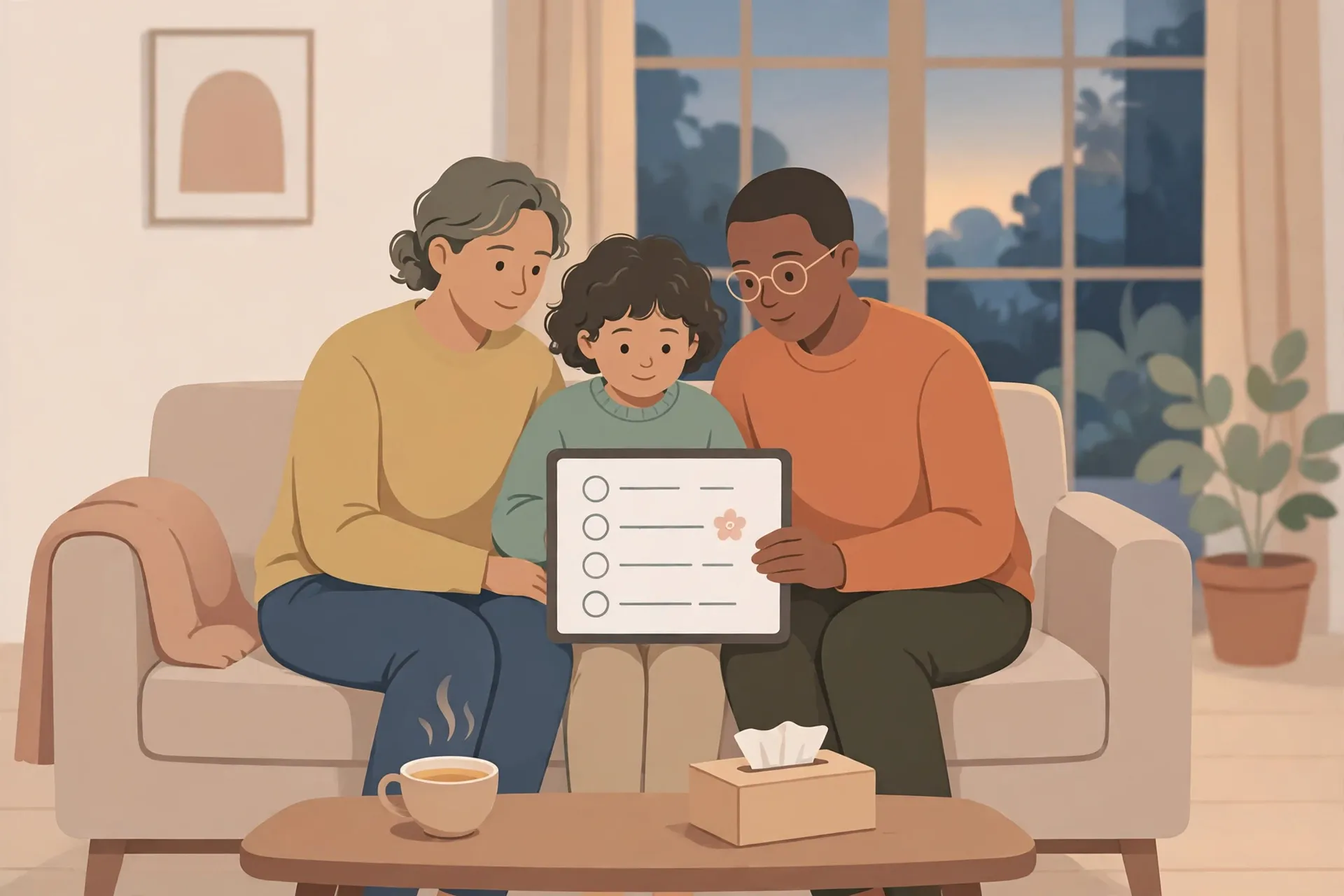
Your name, address and phone number must be identical everywhere — your site, Google, Apple Maps, Bing, Yelp, and funeral-specific directories. Inconsistencies (an old address, a predecessor’s name, a different phone format) erode the prominence signals your rankings depend on. Audit them twice a year; funeral homes change ownership and names more often than most businesses, and legacy listings linger.
On the site itself: fast mobile loading (the 2 a.m. search is on a phone), click-to-call that never requires hunting, and LocalBusiness/FuneralHome schema so search engines and AI tools can read your services, hours and area unambiguously. Verify Search Console and watch the queries that find you — they tell you exactly what families in your area are asking.
5. AI search: being the answer families are given
Families have started asking AI assistants direct questions: “what should I do when a parent dies in Ontario,” “which funeral homes near me offer direct cremation and what does it cost.” AI tools build answers from clear, verifiable text — your pricing explanations, your first-steps guide, your faith-service pages, your consistent listings and reviews. A home with specific, honest, well-organized information gets recommended by name. A home with a thin brochure site gets passed over in silence. The content work in section 3 is, in 2026, also your AI strategy.
Handled with restraint, this is simply good service published well — the same clarity a good funeral director offers across the desk, made available at the moment of need. It’s the work we focus on at SEOelinks, built in Brampton, Canada, serving clients worldwide: visibility earned by being genuinely helpful, in the searches that matter most.
6. Pre-need: the quieter search that builds your future
At-need searches are urgent and few. Pre-need and pre-planning searches — “pre-arrange a funeral,” “prepaid cremation plan,” “write my own funeral wishes” — are slower, more deliberate, and growing as the population ages and talks about end-of-life planning more openly. They deserve their own strategy, because the searcher is different: often planning their own arrangements, comparing carefully, reading everything.
Serve them with content that matches the mindset: a clear explanation of how pre-planning works and what it locks in, the difference between pre-planning (free, no payment) and pre-paying (funded arrangements, insurance or trust options), downloadable or printable planning checklists, and gentle guidance for adult children researching on a parent’s behalf — a large and overlooked share of pre-need research. A dedicated pre-planning section of your site, written without sales pressure, captures months of consideration-phase searches and positions your home as the educator families return to when the need becomes immediate. Homes that publish the best planning resources in their area quietly take the pre-need market while competitors chase only the at-need click.
7. What progress actually looks like
Funeral home SEO is measured in months and in calls, not in traffic spikes. In the first quarter, expect your profile impressions and direction requests to climb as the profile completes and reviews accumulate. By months four to six, a well-built first-steps guide and pricing pages begin ranking for the question searches that bring families to your site before they’ve chosen anyone. The compounding signal to watch is review velocity — a home moving from a handful of old reviews to a steady few each month almost always sees its map position and call volume follow. Track calls and arrangement sources honestly: ask every family how they found you, and log it. In this business, the answer “Google — and your reviews” will become more common every quarter you keep the system running.
8. A note on tone: the constraint that makes it work
Everything in this guide operates inside one constraint: restraint. Funeral care marketing that shouts — discounts, urgency tactics, cheerful promotions — corrodes the exact trust the rankings are meant to reflect. The homes that win search long-term sound in their content the way their best director sounds in the arrangement room: unhurried, specific, honest about costs, and focused entirely on the family’s needs. Write every page that way, and the SEO benefits follow almost as a side effect — because clarity, specificity and trustworthiness are what families search for and what search engines have learned to reward.
Frequently Asked Questions (FAQ)
How do families choose a funeral home from Google?
Mostly from the map results: star rating, review count and recency, whether the home looks complete and professional in photos, and whether the website answers their immediate questions — especially cost. The decision is usually made in minutes.
How should a funeral home ask for reviews respectfully?
A few days after the service, with thanks — a card or email with a direct link, framed as helping other families know what to expect. Never at the arrangement meeting, never with any pressure, and always respond to reviews briefly without referencing private details.
Should funeral homes publish their prices online?
Yes. Cost is the most-searched and most-feared unknown for families. Clear cremation and burial pricing pages build trust, capture high-intent searches, and set your home apart from competitors who hide prices behind a phone call.
What services should a Brampton funeral home highlight online?
The ones Brampton families actually search for: cremation and burial, pre-planning, and tradition-specific care — Hindu, Sikh, Muslim, Christian and secular services — with languages spoken and a service area covering Brampton and the surrounding cities.
Do obituaries help a Brampton funeral home’s website?
Yes. Obituaries published on your own site are searched by name, shared widely by family networks across the GTA, and earn natural links and visits. They’re also a genuine service to families, who can share one stable link instead of a newspaper notice.
Get a free SEO audit of your website
A 120 point crawl, a competitor gap map and a 90 day roadmap, ready in 48 hours. Free, with no obligation.

SEOelinks is a Brampton-based SEO agency helping service businesses across Canada and worldwide win organic search. Our strategists publish the same field-tested playbooks on technical SEO, local visibility and AI search that we run for clients every day.
More about SEOelinks →