A flower shop’s busiest days are predictable to the hour — Valentine’s Day, Mother’s Day, wedding season, prom week, the sympathy order that can’t wait until tomorrow. What’s less predictable is who gets the order. Increasingly, that’s decided weeks earlier, by which shop shows up when someone searches “florist near me,” “same day flower delivery Brampton,” or “wedding florist Brampton” — and by whether the national order-gatherers, who take a heavy cut of every sale, get there first.
This guide covers SEO for florists in 2026: winning the map pack, building the seasonal pages that capture peak demand before it peaks, and keeping the orders (and the margin) in your own shop.
1. Start with the map: most flower orders are local and urgent
Flowers are perishable, emotional and usually time-sensitive. Searchers aren’t researching for weeks — they’re ordering today, often from a phone, sometimes from a hospital corridor. Related reading: our guide to SEO for wedding and event planners. Google knows this, which is why local results and the map pack dominate flower searches. Your Google Business Profile is your storefront for all of it. SEOelinks is also listed on The Manifest for businesses comparing local agencies.
- Categories: “Florist” as primary. Add “Flower Delivery” and “Wedding Florist” or “Event Florist” if you do that work — those are separate searches with separate buyers.
- Delivery area, set honestly: list every town and suburb you actually deliver to. Same-day delivery searches are area-specific, and your profile only matches the areas you’ve declared.
- Special hours for peak days: update your hours before Valentine’s Day and Mother’s Day, and post your order cut-off times. A customer who finds wrong hours simply orders from the next shop.
- Photos of your real work: your arrangements, your shop, your delivery van — not stock photos. Real arrangements are also your proof when a bride is comparing three wedding florists.
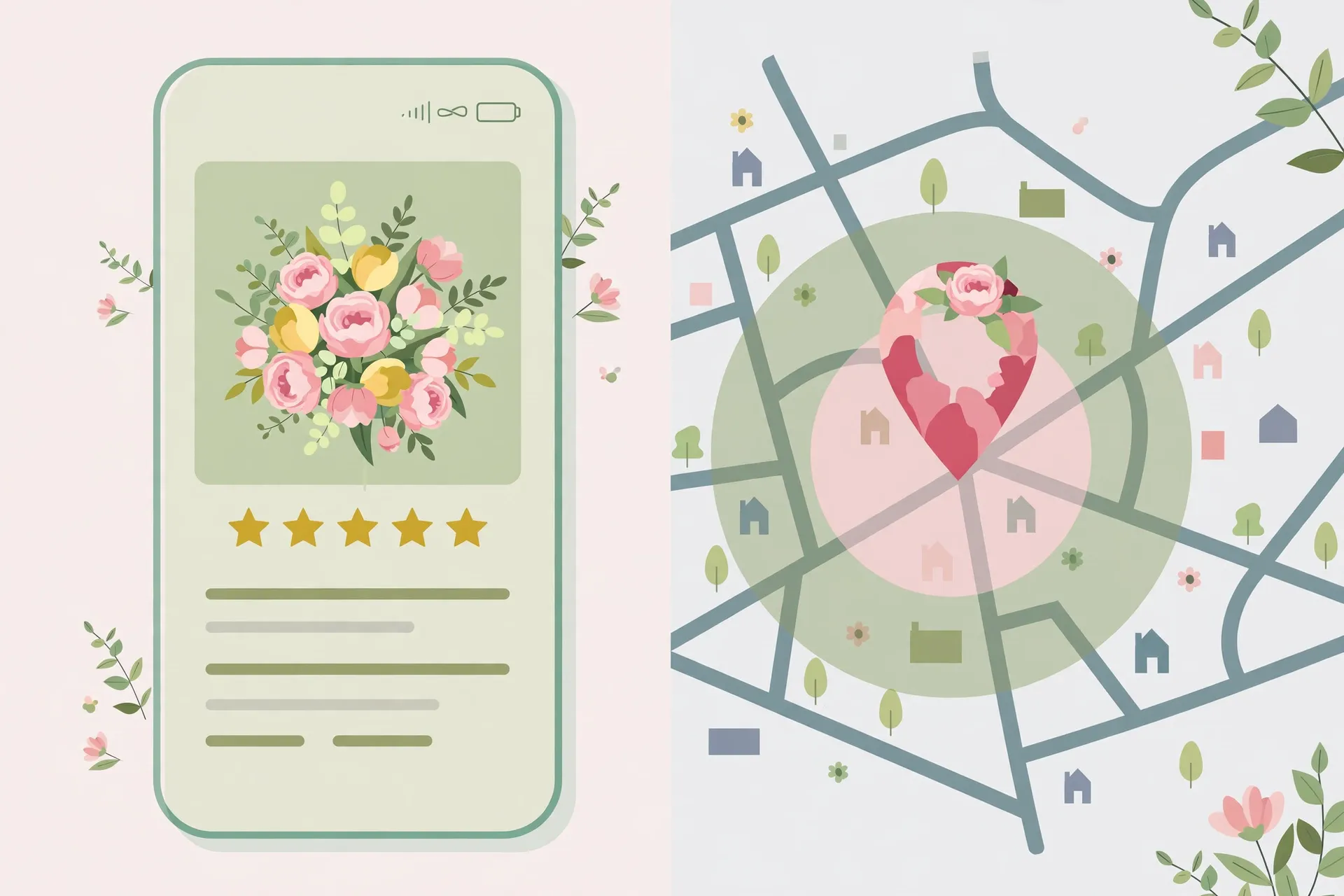
- Products: add your signature arrangements as profile products with prices. Searchers can land on a buyable bouquet straight from the map result.
2. Build seasonal pages before the season, not during it
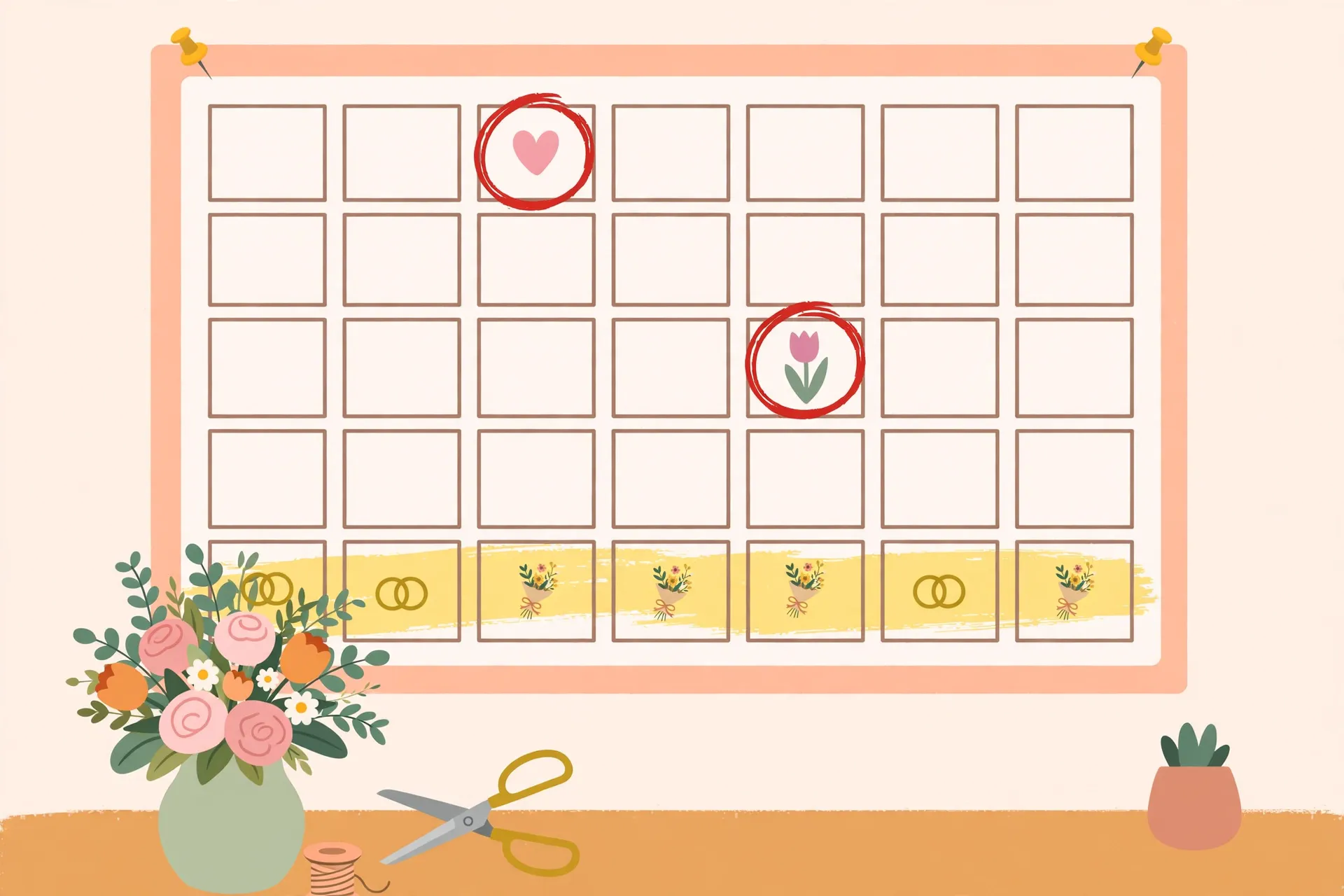
Rankings take weeks to build, and flower demand arrives on fixed dates. The shop that publishes in January owns Valentine’s Day; the shop that starts on February 10th watches a competitor take it. Build a permanent page for each revenue peak and improve it every year:
- Valentine’s Day flowers Brampton: your arrangements, delivery cut-offs, and honest advice on when to order. Keep the same URL every year and refresh it — an aged, updated page outranks a brand-new one.
- Mother’s Day flowers Brampton: the biggest flower day of the year in Canada. Same treatment: real arrangements, delivery areas, deadlines.
- Wedding flowers: a portfolio-led page with real weddings, venues named, starting price ranges and a consultation booking path. Couples search months ahead and spend thousands — this page deserves your best work.
- Sympathy and funeral flowers: searches made under stress, often same-day. Clear, gentle, fast: what you can deliver today, where, and by when. Trust signals matter more than design flair here.
- Subscriptions and corporate gifting: the quiet, recurring revenue most shops ignore. A page targeting offices, realtors and clinics (“weekly flowers for your lobby, monthly for client gifts”) captures buyers who order all year.
3. Beat the order-gatherers with what they can’t copy
National wire services and order-gatherers rank for flower searches in nearly every city while charging shops steep commissions and controlling the customer relationship. You can’t outspend them, but you can out-local them. They can’t publish photos of an actual wedding at a venue in your city, name the neighbourhoods you deliver to, show your designers’ faces, or collect reviews that mention your shop by name and street. Local specificity — real arrangements, real places, real people — is exactly what Google’s local ranking rewards and exactly what a national template site cannot fake. Every page and photo should answer the question: could only a shop here have published this?
What this looks like in Brampton
Brampton’s diversity is a florist’s calendar advantage. Beyond Valentine’s and Mother’s Day, demand spikes around Diwali, Eid, Vaisakhi and Raksha Bandhan, plus a long wedding season that spans multiple cultural traditions, each with its own floral customs — garlands, stage florals, large-volume orders. A Brampton shop that builds pages for these occasions (with real photos and delivery coverage across Bramalea, Springdale, Castlemore and the city’s banquet-hall corridors) captures searches the generic national sites don’t even know exist.
The other Brampton factor is geography: the city is big and delivery promises are competitive. Publish your delivery areas and same-day cut-offs clearly, neighbourhood by neighbourhood, and make sure your profile’s service area matches what’s on the site. When a searcher in Heart Lake needs sympathy flowers delivered across town today, the shop whose pages answer that exact question gets the call.
4. Reviews and photos: the monthly habit that compounds
Florists have a review advantage most businesses don’t: your product photographs beautifully and arrives at emotional moments. Ask at the right ones. The wedding couple after the photos come back, the subscription client after the third delivery, the family who mentions your sympathy arrangement was perfect. A short message with a direct link, sent within a day or two, is enough. Mention of the occasion and the neighbourhood in reviews (“delivered my mother’s birthday flowers to Castlemore within hours”) is local ranking gold.
Treat photos the same way — a monthly habit, not an annual upload. Every season change, every wedding, every new arrangement line should add fresh photos to your profile and site. Google surfaces active profiles, and brides choose with their eyes.
5. AI search and the new front door
Customers increasingly ask AI tools “who’s the best florist near me for same-day delivery” or “which florist does Indian wedding garlands in Brampton.” AI answers are assembled from consistent, specific text: your services, delivery areas, occasions and prices, stated plainly on your site and matching your profile and directories. Shops described vaguely (“beautiful flowers for all occasions”) are hard to recommend for a specific need. Shops described precisely get named.
Keep the fundamentals tight — a fast mobile site with click-to-order, consistent name/address/phone everywhere, and Search Console checked monthly so you know which occasions and neighbourhoods actually drive orders. This is the steady, unglamorous work we do at SEOelinks, built in Brampton, Canada and serving clients worldwide: making sure that when the moment comes — and in flowers, the moment is everything — your shop is the one that appears.
6. Your website: where searches become orders
Rankings bring visitors; your website decides whether they order from you or back-button to the map and pick the next shop. Flower buyers are usually in a hurry and on a phone, so the bar is practical, not artistic:
- Product pages that can rank individually: your best-selling arrangements deserve their own pages with real photos, prices, delivery options and honest descriptions — “rustic wildflower bouquet, serves as a centrepiece for 6–8” beats poetic filler. Searchers increasingly land on specific arrangement and occasion searches, and an individual page can catch them; a single gallery grid can’t.
- Photography that doubles as SEO: name image files descriptively (
red-roses-valentines-delivery-brampton.jpg), write alt text that describes the actual arrangement and occasion, and compress — a slow, heavy gallery bleeds mobile orders by the second. - Ordering without friction: delivery date picker, same-day cut-off shown before checkout (not discovered in it), delivery fees stated early. Every surprise at checkout is an abandoned order and a customer trained to use an aggregator next time.
- Occasion navigation: structure the site the way customers think — by occasion (birthday, anniversary, sympathy, just because), then by collection — rather than by your internal categories. Mirror that structure in your menu and your profile’s product listings.
7. The monthly rhythm that keeps it working
Florist SEO fails when it’s treated as a project with an end date — a redesign, a pre-Valentine’s scramble — instead of a habit. The shops that hold rankings run a short monthly loop: update one seasonal page for the next peak (you’re always 6–8 weeks ahead of a peak), add the month’s real photos to the profile and site, send review requests to the month’s wedding and repeat customers, post one profile update (a seasonal arrangement, a delivery-area note, a cut-off reminder), and spend fifteen minutes in Search Console confirming which occasions and neighbourhoods are actually driving orders. An hour a month, every month, beats a desperate week in early February — because by February, the rankings for Valentine’s Day were decided in December.
8. What to measure so you know it’s working
Track a short list monthly: calls and orders that start from your Google profile (the profile’s own insights show calls, direction requests and searches), your map ranking for the three searches that pay your rent — “florist near me,” “flower delivery [your city],” “wedding florist [your city]” — and in Search Console, which occasion pages are gaining impressions as their seasons approach. The seasonal pattern is your early-warning system: if Mother’s Day impressions aren’t climbing by March, the page needs work while there’s still time to fix it. And track where orders come from at the till — one question, “how did you find us,” asked consistently, will tell you within a season whether the map, your seasonal pages or the aggregators are really feeding the shop.
9. Mistakes that quietly cost shops their rankings
A short list, because they’re so common: hours left wrong after a holiday, which Google notices and customers punish. A profile service area copied from an old address after a move. Stock photos standing in for real arrangements — customers can tell, and so can image search. Seasonal pages deleted each year and rebuilt from scratch, throwing away the authority they’d earned; keep the URL, refresh the content. And reviews answered in bursts of defensiveness — every reply is a public performance for the next customer, so answer the disappointed ones with the same grace you’d use at the counter. None of these take money to fix, only the habit of treating your online storefront with the same care as the physical one.
Frequently Asked Questions (FAQ)
How far ahead should a florist start SEO for Valentine’s Day?
Publish or refresh your Valentine’s page by early January at the latest — rankings need 4–8 weeks to build. Keep the same page URL every year and update arrangements, prices and cut-off times; an established page outperforms a new one.
How do local florists compete with national flower delivery sites?
With local specificity the nationals can’t copy: real arrangement photos, named delivery neighbourhoods, occasion pages for your community’s actual calendar, and reviews that mention your shop and area. You keep the full margin and the customer relationship.
What Google category should a florist use?
“Florist” as the primary category, with “Flower Delivery” and — if you do events — “Wedding Florist” or “Event Florist” as secondary categories. Each matches a different set of searches.
What seasonal pages should a Brampton florist publish?
Valentine’s Day, Mother’s Day and wedding pages first, then pages for the occasions Brampton actually celebrates at scale — Diwali, Eid, Vaisakhi and Raksha Bandhan — each with real photos, arrangements and delivery areas across the city.
Does a Brampton florist need separate pages for each delivery area?
Not for every neighbourhood. One clear delivery page listing all areas and same-day cut-offs, with your profile service area kept in sync, covers most searches. Add dedicated pages only for high-volume areas where you can write genuinely local content.
Get a free SEO audit of your website
A 120 point crawl, a competitor gap map and a 90 day roadmap, ready in 48 hours. Free, with no obligation.

SEOelinks is a Brampton-based SEO agency helping service businesses across Canada and worldwide win organic search. Our strategists publish the same field-tested playbooks on technical SEO, local visibility and AI search that we run for clients every day.
More about SEOelinks →