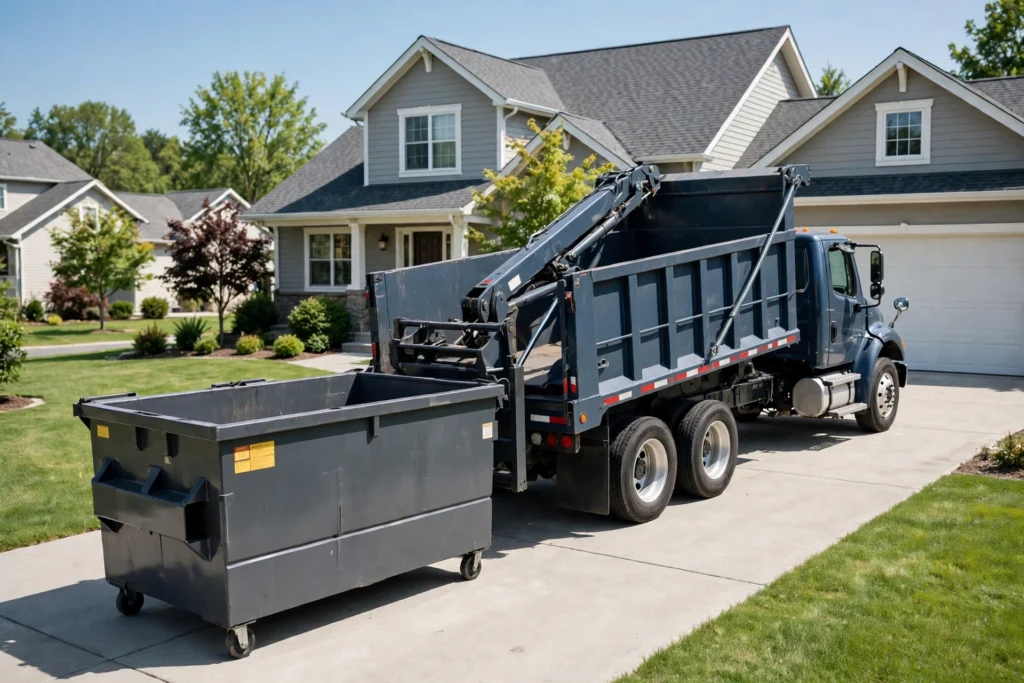
Nobody rents a dumpster for fun. A renovation starts, a garage finally gets cleared, a roof comes off — and then they search “dumpster rental near me,” compare two or three options on their phone, and book the one that shows the right size, a clear price and a delivery day that works. The decision is fast, local and practical: a homeowner or contractor choosing the bin they trust to arrive on time and leave without a mess.
This guide covers SEO for dumpster rental companies in 2026: how size-guide pages win the searches that matter, how residential and construction intent differ, how service-area and delivery-day pages capture the booking, and how reviews separate a reliable hauler from a cheap one — so the next cleanout or job site in your town books your bin.
1. Start with the map: the rental decision is made on your profile
The shortlist for a dumpster rental forms on Google, mostly on a homeowner’s phone in the driveway or a contractor’s phone on the job site, in the minutes between deciding to clear out and choosing a hauler. Your Google Business Profile is where you make or miss that shortlist:
- Categories: “Dumpster rental service” as primary, with “Waste management service” or “Junk removal service” added only where you genuinely offer them.
- Sizes named the way renters search: 10-yard, 20-yard and 30-yard dumpsters listed as distinct services, so you appear for each size search, not only “dumpster rental near me.”
- Photos from real deliveries: the bin on a driveway, the truck setting it down, a clean pickup after the job. Nobody books a dumpster on a logo; they book on what the delivery looks like.
- Hours and delivery days kept current: working hours, same-day and next-day delivery windows and holiday changes updated on the profile before they change anywhere else.
- Call or quote in one tap: the phone number current and the quote option switched on, so a renter can reach you straight from the search without a second step.

2. Size-guide pages: 10, 20 and 30 yards each earn their own search
A renter choosing a dumpster size is not browsing — they are trying not to order the wrong bin. A 10-yard, a 20-yard and a 30-yard dumpster are three different searches, three different jobs and three different kinds of customer, and each deserves its own page:
- 10-yard pages: written to the homeowner clearing a garage or a single room — small cleanouts, a bathroom gut, a yard cleanup, and what fits inside.
- 20-yard pages: written to the homeowner mid-renovation — flooring, a kitchen tear-out, a basement cleanout, and how the bin handles the weight.
- 30-yard pages: written to the contractor or the whole-house job — major renovations, roofing tear-offs, estate cleanouts, and the space the bin needs.
- Size-guide content: an honest what-size-do-I-need page that answers the exact question most renters type before they ever call.
Each page carries photos of the real bin, the dimensions and what it holds, and the booking next step. It’s the same page-per-search discipline behind our guide to SEO for home renovation contractors — renters comparing local haulers reward the company that answers their exact question, for their exact job, first.
Don’t blur the sizes on one page. A homeowner clearing a garage wants to know the smallest bin will do, not a paragraph that mentions all three and explains none. Separate pages let each visitor — and each search — land exactly where they belong.
3. Residential vs construction intent: the two customers a hauler serves
The most valuable dumpster customer is not the one-off homeowner — it is the contractor who rents a bin on every job. Residential searches sound different from construction searches: “dumpster rental for home cleanout,” “small dumpster for garage” versus “construction dumpster rental,” “30 yard dumpster for roofing,” “roll-off for job site.” A page that treats every rental like a weekend cleanout will not rank for the construction searches, and will not convert the contractors who do find it.
Build your content around both customers, and give each a clear path. Answer the questions each asks before booking: how long the rental lasts, what weight is included, what cannot go in the bin, whether a permit is needed on the street, and how pickup is scheduled. Name the common jobs plainly and explain the delivery in plain language, not industry jargon. A size page that reads like a helpful hauler converts; one that reads like a price list does not.
What this looks like in Brampton
Brampton’s dumpster demand follows its homes and its building sites: homeowners across Springdale, Castlemore, Fletcher’s Meadow, Mount Pleasant and Bramalea, where new subdivisions, basement finishes and older homes all generate the same steady stream of cleanouts and renovations — a garage cleared in spring, a roof replaced in summer, a basement finished before winter. The work never really stops, and the haulers who are visible, responsive and bookable when the job is fresh in mind fill their delivery days before the next season starts.
Word of mouth is the local currency: neighbours ask neighbours first, and reviews that name the neighbourhood or the job (“20-yard bin in Castlemore for our kitchen reno, dropped off on time, driveway spotless after pickup”) are the deciding evidence for the next house on the street. One clean delivery in a neighbourhood quietly becomes the next five rentals on the same street.
4. Service-area and delivery-day pages: the booking search is the one that pays
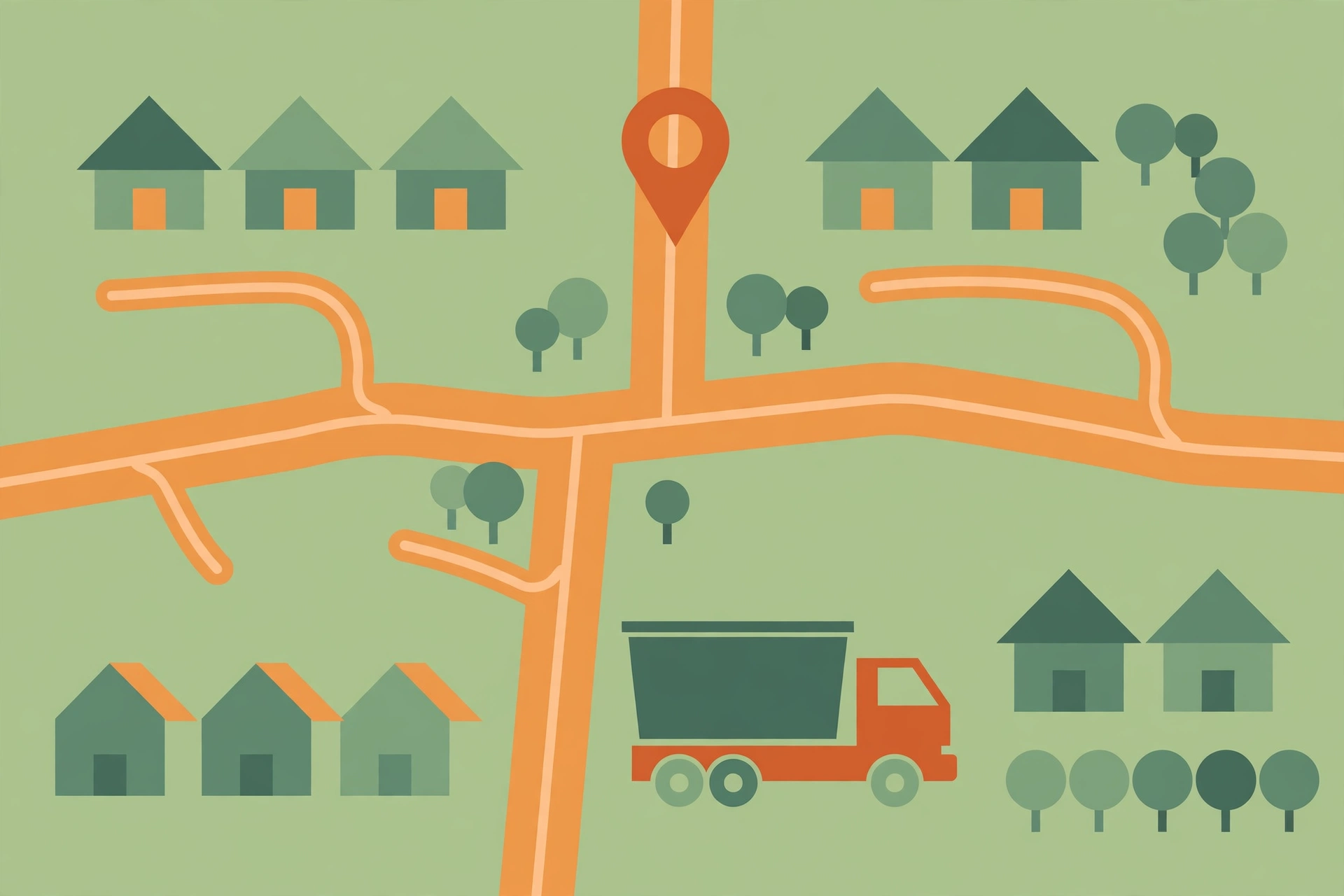
A dumpster search is a search with a project starting this week. “Dumpster rental near me,” “dumpster delivery Brampton,” “same-day dumpster rental” — these are the queries that turn into a booked bin within days, and they are won by pages that state the area and the delivery days plainly. A page for each town or neighbourhood you genuinely serve — naming the streets, the nearby landmarks, the sizes you deliver there — ranks for those searches while a single “areas we serve” list ranks for nothing.
Keep each page honest and specific: the sizes available there, the delivery windows, the driveway protection you use, a photo of a real delivery nearby. Delivery timing deserves its own attention too — same-day and next-day options, weekend drop-offs, pickup scheduling — because a renter whose project starts Monday cannot wait, and does not leave a kind review when the bin is late. Link each service-area page from your size pages and your profile, so a visitor — and a search engine — can follow the map from your yard to their driveway.
5. AI search: the assistant recommending your dumpster
Renters increasingly start with an AI tool: “best dumpster rental near me,” “what size dumpster for a garage cleanout,” “how much does a 20-yard dumpster cost,” “dumpster rental same-day delivery near me.” The answers are assembled from complete, consistent content — size-guide pages with honest guidance and what each bin holds, your service area and delivery days stated the same everywhere, and reviews that mention the neighbourhood and the bin size. Haulers with real pages get summarised accurately and recommended by area; haulers with a one-page site leave the assistant nothing accurate to say, and it says something about a competitor instead.
6. Your website: built to book the bin
A dumpster rental website has one job — move a visitor from a pile of debris to a booked delivery:
- Booking in one tap: a call button and a simple quote form visible on every page, working on a phone in under a minute, with the questions answered on the spot (sizes available, rental length, what is included).
- Pricing without fog: what each size costs for the standard rental period, or at minimum how pricing works. Vague pricing is the leading cause of abandoned quotes and haggling at the curb.
- Photos on every size page: the bin, the delivery, the driveway protection beside the pitch, not buried on a separate page nobody visits.
- Trust signals up front: on-time delivery, driveway protection, and a clean-pickup promise stated plainly, because a renter is trusting you with their property and their project schedule.
7. Reviews: the trust signal that separates a reliable hauler from a cheap one
A dumpster company is judged one delivery at a time, and reviews are where the next renter learns whether to trust you. The moments that matter most are delivery and pickup — the bin arrived on time, the driveway stayed clean, the pickup happened when promised. Ask happy customers to mention what actually matters to the next renter: the size they rented, how fast it arrived, whether the driveway was protected, and the neighbourhood you came from.
Respond to reviews the way you run the deliveries — promptly and plainly. A complaint about a late drop-off or a scuffed driveway is a chance to show the next reader that problems get fixed, not ignored. Reviews that name the size and the area (“30-yard bin in Mount Pleasant for our roofing job, on time both ways”) do double duty: they reassure the next renter and they feed the exact phrases search engines associate with your company.
8. What to measure so you know it’s working
Measure rentals per size and per area: quote requests and bookings from each size-guide page, your visibility for “dumpster rental near me” and “dumpster rental Brampton,” and the split between residential cleanouts and construction jobs. Track which pages bring the customers who actually book again — a contractor who rents a bin on every job is worth more than a dozen one-off homeowners. Repeat rentals are the metric underneath all of it: SEO that fills the delivery schedule with renters who come back shows up next quarter as steady revenue, not a full inbox.
Season is the other quiet signal. Note which weeks the spring cleanout rush actually starts and how renovation season moves demand — then publish next season’s size-guide content two weeks earlier, and let your pages and reviews speak to those neighbourhoods by name.
9. Mistakes that quietly cost dumpster companies the booking
The recurring ones: one generic “dumpster rental” page for 10, 20 and 30 yards, so size searches land nowhere. No size-guide page, so the what-size-do-I-need search goes to a competitor. No service-area or delivery-day pages, so the booking search goes elsewhere. Hours and delivery windows out of date on the profile, so renters call a hauler who cannot come. Prices hidden or vague, breeding abandoned quotes. Reviews never asked for after delivery, so the trust signal never builds. Reviews never answered, so the next renter assumes nobody is minding the yard. And silence between seasons — no new photos, reviews or posts — so each spring starts from zero against haulers who never stopped.
Frequently Asked Questions (FAQ)
How do dumpster rental companies rank for “dumpster rental near me”?
With a complete Google Business Profile — 10, 20 and 30-yard dumpsters listed separately, real photos of deliveries and steady reviews — backed by a dedicated page for each size and each area you serve, each with current delivery days and a one-tap quote path.
Should 10, 20 and 30-yard dumpsters have separate pages?
Yes. Renters search for the size they need, not for a dumpster in general, and each size has different jobs, questions and customers. Separate pages rank for each size search and convert far better than one combined dumpster rental page.
What size dumpster do I need for a home cleanout?
It depends on the job: a 10-yard bin suits a garage or single-room cleanout, a 20-yard bin suits a multi-room renovation or basement clearout, and a 30-yard bin suits a whole-house job or roofing tear-off. A size-guide page with dimensions and examples helps renters choose before they call.
What should a dumpster company put on service-area pages?
The neighbourhoods and streets you deliver to, the sizes available there, your delivery windows and pickup process, and a photo of a real delivery nearby. Renters planning a project need answers in seconds, and a page that gives them is the one that gets the booking.
Do dumpster rentals need a permit on the street?
It depends on where the bin sits. A bin on a private driveway usually needs no permit, while a bin placed on a public street often does, with rules set by the municipality. State the local rules plainly on your pages and tell renters what you handle for them.
Get a free SEO audit of your website
A 120 point crawl, a competitor gap map and a 90 day roadmap, ready in 48 hours. Free, with no obligation.

SEOelinks is a Brampton-based SEO agency helping service businesses across Canada and worldwide win organic search. Our strategists publish the same field-tested playbooks on technical SEO, local visibility and AI search that we run for clients every day.
More about SEOelinks →