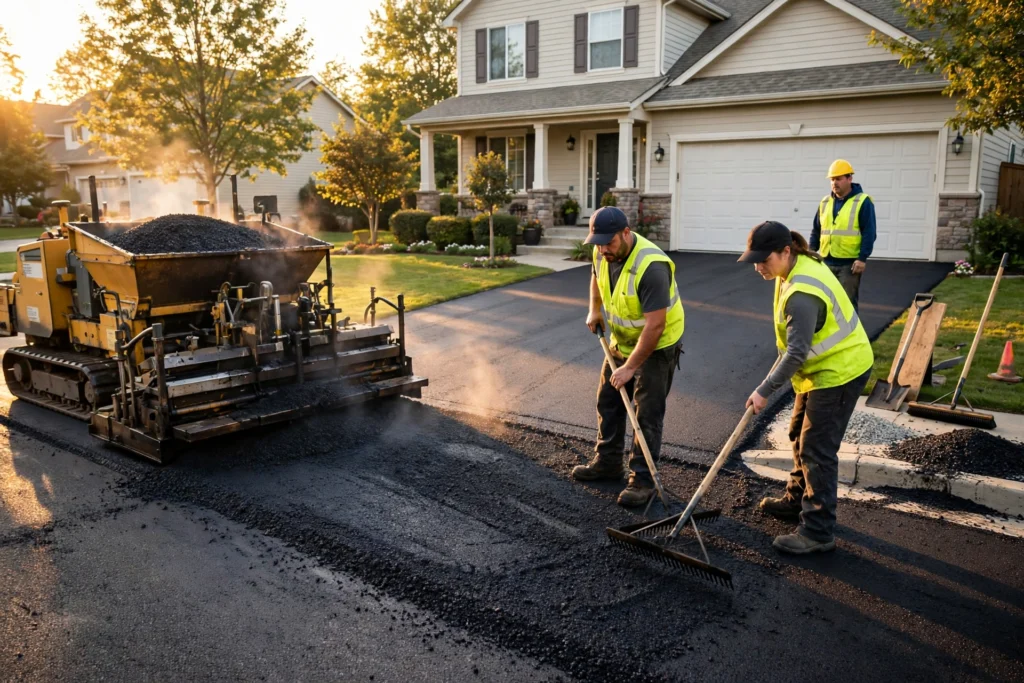
Nobody searches for driveway paving on a whim. They search when the old driveway is cracked and crumbling, when the house is going on the market, or when the spring thaw leaves a driveway that looks ten years older than it is — and then they call the first company that looks capable, local and trustworthy. The decision is visual and expensive: a homeowner choosing the crew they believe will lay a driveway that lasts.
This guide covers SEO for driveway paving companies in 2026: how asphalt, concrete and paver pages win the searches that matter, how resurfacing versus new-install pages capture the exact job a homeowner types, how seasonal timing and a clear quote flow turn a curious visitor into a booked estimate, and how location pages carry the work into every neighbourhood you serve.
1. Start with the map: the paving decision is made on your profile
The shortlist for a paving company forms on Google, mostly on a homeowner’s phone while they stand at the end of a cracked driveway, in the minutes between noticing the damage and choosing who to call. Your Google Business Profile is where you make or miss that shortlist:
- Categories: “Paving contractor” as primary, with “Driveway paving” or “Asphalt paving” style services added only where you genuinely offer them.
- Services named the way homeowners search: asphalt paving, concrete driveways, interlocking pavers, driveway resurfacing and driveway repair listed as distinct services, so you appear for each job search, not only “driveway paving near me.”
- Photos from real jobs: the old driveway being removed, fresh asphalt being laid, the finished driveway in front of the house. Nobody hires a paving crew on a logo; they hire on what the finished driveway looks like.
- Hours and seasonal availability kept current: opening hours, the paving season’s start and end, and holiday changes updated on the profile before they change anywhere else.
- Directions and contact in one tap: the service area stated plainly, the phone number current, and the quote request one tap away, so a homeowner can reach you without a second search.
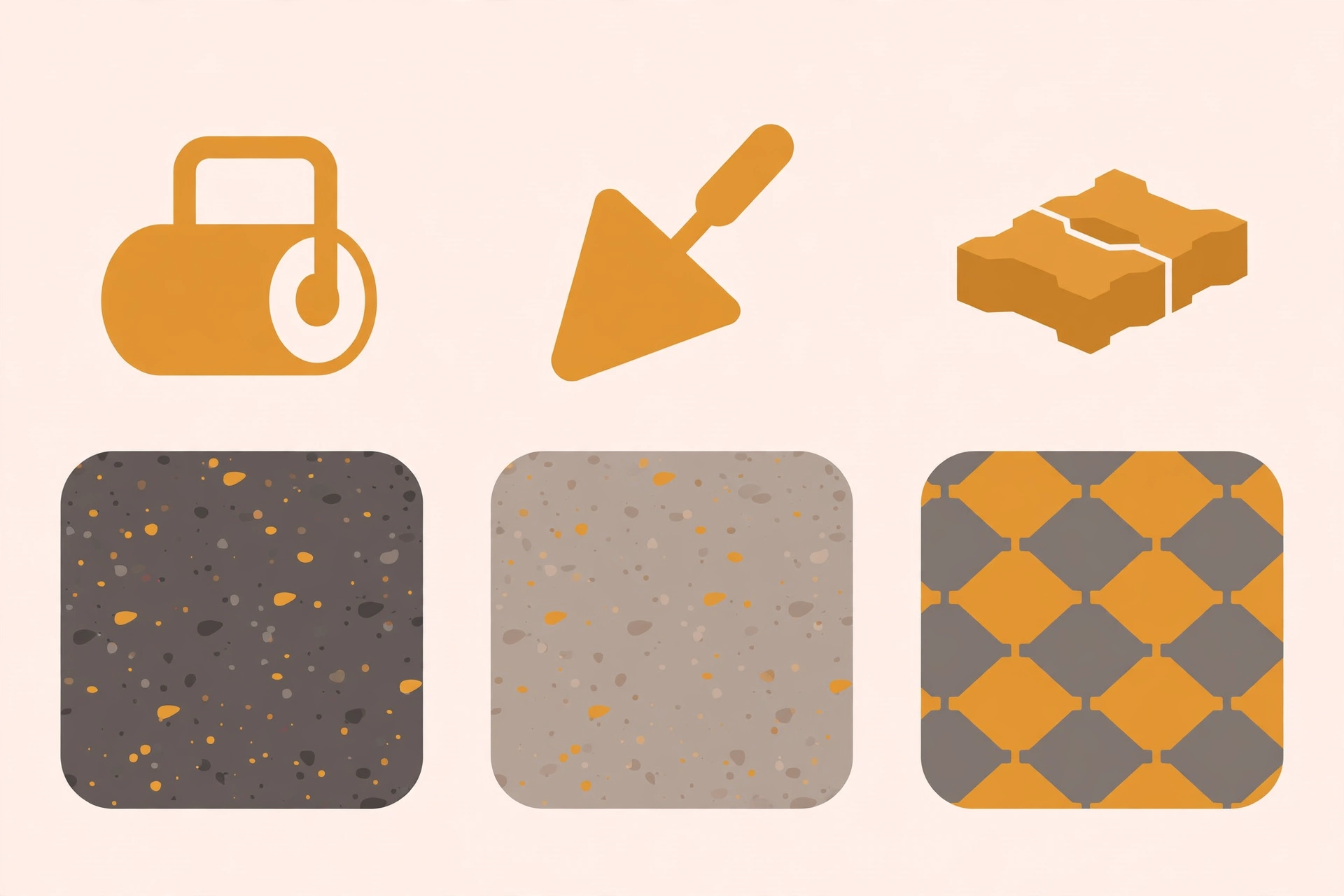
2. Surface pages: asphalt, concrete and pavers each earn their own search
A homeowner choosing a driveway surface is not browsing — they are weighing cost, looks and how long it will last. Asphalt, concrete and interlocking pavers are three different searches, three different budgets and three different kinds of customer, and each deserves its own page:
- Asphalt pages: written to the homeowner who wants the fastest, most affordable new driveway — how it is laid, how long it lasts, and how sealing and maintenance keep it looking new.
- Concrete pages: written to the homeowner who wants a clean, long-lasting finish — poured and stamped options, curing time, and how it handles freeze and thaw.
- Paver pages: written to the homeowner who wants the premium look — interlocking stone patterns, edging and base preparation, and why pavers can be repaired one stone at a time.
- Comparison content: an honest asphalt-versus-concrete-versus-pavers page that answers the exact question most homeowners type before they ever call.
Each page carries photos of the real work, the steps a job follows, and the quote next step. It’s the same page-per-search discipline behind our guide to SEO for concrete contractors — homeowners comparing surfaces reward the company that answers their exact question, for their exact driveway, first.
Don’t blur the surfaces on one page. A homeowner weighing asphalt against pavers wants a straight answer, not a paragraph that mentions both and explains neither. Separate pages let each visitor — and each search — land exactly where they belong.
3. Resurfacing versus new install: two different jobs, two different searches
Some driveways need a fresh surface; others need to be torn out and rebuilt from the base up. Resurfacing and new installation are two different jobs with different costs, different timelines and different searches — “driveway resurfacing near me,” “new driveway installation cost,” “replace cracked driveway” — and a page that treats them as one job will not rank for either.
Build a dedicated page for each that answers the questions a homeowner asks before booking: how you judge whether a driveway can be resurfaced, what the base preparation involves, how long each job takes, and how long the homeowner must stay off the new surface. Name the signs of a driveway that is past resurfacing — deep cracks, sinking sections, a failed base — and explain them plainly, with photos. Add the questions homeowners actually ask — the permit, the drainage slope, the warranty on the new surface — and answer them on the page, not behind a phone call. A page that helps a homeowner diagnose their own driveway converts; one that only lists services does not.
What this looks like in Brampton
Brampton’s paving demand follows its housing and its winters: older driveways across Springdale, Castlemore, Fletcher’s Meadow, Mount Pleasant and Bramalea, where freeze and thaw, road salt and heavy vehicles crack asphalt and heave concrete year after year, plus newer homes whose builder-grade driveways are already failing. The spring is the strategy — calls surge from the first thaw through early summer, and the companies that are visible, reachable and bookable when driveways are at their worst fill their paving calendars first.
Surface choice is the local conversation: asphalt for the homeowner who wants the fastest turnaround, concrete for the clean long-term finish, pavers for the premium front entrance. Brampton homeowners ask neighbours first, and reviews that name the neighbourhood or the surface (“new asphalt driveway in Fletcher’s Meadow, done in two days”) are the deciding evidence for the next driveway on the street.
4. Location and service-area pages: the “near me” search is the one that pays
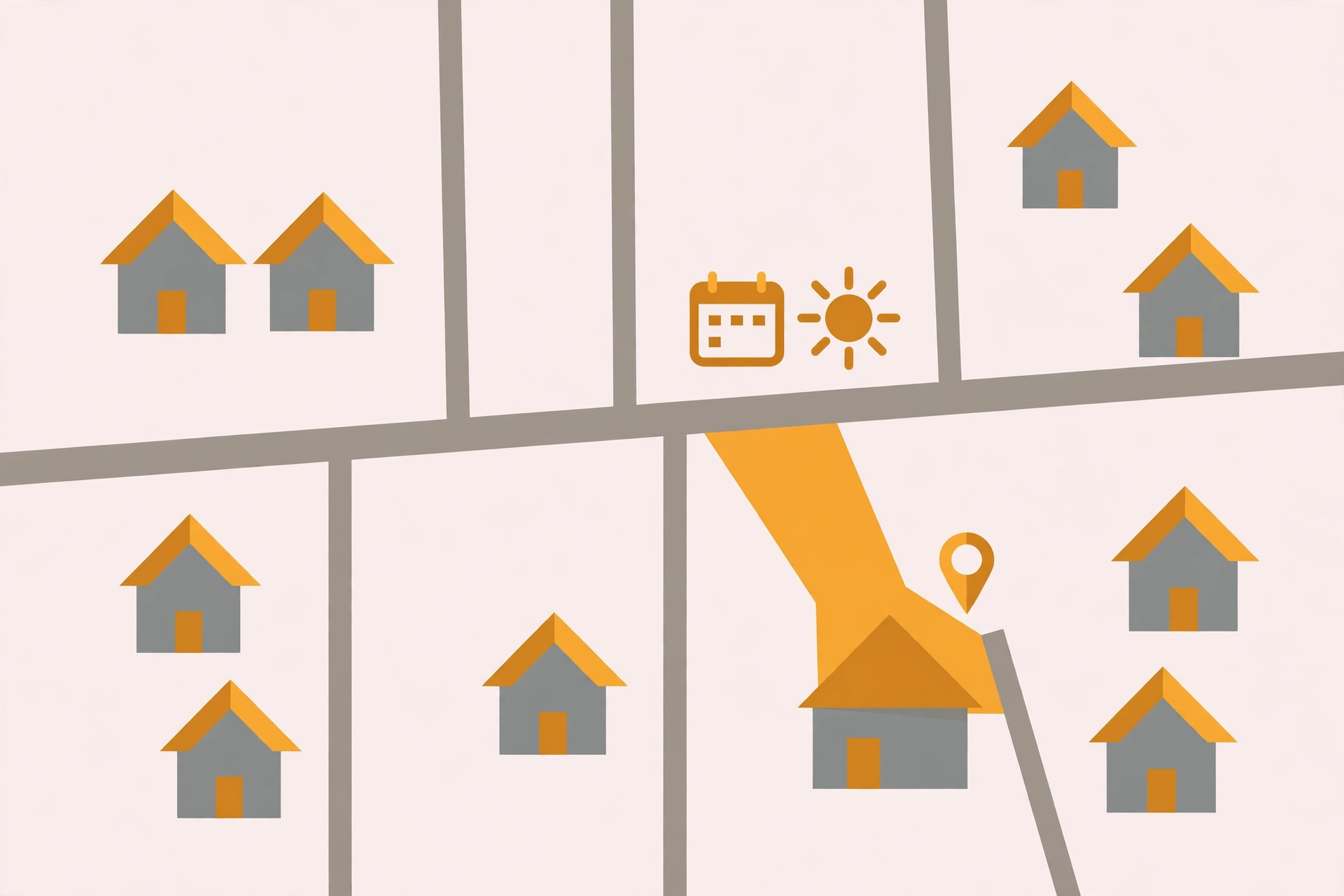
A paving search is a search with a cracked driveway outside. “Driveway paving near me,” “asphalt driveway near Brampton,” “paver driveway Brampton” — these are the queries that turn into a booked estimate within days, and they are won by pages that state the service area plainly. A page for each neighbourhood or town you genuinely serve — naming the area, the common driveway problems there, and the surfaces you install — ranks for those searches while a single “service area” list ranks for nothing.
Keep each page honest and specific: the housing age and driveway types in that area, the damage you see most there, and photos from real jobs nearby. Seasonal timing deserves its own attention too — when the paving season opens and how far ahead the schedule books — because a homeowner who misses the season does not wait patiently. Link each location page from your main service pages and your profile, so a visitor — and a search engine — can follow the map from your company to their street.
5. AI search: the assistant recommending your paving company
Homeowners increasingly start with an AI tool: “best driveway paving company near me,” “asphalt vs concrete driveway,” “how much does a new driveway cost,” “when is the best time to pave a driveway.” The answers are assembled from complete, consistent content — surface pages with honest guidance and what each job includes, your service areas stated the same everywhere, and reviews that mention the neighbourhood and the surface. Companies with real pages get summarised accurately and recommended by area; companies with a one-page site leave the assistant nothing accurate to say, and it says something about a competitor instead.
6. Your website: built to book the estimate
A paving website has one job — move a visitor from a cracked driveway to a booked estimate:
- Quote in one tap: a free estimate request visible on every page, working on a phone in under a minute, with the questions answered on the spot (what the visit covers, how long it takes, whether there is a fee).
- Pricing without fog: typical cost ranges for each surface, or at minimum how pricing works and what affects it. Vague pricing is the leading cause of abandoned quote requests and haggling on the phone.
- Photos on every service page: the old driveway coming out, the fresh surface going down, the finished driveway beside the pitch, not buried on a separate page nobody visits.
- Trust signals up front: warranty terms, before-and-after proof, and licensed and insured status stated plainly, because a homeowner is trusting you with the front of their house.
7. Reviews: the trust signal that separates a crew from a contractor
A paving company and a general contractor sell different promises, and reviews are where homeowners learn the difference. A general contractor is judged on a single finished project; a paving company is judged on whether the driveway still looks new after the first winter. Ask happy customers to mention what actually matters to the next homeowner: the surface they chose, how long the job took, whether the driveway survived the freeze and thaw, and the neighbourhood they live in.
Respond to reviews the way you run the job — promptly and plainly. A complaint about a crack or a low spot is a chance to show the next reader that problems get fixed, not ignored. Reviews that name the surface and the area (“interlocking pavers in Mount Pleasant, still perfect after two winters”) do double duty: they reassure the next homeowner and they feed the exact phrases search engines associate with your company.
8. What to measure so you know it’s working
Measure estimates per surface and per area: quote requests from each surface page, your visibility for “driveway paving near me” and “asphalt driveway Brampton,” and the split between asphalt, concrete and paver jobs. Track which pages bring the customers who actually book — an estimate that turns into a full new driveway is worth more than a dozen phone calls that go nowhere.
Season is the other quiet signal. Note which weeks the paving season actually opens and how rain and cold move demand — then publish next season’s surface content two weeks earlier.
9. Mistakes that quietly cost paving companies the spring rush
The recurring ones: one generic “paving” page for asphalt, concrete and pavers, so surface searches land nowhere. No resurfacing-versus-new-install page, so the homeowner’s first question goes to a competitor. Quote requests hidden or vague, breeding abandoned calls. Service areas listed as a paragraph instead of real pages per neighbourhood. Prices hidden or vague, breeding abandoned estimates. Reviews never answered, so the next homeowner assumes nobody stands behind the work. And silence between seasons — no new photos, reviews or posts — so each spring starts from zero against companies that never stopped.
Frequently Asked Questions (FAQ)
How do driveway paving companies rank for “driveway paving near me”?
With a complete Google Business Profile — surfaces and services listed separately, real photos of the work and steady reviews — backed by a dedicated page for each surface and each service area, each with a one-tap estimate request.
Should asphalt, concrete and pavers have separate pages?
Yes. Homeowners choose a surface before they choose a company, and each surface has different questions, costs and customers. Separate pages rank for each surface search and convert far better than one combined paving services page.
Is resurfacing or a new driveway better for a cracked driveway?
It depends on the base: a driveway with surface cracks and a sound base can often be resurfaced, while deep cracks, sinking sections or a failed base need a full new install. A dedicated resurfacing page that explains how to tell the difference ranks for both searches and builds the trust that wins the estimate.
What should a paving company put on its service-area pages?
The neighbourhood or town, the driveway types and damage common there, the surfaces you install, and photos from real jobs nearby. Homeowners searching with a cracked driveway need answers in seconds, and a page that gives them is the one that gets the call.
How do reviews help a paving company more than a general contractor?
A general contractor wins on one finished project; a paving company wins on a driveway that still looks new after the first winter. Reviews that mention the surface, the job quality and the neighbourhood prove the work holds up — and those same phrases feed the searches that bring the next homeowner in.
Get a free SEO audit of your website
A 120 point crawl, a competitor gap map and a 90 day roadmap, ready in 48 hours. Free, with no obligation.

SEOelinks is a Brampton-based SEO agency helping service businesses across Canada and worldwide win organic search. Our strategists publish the same field-tested playbooks on technical SEO, local visibility and AI search that we run for clients every day.
More about SEOelinks →