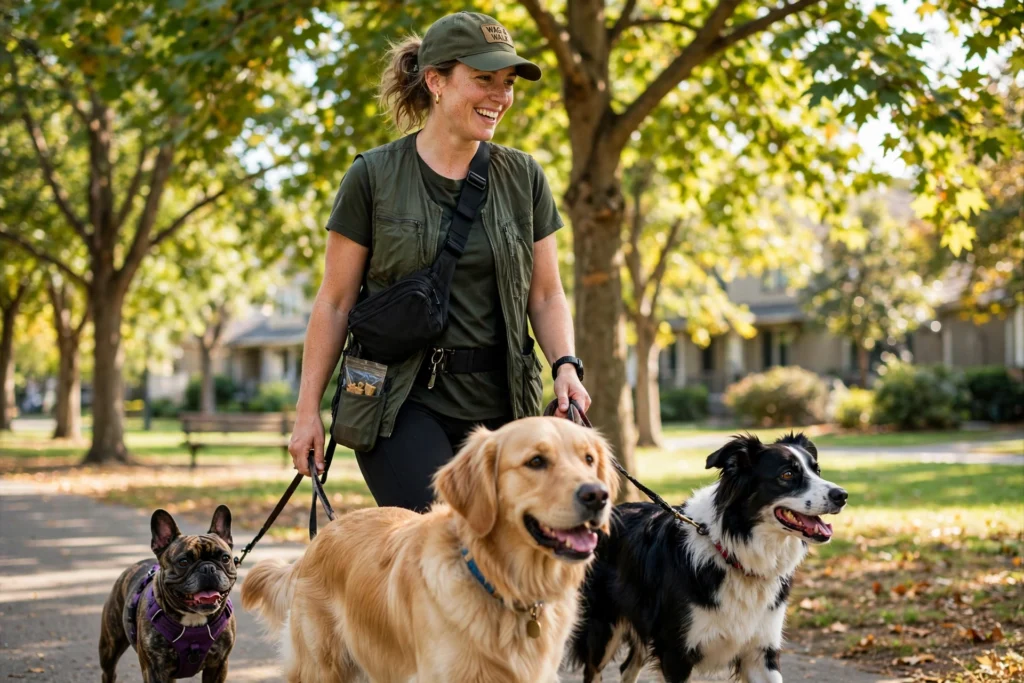
Nobody hands their dog to a stranger lightly. A dog owner leaving for work in the morning searches “dog walker near me,” scrolls two or three local profiles on their phone, and picks the walker who looks trustworthy, reliable and genuinely fond of dogs — usually before lunch. The decision is emotional first and practical second: this is someone’s family member, and the walker’s reviews, photos and first reply matter more than any discount.
This guide covers SEO for dog walkers in 2026: how trust-first bookings are won, how recurring-walk packages become your steadiest income, how neighbourhood and route pages win one area at a time, and how walker profiles and review signals turn a one-off trial walk into a client who books every week.
1. Start with the map: trust is won on your profile
The shortlist for a dog walker forms on Google, mostly on an owner’s phone between errands, in the days after a move, a new job or a new puppy. Your Google Business Profile is where you make or miss that shortlist:
- Categories: “Dog walker” as primary, with “Pet sitter” or “Dog day care center” added only where you genuinely offer them.
- Real walk photos: dogs on real routes in real weather — muddy paws, happy faces, the park they actually visit. Stock photos of strangers’ dogs tell an owner nothing; your own walks tell them everything.
- Services named plainly: midday walks, puppy visits, senior-dog strolls and group walks listed as distinct services, so you appear for each kind of search, not only “dog walker near me.”
- Reviews that name the dog: “Milo loves his walks with Sarah” beats a generic five stars — it proves a real dog, a real walker and a real relationship.
- Booking path in one tap: phone, message link and meet-and-greet booking current, and the service area stated identically on your profile and your website.
2. Recurring walks and packages: the income that stays
One-off walks pay the bills; recurring packages build the business. Most owners need the same walk, the same days, every week — and they search for it that way. Build pages for the bookings you actually want:
- Midday walk packages: three and five walks a week, priced as a package with how the schedule works, what happens on holidays, and how a missed walk is handled.
- Puppy visits: short, frequent visits for young dogs — toilet breaks, play and basic manners — written for new owners who search the moment the puppy arrives home.
- Senior and gentle walks: slower routes, shorter distances and extra patience, for older dogs and owners who worry about exactly that.
- Group vs solo walks: explained honestly — which dogs suit a group, which need one-to-one, and how you decide. Owners choose the walker who is honest about fit, not the one who promises everything to every dog.
Each package page carries pricing guidance or how quotes work, the neighbourhoods covered, and the meet-and-greet next step. It is the same page-per-search discipline behind our guide to SEO for pet groomers and dog trainers — pet owners comparing local services reward the business that answers their exact question, for their exact dog, first.
Recurring packages also change how you measure success. A single trial walk is a lead; a five-walks-a-week package is a client. Rank the package pages, track which ones convert, and let the steady bookings — not the one-off enquiries — decide where your effort goes.
3. Walker profiles and review signals: the people behind the leash
Owners do not hire a company; they hire a person they trust with their dog. Every walker on your team deserves a profile page — a real photo, the dogs they love walking, their experience, and the neighbourhoods they cover. A profile that reads like a person, not a job listing, is what turns a nervous first enquiry into a booked meet-and-greet.
Reviews are the second half of the same proof. Ask after a great walk, with a one-tap link, and make it easy for the owner to name the walker and the neighbourhood. Replies matter too: a short, warm reply to every review shows the next owner that you read what people say about their dogs. A meet-and-greet before the first paid walk is the moment trust is sealed — put it on every page, and make booking it the easiest action on the site. And state the trust basics plainly on every page — background checks, insurance, and the meet-and-greet before the first paid walk — because the owners who check for them are exactly the owners you want.
What this looks like in Brampton
Brampton’s dog walking demand follows its households: detached homes across Springdale, Castlemore, Fletcher’s Meadow, Mount Pleasant and Bramalea, where commuters leave early and dogs wait for a midday walk, plus a growing stock of condos and townhouses where owners without a yard need a walker every day. The busiest weeks follow the school year — new routines in September, holiday cover in December, and a fresh wave of puppies in spring.
Routes are the local advantage: the trails, parks and green spaces each neighbourhood actually uses, named on the page for that neighbourhood. Brampton owners ask neighbours first, and reviews that name the street or the park (“Bella’s walks in Castlemore, always on time, photos every day”) are the deciding evidence for the next house on the street.
4. Neighbourhood and route pages: win one area at a time
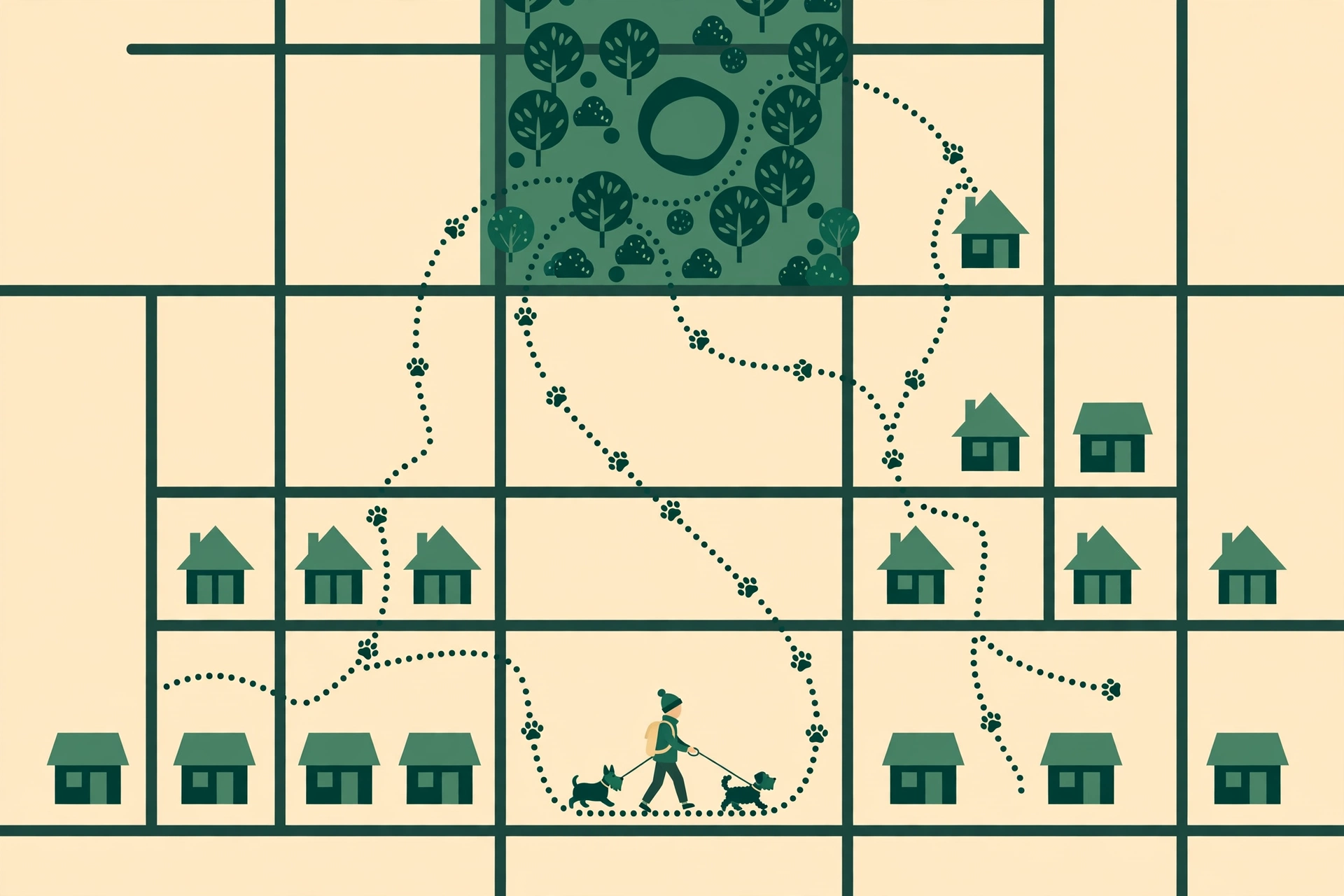
Dog walking is a local search through and through, and the map is won neighbourhood by neighbourhood. A page for each area you genuinely serve — naming the streets, the parks and trails you walk, and the walkers who cover it — ranks for “Brampton dog walker” while a single “areas we serve” list ranks for nothing. Keep each page honest and specific: the routes you walk, the dogs you see there, a photo from a real walk nearby. Thin pages copied neighbourhood to neighbourhood with only the name swapped do not rank and do not convert; one genuine page per area does both. Link each neighbourhood page from your main service pages and your profile’s service area, so a visitor — and a search engine — can follow the map from your company to their street.
5. AI search: the assistant recommending your walker
Owners increasingly start with an AI tool: “best dog walker near me,” “how much does a dog walker cost,” “dog walker for a nervous rescue dog.” The answers are assembled from complete, consistent content — package pages with honest pricing guidance and what a walk includes, walker profiles that describe real people and real experience, your service area stated the same everywhere, and reviews that mention the walker, the dog and the neighbourhood. Walkers with real pages get summarised accurately and recommended by area; walkers with a one-page site leave the assistant nothing accurate to say, and it says something about a competitor instead.
6. Your website: built to book the walk
A dog walking website has one job — move a visitor from comparing to a booked meet-and-greet:
- Meet-and-greet in one tap: booking form and phone visible on every page, working on a phone in under a minute, with the questions answered on the spot (dog’s name, breed, age, temperament, neighbourhood).
- Pricing without fog: per-walk and package guidance, or at minimum how quotes work. Vague pricing is the leading cause of abandoned enquiries from owners who simply want to know if they can afford you.
- Walker profiles beside the pitch: the people, not just the packages — because the owner is choosing who holds the leash.
- Trust signals up front: insurance, background checks, GPS walk updates and after-walk photos — stated plainly, because a stranger is taking someone’s dog out of the house.
7. The seasonal calendar that fills the diary
Dog walking SEO runs on the year. Late summer: back-to-school packages and profile posts live before September routines lock in. Autumn: steady midday walks as commutes settle, with holiday cover published early. Winter: cold-weather care, shorter senior walks and holiday bookings opened before December. Spring: puppy season — new owners searching the week the puppy arrives, and the year’s biggest wave of trial walks. Summer brings longer daylight walks and vacation cover for owners travelling without their dogs. Walkers who run this calendar spend September walking, not wondering where the enquiries went.
8. What to measure so you know it’s working
Measure booked packages per service and per neighbourhood: meet-and-greet requests from each package page, your visibility for “dog walker near me” and “dog walker Brampton,” and the split between one-off walks and recurring packages. Track which pages bring the clients who actually stay — a five-walks-a-week package that renews is worth more than a dozen trial walks that never rebook. Retention is the metric underneath all of it: SEO that fills the diary with owners who book every week shows up next year as a full route, not a full inbox.
Seasonality is the other quiet signal. Note which weeks the September rush and the spring puppy wave actually start in each neighbourhood — then publish next year’s content two weeks earlier, and let your pages and reviews speak to those neighbourhoods by name.
9. Mistakes that quietly cost dog walkers the booking
The recurring ones: one generic “dog walking” page for puppies, seniors and group walks, so specific searches land nowhere. No walker profiles, so the pitch is a faceless company against a competitor’s friendly team page. No photos from real walks, so trust rests on words alone. Service areas listed as a paragraph instead of real pages per neighbourhood. Prices hidden or vague, breeding abandoned enquiries. And silence between seasons — no new walk photos, reviews or posts — so each rush starts from zero against walkers who never stopped.
Frequently Asked Questions (FAQ)
How do dog walkers rank for “dog walker near me”?
With a complete Google Business Profile — dog walking services listed separately, real photos from real walks and steady reviews that name the walker and the neighbourhood — backed by a dedicated page for each service, package and neighbourhood served, each with pricing guidance and a one-tap meet-and-greet path.
Should dog walking packages have separate pages?
Yes. Owners search for exactly what they need — midday walks, puppy visits, senior walks — and each search deserves its own page with its own pricing guidance and booking step. Separate pages rank for each search and convert far better than one combined services page.
Do walker profiles really help SEO?
They help everywhere it counts: they give search engines and AI tools real people to describe, they raise click-through from your profile and pages, and they convert nervous owners who need to see who will hold the leash before they book. A real photo and a real story outperform a generic team page every time.
When should a dog walker publish seasonal content?
Before the rush: back-to-school packages live in late summer, holiday cover published in autumn, and puppy content live before spring. Visibility takes weeks to grow; publishing when the rush is already peaking misses the first wave.
How do dog walkers get reviews that help?
Ask after a great walk — when the owner sees the after-walk photo and their happy dog — with a one-tap link, and make it easy to name the walker, the dog and the neighbourhood. Reply briefly to all of them, and never buy reviews.
Get a free SEO audit of your website
A 120 point crawl, a competitor gap map and a 90 day roadmap, ready in 48 hours. Free, with no obligation.

SEOelinks is a Brampton-based SEO agency helping service businesses across Canada and worldwide win organic search. Our strategists publish the same field-tested playbooks on technical SEO, local visibility and AI search that we run for clients every day.
More about SEOelinks →