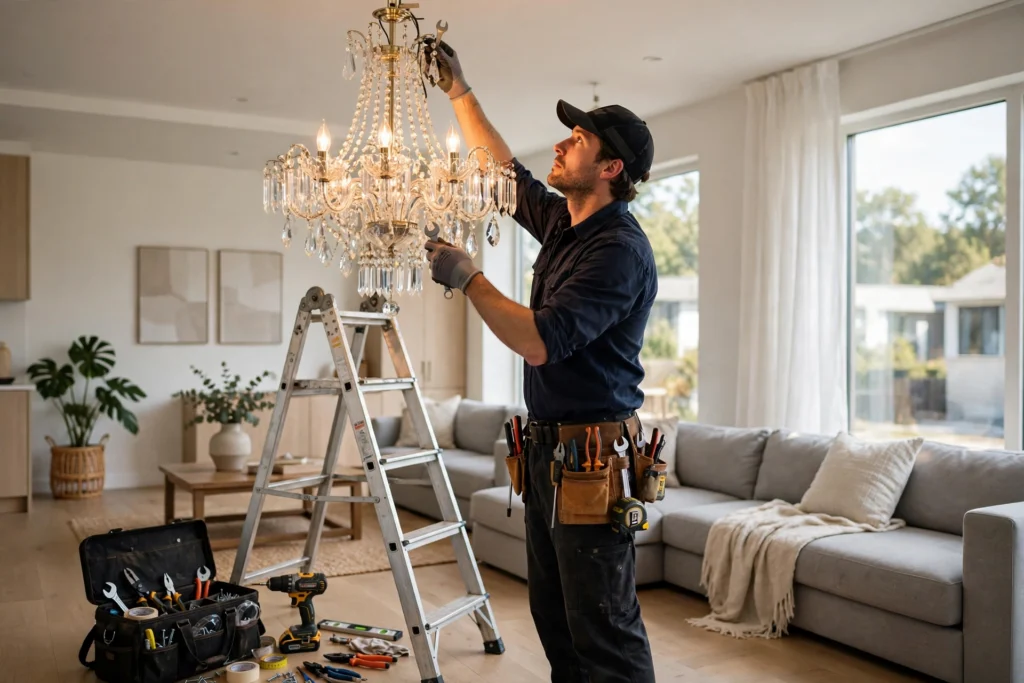
A homeowner choosing a chandelier installer is not browsing — they are standing under a heavy, expensive fitting, wondering who can hang it safely, wire it properly, and leave the ceiling looking perfect. A new crystal chandelier over the dining table, a grand fitting in a double-height foyer, a replacement in a bedroom: the search is local, urgent, and decided in minutes. The company that shows up first, looks careful, and makes booking simple wins the job before the next company is even opened.
This guide covers SEO for chandelier installation companies in 2026: how homeowners search when they need a fitting hung, how pages for each type of chandelier and each room win the searches that matter, how photos of real installations and real homes build trust, and how a company website turns a search into a booked installation — so the next homeowner looking for a chandelier installer finds you first.
1. Start with the map: the homeowner decides on your profile
The shortlist for a chandelier installer forms on Google, mostly on a phone in the room where the fitting will hang, while the homeowner is weighing safety, price and the look of the finished job. Your Google Business Profile is where you make or miss that shortlist:
- Categories: “Lighting contractor” as primary, with “Electrician” or “Lighting store” added only where they honestly describe what you offer.
- Services, listed plainly: chandelier installation, chandelier replacement, ceiling reinforcement, dimmer fitting and crystal cleaning — named the way homeowners search for them.
- Photos of real installations: a crystal chandelier glowing over a dining table, a grand fitting in a foyer, a neat ceiling canopy, so a homeowner can see the work is careful and well finished.
- Hours and service area: working hours and the areas you serve stated clearly, so nobody calls a company that cannot reach their home when they need it.
- A quote in one tap: a call button and a simple quote form, so a homeowner can reach you straight from the search without a second step.
2. One fitting, one page: each search earns its own page
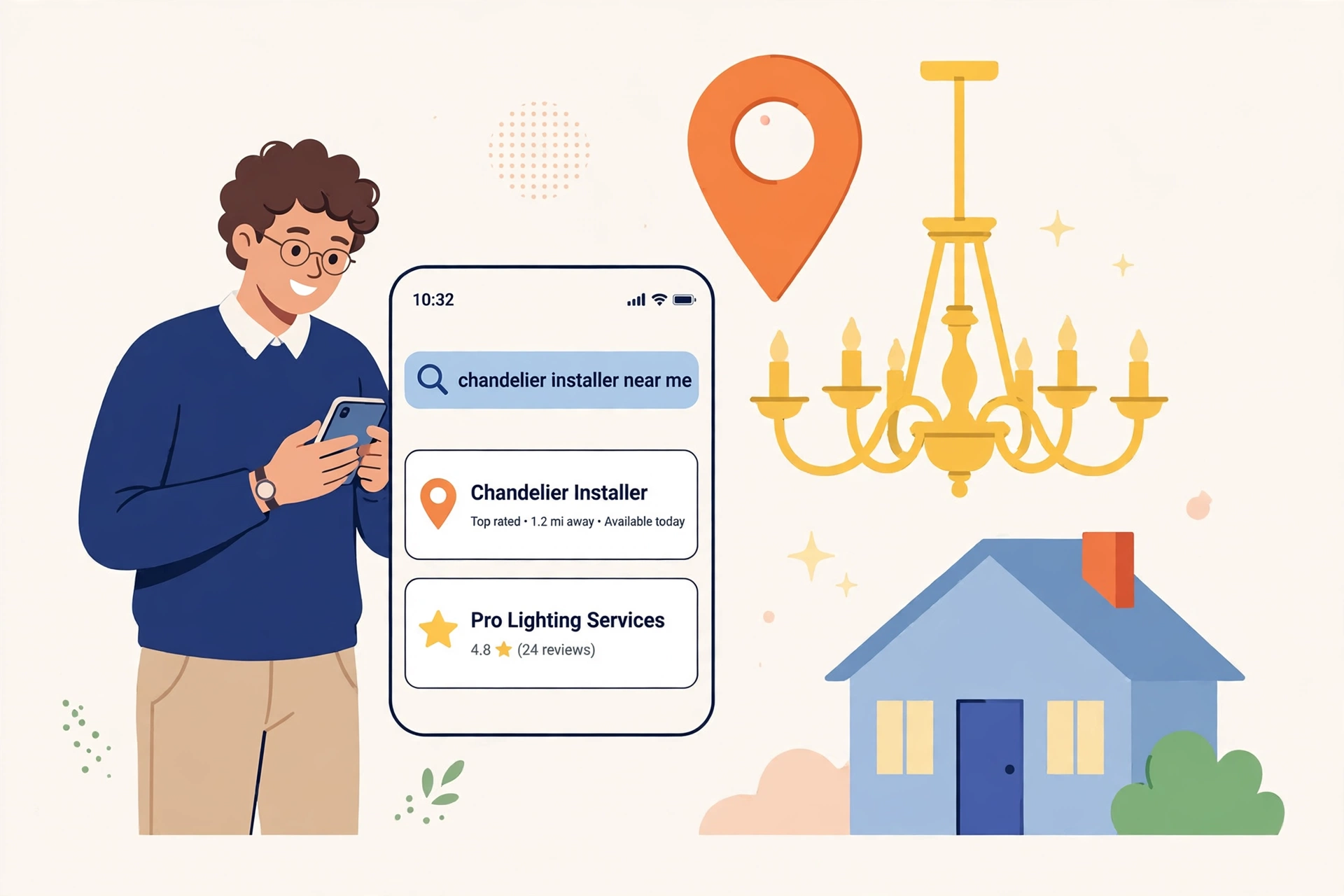
A homeowner searching “crystal chandelier installation” is not the same homeowner as one searching “chandelier installation in a high ceiling” or “replace a chandelier in the dining room.” Each fitting is different, needs different support, and carries a different worry:
- Crystal chandelier pages: written to the homeowner choosing a statement piece — the weight, the ceiling support, and what the installation costs.
- High-ceiling and foyer pages: written to the homeowner with a double-height space — the scaffold, the lift, and the safe way to hang a heavy fitting overhead.
- Replacement and repair pages: written to the homeowner swapping an old fitting — the wiring, the new canopy, and the tidy finish left behind.
- Dining room and bedroom pages: written to the homeowner choosing a fitting for one room — the height, the light, and the dimmer that makes it usable every evening.
Each page carries photos of real installations, the details homeowners actually ask about, and the next step to book a quote. It is the same page-per-search discipline behind electrician SEO — homeowners reward the company that answers their exact fitting, in their exact room, first.
Don’t blur the fittings into one. A homeowner with a heavy crystal chandelier wants a straight answer about ceiling support and safe wiring, not a paragraph that mentions every fitting and explains none. Separate pages let each visitor — and each search — land exactly where they belong.
3. Installation intent vs browsing intent: the two crowds chandelier companies serve
The most valuable chandelier customer is not the one-off installation — it is the homeowner who books a careful fitting, trusts the work, and then calls again for the next room and tells their neighbours to do the same. Chandelier searches sound decisive because they are: “chandelier installer near me,” “chandelier installation cost,” “install chandelier high ceiling,” “chandelier replacement near me.” A page that treats every visitor like a casual browser will not rank for the installation searches, and will not convert the homeowners who do find it.
Build your content around the homeowner ready to book first, and make browsing a clear second path. Answer the questions a homeowner asks before booking: can my ceiling hold this weight, how long will it take, will you clean up after, and what does it cost. Name your fittings plainly and explain the installation in plain language. A page that reads like a careful installer converts; one that reads like a generic listings page does not.
What this looks like in Brampton
Brampton’s chandelier demand follows its streets and its calendar: homeowners across Springdale, Castlemore, Fletcher’s Meadow, Mount Pleasant and Bramalea, where new detached homes, renovated dining rooms and grand foyers generate the same steady stream of installations — a crystal fitting in Springdale, a foyer chandelier in Castlemore, a dining-room replacement in Fletcher’s Meadow. Demand rises through renovation season and the summer, and around the holidays, when relatives visit and the house needs to look its best — and the installers that are visible, findable and quick to answer win the job before the next company is opened.
Word of mouth is the local currency: neighbours tell neighbours first, and reviews that name the fitting and the neighbourhood (“they hung our crystal chandelier in Mount Pleasant, neat ceiling, no mess left behind”) are the deciding evidence for the next homeowner booking an installation. A careful job in one neighbourhood quietly becomes the next five jobs nearby.

4. Service-area pages: the neighbourhood search is the one that pays
A chandelier search is a search with a fitting already bought or chosen. “Chandelier installer near Brampton,” “chandelier installation in Brampton,” “hang chandelier Brampton” — these are the queries that turn into a booked job within days, and they are won by pages that state the area plainly.
A page for each neighbourhood you genuinely serve — naming the home styles, the new subdivisions, the renovated streets nearby — ranks for those searches while a single “service area” paragraph ranks for nothing.
Keep each page honest and specific: the fittings common there, the ceiling heights and home styles nearby, a photo of a real installation in a real home. Timing matters too — renovation season, the summer moves, and the December visits when relatives arrive — because a homeowner who cannot find an installer does not wait. Link each area page from your services page and your profile, so a visitor — and a search engine — can follow the map from your company to their home.
5. AI search: the assistant recommending your chandelier company
Homeowners increasingly start with an AI tool: “chandelier installer near me,” “best chandelier installation company in Brampton,” “how much does chandelier installation cost,” “can my ceiling hold a crystal chandelier.” The answers are assembled from complete, consistent content — fitting pages with honest details, your service area stated the same everywhere, and reviews that mention the fitting and the room. Companies with real pages get summarised accurately and recommended by area; companies with a one-page site leave the assistant nothing accurate to say, and it says something about a competitor instead.
6. Your website: built to turn a search into a booked installation
A chandelier company website has one job — move a visitor from a browsing homeowner to a booked installation:
- Quote up front: the quote form and the phone number visible on every page without scrolling, working on a phone in under a minute.
- An installation without fog: what the fitting needs, how long it takes, and how the ceiling is protected, stated plainly. A homeowner who cannot see the job does not book.
- Photos on every page: real chandeliers, real ceilings, real finished rooms, not buried on a separate page nobody visits.
- Booking in one tap: a call button and a simple form, with the questions answered on the spot (can my ceiling hold it, how long will it take, what does it cost).
7. Reviews: the trust engine that fills the installation calendar
A chandelier installer is judged one home at a time, and reviews are where the next homeowner learns whether the fitting hangs level, the wiring is safe, and the ceiling is left spotless. The moment that matters most is the evening the chandelier first lights up — the fitting glows, the room looks finished, and the ask takes thirty seconds. Ask happy homeowners to mention what actually matters to the next booker: the chandelier they had hung, the room it hangs in, and the neighbourhood where the home sits.
Respond to reviews the way you work in a home — promptly and carefully. A worry about ceiling damage or mess is a chance to show the next reader that concerns get heard, not ignored. Reviews that name the fitting and the area (“they installed our foyer chandelier in Bramalea, level, tidy, on time”) reassure the next homeowner and feed the exact phrases search engines associate with your company.
8. What to measure so you know it’s working
Measure bookings per fitting type and per page: quote requests, calls and enquiries from each chandelier and room page, your visibility for “chandelier installer near me” and “chandelier installation Brampton,” and the split between new installations and replacements. Track which pages bring the homeowners who actually book and return — a foyer fitting plus a dining-room fitting is worth more than a dozen quick enquiries. Booked installations are the metric underneath all of it: SEO that fills the calendar with real jobs shows up next month as a full diary, not a full inbox.
Season is the other quiet signal. Note which weeks renovation season actually peaks and how the holidays move demand — then publish next season’s content earlier, and let your pages and reviews speak to those neighbourhoods by name.
9. Mistakes that quietly cost chandelier companies the next job
The recurring ones: one generic “lighting” page for every fitting, so installation searches land nowhere. No photos of real installations, so homeowners cannot see the work is careful. No area pages, so the neighbourhood search goes to a competitor. Hours out of date on the profile, so a homeowner calling on a Saturday assumes nobody answers. A quote form buried three clicks deep, breeding abandoned enquiries. Reviews never asked for, so the trust signal never builds. Reviews never answered, so the next homeowner assumes nobody is listening. And silence between seasons, so each renovation season starts from zero against companies who never stopped.
Frequently Asked Questions (FAQ)
How do chandelier companies rank for “chandelier installer near me”?
With a complete Google Business Profile — services and hours kept current, real photos of installations in real homes — backed by a dedicated page for each chandelier type and room and a page for each area you serve, each with a one-tap way to request a quote.
Should each chandelier type have its own page?
Yes. A crystal chandelier asks about weight and ceiling support, a high-ceiling fitting asks about scaffolding and safe access, and a replacement asks about wiring and a tidy finish — three different jobs. Separate pages rank for each search and convert far better than one combined lighting page.
How do reviews help a chandelier installer?
Reviews are the trust signal a homeowner books on. Ask the evening the chandelier first lights up, when the fitting glows and the room looks finished, and encourage mentions of the chandelier, the room and the neighbourhood. Those same phrases feed the searches that bring the next homeowner in.
What should a chandelier company put on area pages?
The neighbourhood and home styles you serve, the new subdivisions and renovated streets nearby, the fittings common there, and a photo of a real installation in a real home. Homeowners need answers in days, and a page that gives them is the one that gets the booking.
Do chandelier companies really need a quote page?
Yes — the quote is the search. “Chandelier installer near me” and “chandelier installation cost” are the queries homeowners type when they need a fitting hung, and a page that answers them ranks and books while a vague page sends homeowners to a competitor.
Get a free SEO audit of your website
A 120 point crawl, a competitor gap map and a 90 day roadmap, ready in 48 hours. Free, with no obligation.

SEOelinks is a Brampton-based SEO agency helping service businesses across Canada and worldwide win organic search. Our strategists publish the same field-tested playbooks on technical SEO, local visibility and AI search that we run for clients every day.
More about SEOelinks →