SEO for Beauty Salons in 2026: Fill Every Chair with Local Search
SEO for beauty salons comes down to one simple reality: when someone nearby searches for “balayage near me” or “haircut open Saturday,” your salon needs to show up with enough proof — photos, reviews, a clear way to book — that they choose you over the five other options on the screen. Hair is personal. Clients judge on visuals, specialties, and trust long before they sit in the chair, and almost all of that judgment happens on Google.
This guide walks through exactly how salon clients search, how to turn your Google Business Profile into a booking engine, how to build a review engine that feeds your map rankings, and how service pages and online booking links tie it all together. No fluff — just the pieces that actually move bookings.
How Salon Clients Actually Search
Salon searches fall into three patterns, and your SEO needs to catch all three.
The urgent search: “nail salon open now,” “haircut open Saturday,” “emergency hair fix near me.” These searchers have a phone in one hand and a deadline in the other. They barely look at websites — they scan the map pack, check who’s open, glance at ratings, and tap call or book. If your hours are wrong or your booking link is missing, you lose them in seconds.
The service search: “balayage near me,” “bridal makeup artist Brampton,” “curly hair specialist.” This is your highest-value traffic. Someone searching a specific service has already decided what they want — they’re choosing who, not whether. Salons that build dedicated pages for each major service (balayage, keratin, color correction, bridal) capture these searches at far higher conversion rates than a generic homepage ever will.
The research search: before-and-after photos, “is balayage worth it,” stylist portfolios. This is where your Instagram, your photo galleries, and your content do the persuading. A client might follow your work for weeks before booking — make sure every one of those touchpoints is connected to something searchable.
One stat that should focus your priorities: Google reported in 2024 that 76% of people who search for a local business on their phone visit that business within 24 hours. Salon clients are the textbook case — the search is the buying decision.
Your Google Business Profile Is Your Second Website
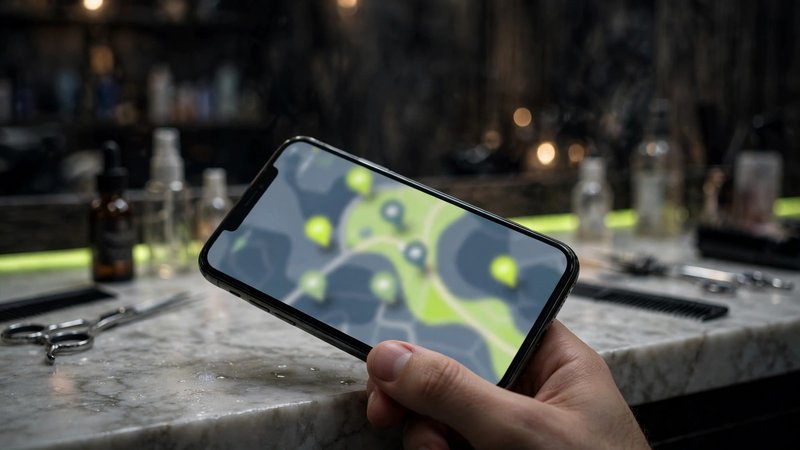
When someone searches “haircut near me,” they’re not going to your website first. They’re looking at the map pack — those three business listings with photos, ratings, and a call button at the top of local results. Your Google Business Profile decides whether you’re in that pack, and how strong your listing looks when you are.
Most salon owners set up their profile once, forget about it, and wonder why they’re not ranking. The salons that dominate local search treat it as an active channel. Here’s what “complete” actually means:
Categories, services, and attributes
Pick your primary category carefully — “Hair salon,” “Beauty salon,” “Nail salon,” or “Day spa” — then add every relevant secondary category. List each service you offer with a description and price range. Fill in attributes that matter to salon clients: “women-led,” “LGBTQ+ friendly,” wheelchair accessibility, free Wi-Fi, whatever applies. These attributes increasingly appear as filters in local search.
Photos: your most underused ranking signal
Salon clients book with their eyes. Upload 3 to 5 fresh photos every week: before-and-after transformations, your stylists at work, the interior, the products you use. Photo recency and volume are two of the fastest-moving local signals you control directly — listings with more than 100 photos receive dramatically more calls than sparse ones, according to Google’s own published data. Your phone camera is fine. Consistency beats production value.
Posts, offers, and Q&A
Use GBP posts the way you’d use social media: seasonal promotions, new services, holiday hours, last-minute openings. Answer the Questions & Answers section yourself before strangers do — seed it with the questions clients always ask (parking, pricing, how long a balayage takes) and answer them in your own words. An unanswered Q&A section is an invitation for competitors or trolls.
Hours — including the ones people forget
Incorrect hours are one of the fastest ways to lose a client and earn a one-star review in the same afternoon. Keep regular hours accurate, and set special hours for holidays well in advance. “Open now” searches are pure gold for salons; if Google thinks you’re closed, you don’t exist for that searcher.
The Review Engine That Feeds Your Map Rankings
Reviews do double duty for salons: they build trust with potential clients and they feed Google’s local ranking signals. Reviews that mention specific treatments or services can help you appear in more relevant searches — a review that says “best balayage in Brampton” is doing keyword work for you.
Build the engine into your appointment flow:
- Ask right after the appointment, while the client is still happy and looking in the mirror. A simple “would you mind leaving us a Google review?” at checkout beats any email drip.
- Make it frictionless. A QR code at the front desk or a short link in your booking confirmation text takes the client straight to the review form. Every extra tap loses people.
- Encourage specifics, never scripts. Ask clients to mention the service and their stylist — “Sarah’s balayage” in a review helps you rank for both. Never offer incentives for reviews; it violates Google’s policies and clients can smell a bribed review.
- Respond to every review. Thank the happy clients by name. For negative reviews, respond politely and professionally, acknowledge the issue, and take the resolution offline. Unanswered reviews — good or bad — signal a business that isn’t paying attention.
Review velocity matters as much as the star rating. A salon with 200 reviews and nothing new in six months looks dormant next to a competitor with 120 reviews and five new ones this week. The engine never stops — it just becomes habit.
Service and Location Pages That Catch Specific Searches
Your homepage can’t rank for everything. The salons winning local search in 2026 build one dedicated page per major service, written in the exact words clients type.
One page per service
“Balayage in Brampton,” “keratin treatment,” “bridal hair and makeup,” “men’s fade” — each deserves its own page with real substance: what the service involves, how long it takes, price ranges, aftercare, FAQs, and before-and-after photos. A thin page with a booking button won’t cut it; Google (and clients) reward pages that actually answer questions.
Service × neighborhood pages
If you serve multiple areas, build service pages with genuine local relevance — not cookie-cutter pages with the suburb name swapped in. A “bridal makeup artist in downtown Brampton” page should mention the venues you work at, the hotels you travel to, and real local details. Thin location-swapped pages are exactly what Google’s spam filters are built to catch.
Stylist profile pages
This is the piece most salons skip, and it’s a genuine differentiator. One page per stylist: their specialties (“curly hair specialist,” “bridal expert”), their training and certifications, a photo gallery of their work, and client testimonials about them specifically. These pages do three jobs at once — they rank for stylist-name searches, they demonstrate real expertise (the E-E-A-T signals Google and AI systems both look for), and they give clients a reason to request a specific person, which builds loyalty.
Online Booking Links and Schema
Every step between “I want this salon” and “I’m booked” is a place to lose the client. Tighten the path.
Put a direct booking link in your Google Business Profile. GBP has a dedicated booking field — paste your direct booking URL there. This captures appointments at the map-pack stage, before the searcher ever reaches your website. A ten-minute setup that immediately reduces friction.
Keep your website as the hub, not a marketplace page. Third-party booking platforms are fine as a channel, but your own site should be the canonical home for booking — it’s the asset you control, and it keeps the SEO value on your domain. Link your Instagram portfolio to your service and stylist pages so visual proof and search visibility reinforce each other instead of living in separate worlds.
Add schema markup. Structured data helps Google understand exactly what your business is. At minimum, implement LocalBusiness schema (the HairSalon or BeautySalon subtype) with your name, address, phone, opening hours, price range, and geo coordinates. Add opening-hours specification so “open now” searches resolve correctly, and consider FAQ schema on your service pages for the questions clients always ask. It’s invisible to visitors and speaks directly to search engines.
Measure what matters. Connect Google Search Console and GA4, then tag your booking button as a conversion event. Without this, you can’t tell which SEO actions are producing real appointments — and you’ll keep guessing instead of doubling down on what works. Track calls, direction requests, and bookings separately; for a salon, a phone call is a conversion.
Don’t Forget the AI Search Layer
Tools like ChatGPT increasingly recommend local businesses, and they don’t read your site the way Google does. They analyze trust signals across the internet: your qualifications, your reviews, your website content, and whether your business details are consistent everywhere they appear. Salons with strong, consistent signals — the same name, address, and phone number on your site, your GBP, and your citations — are the ones AI systems recommend. Everything in this guide feeds that layer too.
The Bottom Line
Salon SEO in 2026 isn’t complicated, but it is relentless. A complete Google Business Profile treated as an active channel. Fresh photos every week. A review engine built into checkout. One real page per service, per stylist, per neighborhood you serve. A booking path with no friction. Schema markup doing the quiet work underneath. Do these consistently for 90 days and the chairs start filling — because when someone nearby searches, you’re the obvious choice on the screen.
Want help putting it together? We’re SEOelinks — an SEO agency built in Brampton, Canada, serving clients worldwide, and local SEO is what we do every day. Request a free audit and we’ll show you exactly where your salon stands and what to fix first.

SEOelinks is a Brampton-based SEO agency helping service businesses across Canada and worldwide win organic search. Our strategists publish the same field-tested playbooks on technical SEO, local visibility and AI search that we run for clients every day.
More about SEOelinks →