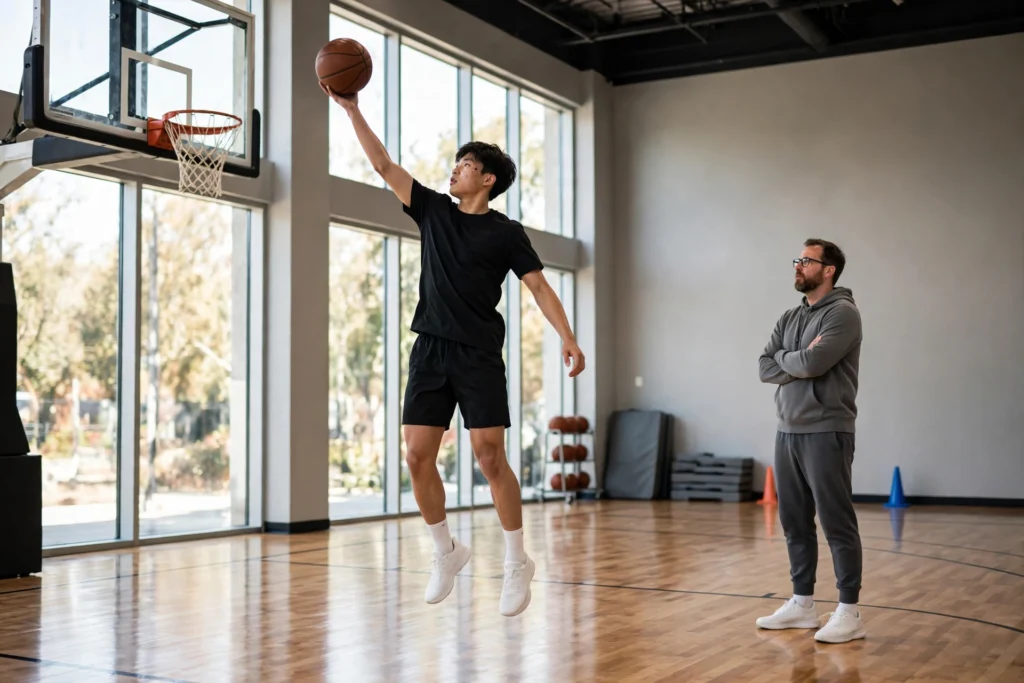
Someone looking for a basketball training academy is not browsing — they are choosing where to spend the next season, often on a tight schedule, while they compare coaches, programs, schedules and prices, and look for proof of real skill development, a safe gym and honest fees. The academy that shows up first, shows real photos of its court and its players training, and makes registration simple earns the sign-up before the next academy is even opened.
This guide covers SEO for basketball training academies in 2026: how players and parents search when they want better skills, how pages for each program win the searches that matter, how a straightforward website builds trust before the first session, and how an academy turns a search into a player that trains with you all season — so the next person looking for basketball training finds you first.
1. Start with the map: the player decides on your profile
The shortlist for a basketball academy forms on Google, mostly on a phone, while a player or parent is weighing coaches, programs and the gym on offer. Your Google Business Profile is where you make or miss that shortlist:
- Categories: “Basketball Club” as primary, with “Sports Club” or “Basketball Court” added only where they honestly describe what you offer.
- Programs listed plainly: youth skills training, elite academy programs, summer camps, private coaching and adult leagues — named the way players and parents search for them.
- Photos of the real gym: the court, the training drills, your coaches at work, and your players improving, so a family can see the quality before making contact.
- Hours and contact details: your training hours and a phone number that is answered, stated clearly, so nobody waits days for a reply when a season is near.
- Registration in one tap: a call button and a simple registration link, so a player or parent can ask a question or sign up straight from the search without a second step.
2. One program, one page: each search earns its own page
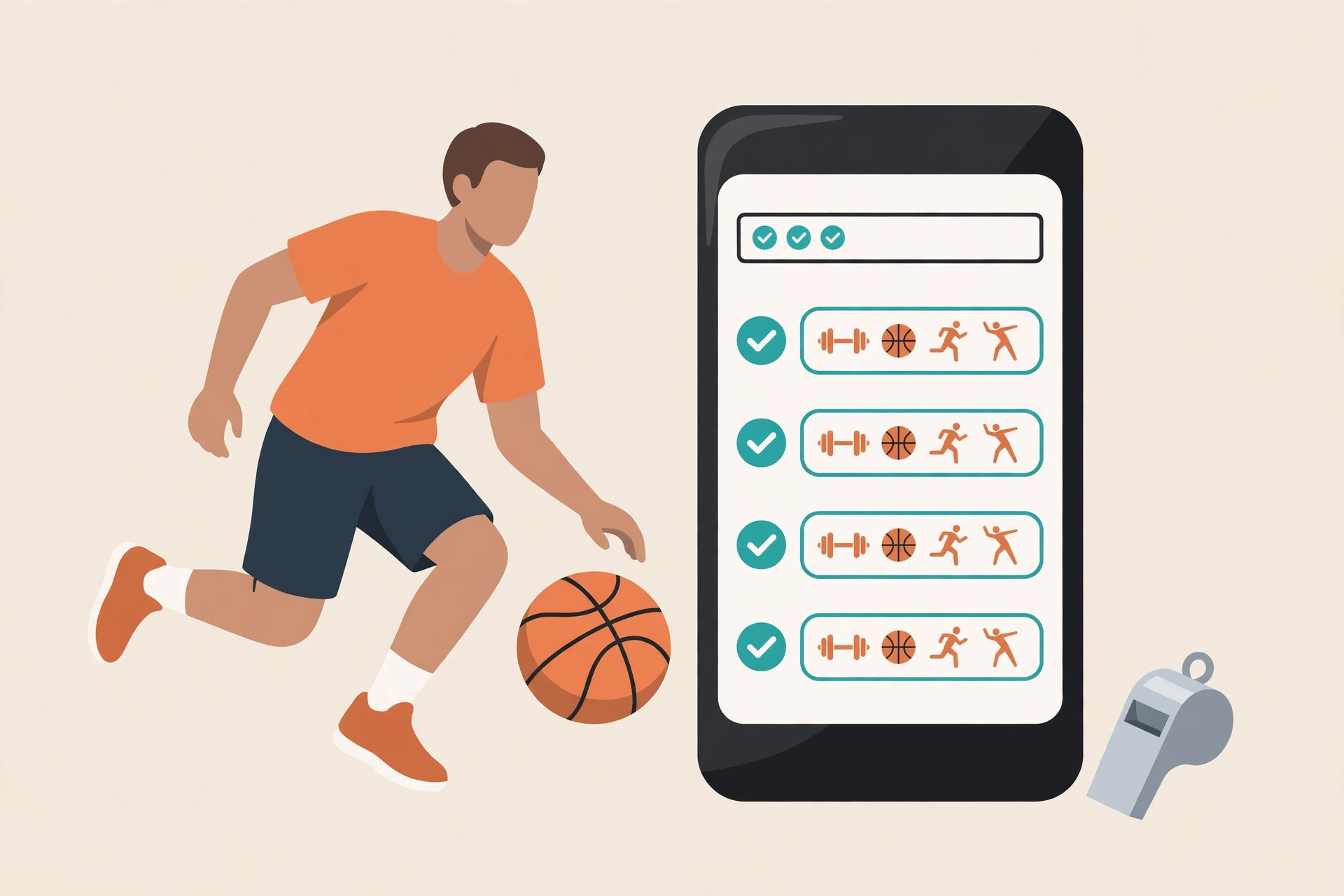
A parent searching “youth basketball training near me” is not the same visitor as one searching “basketball summer camp Brampton” or “elite basketball academy near me” or “private basketball coach Brampton” or “adult basketball league Brampton.” Each program is different, carries different questions, and deserves its own page:
- Youth skills pages: written to the parent wanting fundamentals — the age groups, the drills, the coaches and how progress is tracked.
- Elite academy pages: written to the serious player chasing the next level — the tryouts, the training load, and the path to school and rep teams.
- Summer camp pages: written to the parent planning the break — the dates, the daily schedule, and what each camper takes home.
- Private coaching and adult league pages: written to the player after focused work — the one-on-one format, the session times, and how to join a team.
Each page carries photos of your court and your players training, the details families actually ask about, and the next step to call or register. It is the same page-per-search discipline behind gym SEO — players reward the academy that answers their exact goal, in their exact moment, first.
Don’t blur the programs into one. A parent asking what youth training covers wants an answer about youth training, not a paragraph that mentions every program and explains none of them. Separate pages let each visitor — and each search — land exactly where they belong.
3. Parents and players: the two sides basketball academies serve
The most valuable sign-up is not the one-off question about a single session — it is the player who finds you, improves, and trains with you all season, bringing a teammate with them. Basketball searches sound urgent because they are: “basketball training near me,” “best basketball academy Brampton,” “youth basketball near me,” “basketball camp near me.”
Build your content around the parent signing up a young player first, and make the adult player training for themselves a clear second route. Answer the questions families ask before the first session: what ages do you coach, who are the coaches, what does a week look like, and what does it cost. Name your programs plainly and explain training in plain language. A page that reads like a steady, knowledgeable guide converts; one that reads like a generic listings page does not.
What this looks like in Brampton
Brampton’s basketball demand follows its neighbourhoods: players across Springdale, Castlemore, Fletcher’s Meadow, Mount Pleasant and Bramalea, where school seasons, weekend practices and summer camps all send families looking for a basketball academy they can trust close to home. Demand peaks before the school season and through the summer, with tryouts and camp registrations filling the schedule, and the academies that are visible, findable and quick to answer when the search begins earn the registration before the next academy is opened.
Word of mouth is the local currency: players tell other players first, and reviews that name the program and the neighbourhood (“youth training in Springdale, great coaches, my son improved fast”) are the deciding evidence for the next family choosing a basketball academy. A well-run program in one neighbourhood quietly becomes the next five sign-ups nearby.

4. Service-area pages: the neighbourhood search is the one that pays
A basketball academy search is a search with a registration already attached. “Basketball training near Brampton,” “basketball academy in Brampton,” “youth basketball near me Brampton” — these are the queries that turn into a sign-up within days, and they are won by pages that state the area plainly. A page for each neighbourhood and landmark you genuinely serve — naming the streets, the schools and the routes nearby — ranks for those searches while a single “location” paragraph ranks for nothing.
Keep each page honest and specific: the programs common there, the parking and transit nearby, a photo of your gym at its best. Season deserves its own attention too — the pre-season rush, the summer camp surge, and the quieter months when players plan ahead — because a family that cannot find a basketball academy at their hour does not wait, and does not leave a kind review. Link each area page from your program pages and your profile, so a visitor — and a search engine — can follow the map from your front door to their reason for registering.
5. AI search: the assistant recommending your basketball academy
Players and parents increasingly start with an AI tool: “basketball training near me,” “best basketball academy in Brampton,” “youth basketball near Brampton,” “basketball summer camp Brampton.” The answers are assembled from complete, consistent content — program pages with honest details, your location and training hours stated the same everywhere, and reviews that mention the program and the result. Academies with real pages get summarised accurately and recommended by area; academies with a one-page site leave the assistant nothing accurate to say, and it says something about a competitor instead.
6. Your website: built to turn a search into a registration
A basketball academy website has one job — move a visitor from a player searching for training to a player that trusts your academy:
- Registration up front: the registration button and the phone number visible on every page without scrolling, working on a phone in under a minute.
- Programs without fog: what each program covers, who coaches it, and the schedule and fees behind it, stated plainly. A family that cannot see a clear first step does not register.
- Photos on every page: the court, the drills and the coaches, not buried on a separate page nobody visits.
- Contact in one tap: a message link and a phone number, with the questions answered on the spot (what ages do you coach, who are the coaches, what does a week look like, what does it cost).
7. Reviews: the trust engine that brings the next player
A basketball academy is judged one season at a time, and reviews are where the next family learns whether the coaching was strong, the drills were useful, and the players improved. The moment that matters most is right after a great session or a visible improvement — the player is proud, the parent is happy, and the ask takes thirty seconds. Ask families to mention what actually matters to the next caller: the program their child joined, the way the coaches taught, and the neighbourhood where the gym sits.
Respond to reviews the way you run your academy — promptly and with care. A worry about scheduling or fees is a chance to show the next reader that concerns get heard, not ignored. Reviews that name the program and the area (“elite training in Bramalea, strong coaches, my daughter made the rep team”) do double duty: they reassure the next family and they feed the exact phrases search engines associate with your basketball academy.
8. What to measure so you know it’s working
Measure registrations per program and per page: calls, message clicks and sign-ups from each program page, your visibility for “basketball training near me” and “youth basketball Brampton,” and the split between families signing up a first session and players returning for another season. Track which pages bring the players who actually stay too — a player that trains with you all season and brings a teammate is worth more than a dozen one-off enquiries. A full gym is the metric underneath all of it: SEO that fills your court with real players shows up next month as a full book, not a full inbox.
Season is the other quiet signal. Note which weeks the pre-season rush and the summer camp surge actually peak and how the quieter months move demand — then publish next season’s program content earlier, and let your pages and reviews speak to those neighbourhoods by name.
9. Mistakes that quietly cost basketball academies the next sign-up
The recurring ones: one generic “programs” page for every offering, so urgent searches land nowhere. No photos of the court, so families cannot see the training or the coaching. No area pages, so the neighbourhood search goes to a competitor. Training hours out of date on the profile, so a family ready to register finds nobody there. Reviews never asked for, so the trust signal never builds. Reviews never answered, so the next family assumes nobody is listening. And silence between seasons — no new program information, reviews or posts — so each new season starts from zero against academies who never stopped.
Frequently Asked Questions (FAQ)
How do basketball academies rank for “basketball training near me”?
With a complete Google Business Profile — programs and hours kept current, real photos of your court and your coaches — backed by a dedicated page for each program and a page for each area you serve, each with a one-tap way to call or register.
Should each basketball program have its own page?
Yes. A parent wanting youth training needs the age groups and the drills explained, a serious player wanting the elite academy needs the tryouts and the training load covered, and a parent wanting a summer camp wants the dates and the daily schedule answered — three different visitors with different questions. Separate pages rank for each search and convert far better than one combined programs page.
What do players and parents look for on a basketball academy website?
Honest photos of the court and training, a clear description of each program, the coaches, the schedule and the fees, and a simple way to register or call. Families are choosing a place they trust with their child’s season — a website that feels energetic, open and easy to join earns the visit.
How do reviews help a basketball academy?
Reviews are the trust signal a family calls on. Ask right after a great session or a visible improvement, when the player is proud and the parent is happy, and encourage mentions of the program, the way the coaches taught and the neighbourhood. Those same phrases feed the searches that bring the next player in.
What should a basketball academy put on area pages?
The neighbourhood and landmarks you serve, the streets, schools and routes nearby, the programs common there, and a photo of your gym at its best. Families need answers quickly, and a page that gives them is the one that gets the registration.
Get a free SEO audit of your website
A 120 point crawl, a competitor gap map and a 90 day roadmap, ready in 48 hours. Free, with no obligation.

SEOelinks is a Brampton-based SEO agency helping service businesses across Canada and worldwide win organic search. Our strategists publish the same field-tested playbooks on technical SEO, local visibility and AI search that we run for clients every day.
More about SEOelinks →