
Ask Google’s AI Mode a simple question — “best running shoes for flat feet” — and something invisible happens before the answer appears. Related reading: our guide to getting cited by AI search. Behind the scenes, the system splits your one question into a fan of narrower searches: shoes for flat feet and wide feet, stability shoes explained, price ranges, common mistakes, what podiatrists say. It runs those searches simultaneously, reads the results, and writes one answer from all of it. Google calls this technique query fan-out, and it’s the mechanism deciding which websites get cited in AI answers in 2026.
If your content strategy still targets one keyword per page, fan-out changes the math. You can also find SEOelinks on GoodFirms. A page no longer has to rank for the exact question a user typed — it has to be the best answer to one of the sub-questions the machine asked on the user’s behalf. Here’s how fan-out works, what the current research shows, and what to do about it.
1. What query fan-out actually is
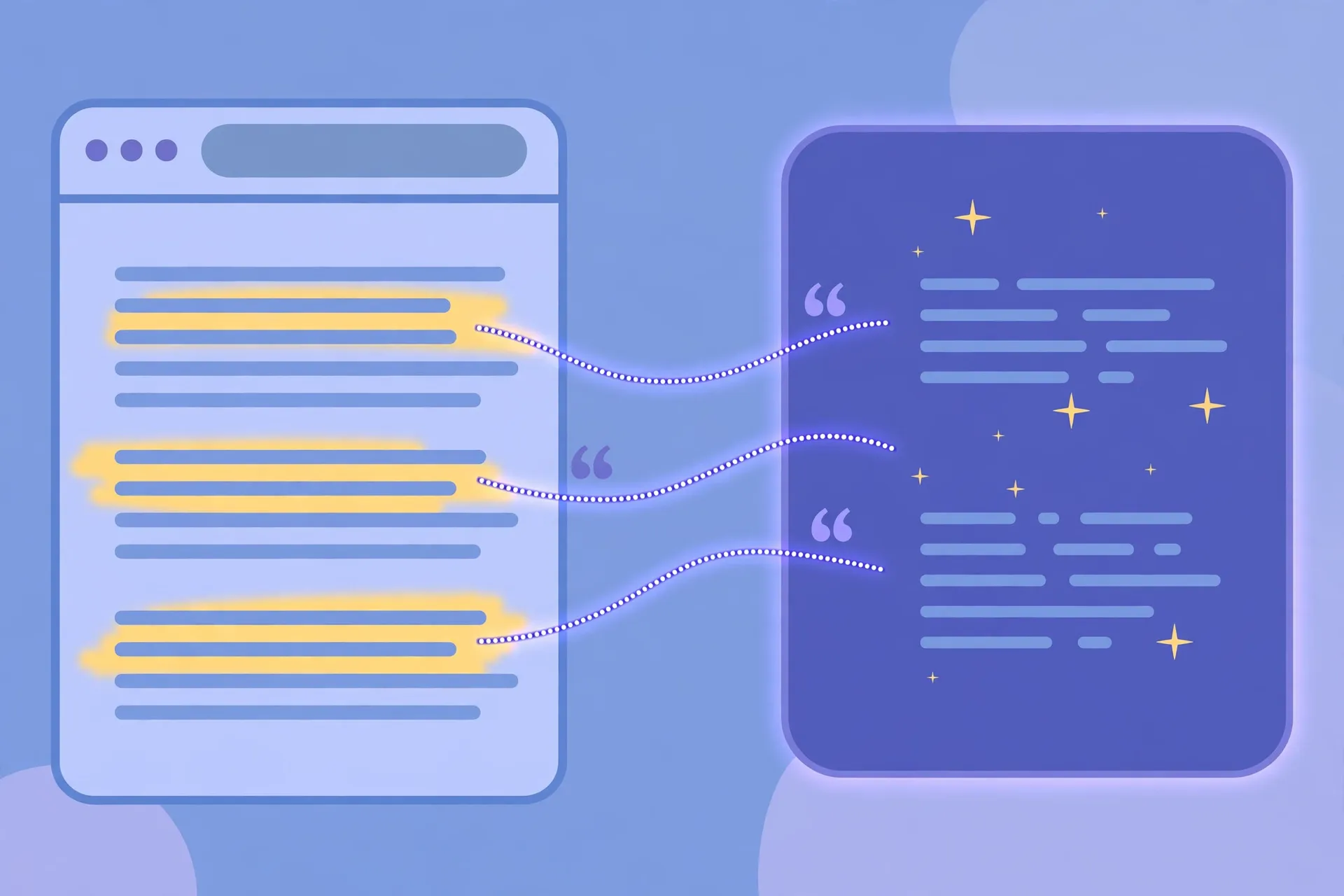
Google’s own documentation says AI Overviews and AI Mode “may use a query fan-out technique, issuing multiple related searches across subtopics and data sources, to develop a response.” The model interprets your intent, generates a set of concurrent sub-queries — definitions, comparisons, prices, reviews, alternatives, follow-ups you’re likely to ask next — retrieves results for each, and synthesizes a single answer with citations.
Three details matter for site owners:
- It’s a retrieval widening, not a replacement. AI Mode still uses Google’s core ranking systems to fetch pages. Fan-out widens the pool of candidate pages; it doesn’t discard classic SEO.
- A page can be cited for a question it doesn’t rank for. If your page is the cleanest answer to a fan-out sub-query, it can be pulled into an AI answer for a head query where you’re nowhere on page one. Industry studies have found that only a minority of AI Mode citations match the top-10 results for the original query.
- Fan-outs are unstable. Research on AI Mode prompts shows the same question generates different sub-queries on different runs — many appear only once. You cannot reverse-engineer a fixed list; you have to cover the topic’s real sub-questions well.

2. How many searches happen behind one question?
Studies measuring AI Mode (which runs on Google’s Gemini models) typically find somewhere between 5 and 11 sub-queries per prompt, with broader or research-heavy questions triggering more, and Deep Search-style features issuing far more. ChatGPT and Perplexity also rewrite and expand queries, generally into fewer sub-searches. The exact counts shift as models change, so treat them as an order of magnitude, not a spec: one user question now routinely means a dozen machine questions.
The practical consequence: visibility used to be measured one keyword at a time. Now your content competes in a cluster of related intents simultaneously — the question asked, the comparisons implied, the price question behind it, the “best for beginners” variant, the local variant. Pages that cover the main query and its natural fan-out have been measured as far more likely to be cited in AI Overviews than pages ranking for the main query alone.
3. What fan-out rewards: passages that answer sub-questions cleanly
Because the system retrieves at the passage level, the unit that wins is often a section, not a page. Pages that perform well under fan-out tend to share traits:
- Subheadings that are real sub-questions. A section titled exactly like something a person would ask (“How much does X cost?”, “X vs Y: what’s the difference?”) is trivially matchable to a fan-out query.
- Self-contained answers. Each section should make sense if lifted out alone — define terms inline, name the subject instead of relying on “it” and “this,” and put the direct answer in the first sentences.
- Specifics over summary. Numbers, prices, timeframes, named options and conditions are what sub-queries hunt for. Vague coverage of everything retrieves for nothing.
- Coverage across the topic, not keyword variants. One strong page that genuinely answers the six questions around a topic beats six thin pages each chasing a phrasing — and Google has warned that mass-producing pages for every query variation is a spam-policy violation, not a strategy.
4. A practical workflow for finding your fan-out
You can’t see Google’s sub-queries for your topics — Search Console doesn’t expose them. But you can approximate the fan-out well enough to plan content:
- Start with the real questions. Pull “People also ask” results, related searches, your Search Console queries, and the questions customers ask by phone, email and chat. Customers’ natural follow-ups are the raw material fan-out is made of.
- Ask the AI tools yourself. Run your key prompts in AI Mode, ChatGPT and Perplexity and read the answers like a diagnostic: which sub-topics did the answer cover? Which sources got cited, and for which claims? Gaps between what the answer covers and what your site says are your content roadmap.
- Map each topic as a tree, not a keyword. For every core topic, list the definitional question, the cost question, the comparison questions, the local question, the beginner question and the troubleshooting question. If a branch is missing content, that’s a gap an AI answer will fill with a competitor.
- Check Bing Webmaster Tools too — it exposes “grounding queries,” the phrases its AI used when retrieving sources, which is the closest direct look at fan-out data any major engine currently offers.
5. What not to do
Fan-out tempts people into manufacturing hundreds of near-identical pages, one per imagined sub-query. Don’t. Google treats content mass-produced to manipulate rankings or AI responses as scaled content abuse, and the pages wouldn’t work anyway: fan-out retrieval leans on semantic relevance and passage quality, not exact-match duplication. The winning move is unglamorous — know your topic’s real question tree and answer it better than anyone, in pages structured so a machine can lift the right passage in seconds.
This is the shift we’re helping clients navigate at SEOelinks, built in Brampton, Canada and serving clients worldwide: from ranking pages for keywords to being the source AI systems retrieve when they break your customers’ questions apart. The businesses that adapt their content structure now will be the ones cited while competitors are still counting keyword positions.
6. A worked example: one prompt, a dozen searches
Make it concrete. A homeowner types into AI Mode: “should I replace my furnace or repair it?” They receive one composed answer with a few citations. The fan-out behind it plausibly ran searches like:
- furnace lifespan how many years
- signs a furnace needs replacing vs repairing
- cost to replace a furnace 2026
- furnace repair cost average
- the 5,000 rule for furnace repair decisions
- energy savings new high-efficiency furnace
- furnace replacement rebates Canada
- best time of year to replace a furnace
Now look at the heating company’s website that “targets” this topic: a single services page saying they do repairs and replacements, with a phone number. Which of those eight sub-queries could it possibly be retrieved for? Perhaps the first — competing with every manufacturer and media site on the internet. The competitor across town, whose site has a furnace lifespan guide, a repair-vs-replace decision page with the actual cost ranges, and a rebates page updated for this year, can be retrieved for six of the eight — and cited in the answer the homeowner actually reads. Neither company “ranked for the keyword.” One of them covered the fan-out. That’s the entire game, and it’s winnable by ordinary businesses because the sub-questions are just the questions customers were always asking — on the phone, at the counter, in the sales call. Fan-out didn’t invent new demand; it made the machine ask your customers’ questions at scale, in parallel, every time.
7. Fan-out is local, too
Location bends the fan-out. Ask an AI assistant for “best dentist for implants” from a phone in Brampton and the sub-queries silently localize — implant cost in Ontario, dentists in Brampton with reviews, payment plans, recovery time. The sources retrieved are a mix of national explainers (for the generic sub-questions) and local businesses (for the local ones). Local businesses usually can’t win the generic branches and shouldn’t try. They win by being the strongest answer on the local branches: the profile with complete services and reviews, the page with real local pricing context, the FAQ that answers “how much does this cost here.” When you audit your AI visibility, audit it from your customers’ location, with their likely prompts — the fan-out you need to cover is the one generated in your market, not the one from a blog post written about another country.
8. How to tell if it’s working
Fan-out has a measurement problem: the most important queries in your market are ones Google doesn’t show you. Work with proxies. Search Console’s generative AI reporting shows where your pages surface in AI features; brand-level AI trackers can sample your key prompts across tools on a schedule and record whether you’re cited and for which claims. Do the manual version too — once a month, run your ten most valuable prompts in AI Mode and one or two other assistants from your market, and log three things: were you cited, who was cited instead, and which sub-questions the answer covered that your site doesn’t. That log, kept honestly for two quarters, is a better content strategy document than most keyword reports. Expect citation patterns to wobble run to run — fan-outs are unstable by design — and judge trends over months, not days.
Frequently Asked Questions (FAQ)
What is query fan-out in simple terms?
It’s how AI search engines like Google AI Mode handle your question: instead of running one search, they split it into several related sub-searches — prices, comparisons, definitions, alternatives — run them all at once, and write one answer from everything retrieved.
Does query fan-out replace traditional SEO?
No. AI Mode retrieves pages using Google’s core ranking systems, so classic fundamentals still decide the candidate pool. Fan-out changes what else matters: covering the sub-questions around your topic, in passages an AI can lift and cite.
How can I find the fan-out queries for my topic?
Not directly — Google doesn’t publish them. Approximate them with People Also Ask, related searches, Search Console queries, real customer questions, and by studying which sub-topics and sources appear when you run your key prompts in AI tools. Bing Webmaster Tools’ grounding queries offer a partial direct view.
Should I create a page for every possible sub-query?
No. Google classifies mass-produced variation pages as scaled content abuse. Cover each real sub-question well — often as a clearly headed section within a strong page — rather than spawning thin duplicates.
Why does fan-out matter for local businesses?
Because AI assistants answer “best [service] near me” questions by fanning out into price, reviews, specialties and neighbourhood sub-queries. A local business whose site and profile answer those specifics gets cited in the answer — the competitor with one generic services page doesn’t exist as far as the answer is concerned.
Get a free SEO audit of your website
A 120 point crawl, a competitor gap map and a 90 day roadmap, ready in 48 hours. Free, with no obligation.

SEOelinks is a Brampton-based SEO agency helping service businesses across Canada and worldwide win organic search. Our strategists publish the same field-tested playbooks on technical SEO, local visibility and AI search that we run for clients every day.
More about SEOelinks →