
Most med spa owners don’t have a traffic problem. They have an appointment-book problem — the right people search for treatments in your city every single day, and the clinics that show up first get the consultations. Med spa SEO is the work of making sure your clinic is the one they find, trust, and book with.
Why med spa SEO isn’t generic local SEO
Plenty of local SEO advice treats every business the same. Med spas aren’t the same. Someone searching “lip filler near me” or “laser hair removal cost” is usually days — sometimes hours — away from booking. That’s about as high-intent as local search gets, which is exactly why the competition for those clicks is fierce. In most cities, a half-dozen clinics are fighting over the same map pack.
There’s also a trust gap you don’t see with, say, pizza shops. Nobody needs to trust a pizza place with their face. Your prospects are handing over their appearance to a stranger, so everything they find about you online — your reviews, your photos, your before-and-afters, the tone of your website — gets weighed like evidence. Medical spa SEO has to win on visibility and on credibility at the same time.
And then there’s the money question every owner asks: “Should I just run Google Ads instead?” Ads buy you speed, and there’s nothing wrong with them. But paid clicks in the aesthetics space are notoriously expensive, and the moment you pause the budget, the appointments stop. SEO is the slower channel that compounds — the map pack presence and the treatment pages you build this year keep booking consultations next year. In practice, the clinics that do best run both, and let SEO gradually carry more of the load.
Your Google Business Profile is the appointment engine
For “med spa near me” and most treatment searches, the map pack sits above everything else on the page — including on mobile, where most of these searches happen. Your Google Business Profile is effectively your homepage for local search. People call, get directions, and read reviews without ever touching your website. If your profile is thin or neglected, you’re invisible exactly where it matters most.
Get the categories and services right
Your primary category should be Medical Spa — full stop. That single choice tells Google what you are more clearly than anything else on the profile. Then add secondary categories only for services you genuinely offer: Skin Care Clinic and Laser Hair Removal Service are the common ones. Don’t stack categories you can’t back up; a mismatch between your categories and your actual services creates confusion, not coverage.
Then fill out your services list completely, using the treatment names people actually search for — Botox, dermal fillers, microneedling, chemical peels, laser hair removal. This is how you show up for treatment-specific searches, not just “med spa near me.” A common worry is that listing everything makes you look unfocused. It doesn’t. Google matches queries to services, so a complete list means more ways for the right searchers to find you. If you’re working through the broader map pack fundamentals, our map pack checklist walks through the full setup step by step.
Photos, posts, and the Q&A section everyone ignores
Upload real photos of your facility and your staff — treatment rooms, the reception area, the team. Prospects are choosing who to trust with their face; stock photos of models don’t build that trust, and in practice they can actively undermine it. Add new photos regularly, not once at setup.
Use Google Posts for things with a shelf life: a seasonal promotion, a new treatment launch, a reminder that laser season is coming. They expire, so a dead posts feed quietly signals a dead business. And check your Q&A section. Anyone can ask questions there — including competitors’ fans — and Google lets anyone answer. Monitor it, answer promptly, and seed it with the questions you hear every day (“Do you offer free consultations?”, “Is there parking?”).

Reviews: the ranking signal that also closes the sale
Reviews do double duty in local SEO for med spas. They’re one of the signals Google weighs for map pack rankings, and they’re the first thing a prospect reads after finding you. A clinic with 200 thoughtful reviews and a clinic with 12 are not competing for the same customer, even if they rank side by side.
Build a post-treatment review system
Reviews don’t happen by accident — happy clients leave, forget, and move on with their lives. You need a system: ask at the right moment, which is right after a good outcome, while the glow is still fresh. The front desk mentioning it at checkout works. A short text or email follow-up the next day with a direct link to your Google review page works even better. The key word is direct — every extra click costs you reviews.
Two rules that matter. First, never incentivize reviews — discounts or freebies in exchange for reviews violate Google’s policy and can get reviews removed. Second, never gate: don’t filter unhappy clients away from Google and only send the happy ones. Ask everyone, evenly. What tends to work is making the ask a normal part of the visit, the way a good restaurant makes the dessert menu a normal part of dinner. For the full mechanics of this, our review generation system breaks down the timing, templates, and follow-up cadence.
Respond to every review — especially the bad ones
Yes, every single one. Thank the happy clients briefly and specifically. For negative reviews, respond calmly, don’t get defensive, and never discuss treatment details publicly — a response like “We’re sorry to hear about your experience; please contact us directly so we can make this right” protects client privacy and shows prospects you’re professional under pressure.
The objection we hear most: “But the review is fake / unfair / from someone who was never a client.” Respond anyway. You’re not writing for the reviewer; you’re writing for the fifty prospects who’ll read the exchange before deciding to call you. A composed, human response to an unfair review builds more trust than a wall of five-star silence.

Build the pages that win treatment searches
Your website needs pages that match how people actually search — and people search by treatment, by comparison, and by timing. One generic “Services” page with a bullet list of treatments won’t rank for any of them. The clinics that dominate local treatment searches build a page architecture around searcher intent.
Treatment + city pages
This is your highest-priority content: one strong page per core treatment, built around what a prospect needs to decide. “Botox in [your city]” should cover cost ranges, candidacy, what the appointment feels like, recovery and aftercare, how long results last, and a clear path to booking. That’s the anatomy — cost, recovery, what to expect — because those are the questions people type into Google.
Service businesses with treatment-style offerings all win with this structure. Dentists are a close parallel — here’s how dental practices structure their service pages for the same kind of high-intent local search.
The edge case owners always ask about: “Should I make a version of this page for every suburb?” Only if you can write something genuinely local for each one — real directions, real neighborhood references, real relevance. Ten thin pages with the city name find-and-replaced will underperform one excellent page, and in practice they can drag the whole site down.
Comparison content that captures researchers
“Botox vs Dysport.” “Laser hair removal vs electrolysis.” “Microneedling vs chemical peels.” People searching comparisons are doing their homework, which means they’re close to a decision. These pages convert remarkably well because you get to be the honest guide: explain the real differences, who’s a better candidate for each, what each costs, and end with an invitation to book a consultation for a personalized recommendation. Don’t trash the alternative — the credibility you earn from fairness is worth more than the consultation you’d win from bias.
Seasonal content, published ahead of the season
Aesthetic treatments have a calendar. Laser hair removal needs to start months before summer. Nobody wants significant downtime during wedding season. A post like “the best time to start laser hair removal” published in late fall catches people at the exact moment they’re planning. The mistake is publishing it in summer, when the moment has passed. Work one season ahead.
The posts you should skip
Do not write generic “what is Botox” explainers. Mayo Clinic and WebMD own those results, you won’t outrank them, and — more importantly — someone reading a medical encyclopedia article isn’t looking for a local provider. Every content hour you spend fighting for informational keywords you can’t win is an hour not spent on treatment pages that book consultations. If a topic doesn’t end with a plausible path to your booking page, it probably doesn’t belong on your site.

NAP consistency and the directories that matter for med spas
NAP — name, address, phone number — needs to be identical everywhere your business is listed. Not close. Identical. “St.” vs “Street” and suite-number formatting differences across listings create the kind of entity confusion that quietly suppresses local rankings.
Beyond the general directories, med spas have a healthcare-specific citation layer worth building out: RealSelf, Healthgrades, Zocdoc, and Yelp. These do two jobs — they reinforce your location signals to Google, and they rank in their own right, sending you referral traffic from prospects who start their search there instead of on Google. Then cover the two everyone forgets: Apple Maps and Bing Places. A meaningful share of “near me” searches happens on iPhones defaulting to Apple Maps, and Bing still powers a slice of desktop search. The broader discipline here is the same as any local SEO for small businesses — citations are table stakes, but the right citations for your industry are what move the needle.

Rankings don’t pay the bills — bookings do
Here’s the uncomfortable truth about med spa marketing: you can rank #1 for “Botox near me” and still have an empty appointment book if your website fumbles the conversion. Rankings create the opportunity; the site has to close it. Treat conversion work as part of SEO, not something separate.
Online booking and click-to-call
Make booking frictionless. Online scheduling should be visible above the fold on every treatment page — not buried three clicks deep under “Contact.” On mobile, a sticky click-to-call button is non-negotiable; a large share of your calls will come from people tapping a phone number on their phone screen. Every extra step between “I’m interested” and “I’m booked” costs you real appointments. In practice, the clinics that audit this find embarrassing gaps — booking widgets that break on iPhones, phone numbers that aren’t tappable, forms that ask for twelve fields.

Before-and-after galleries and honest pricing
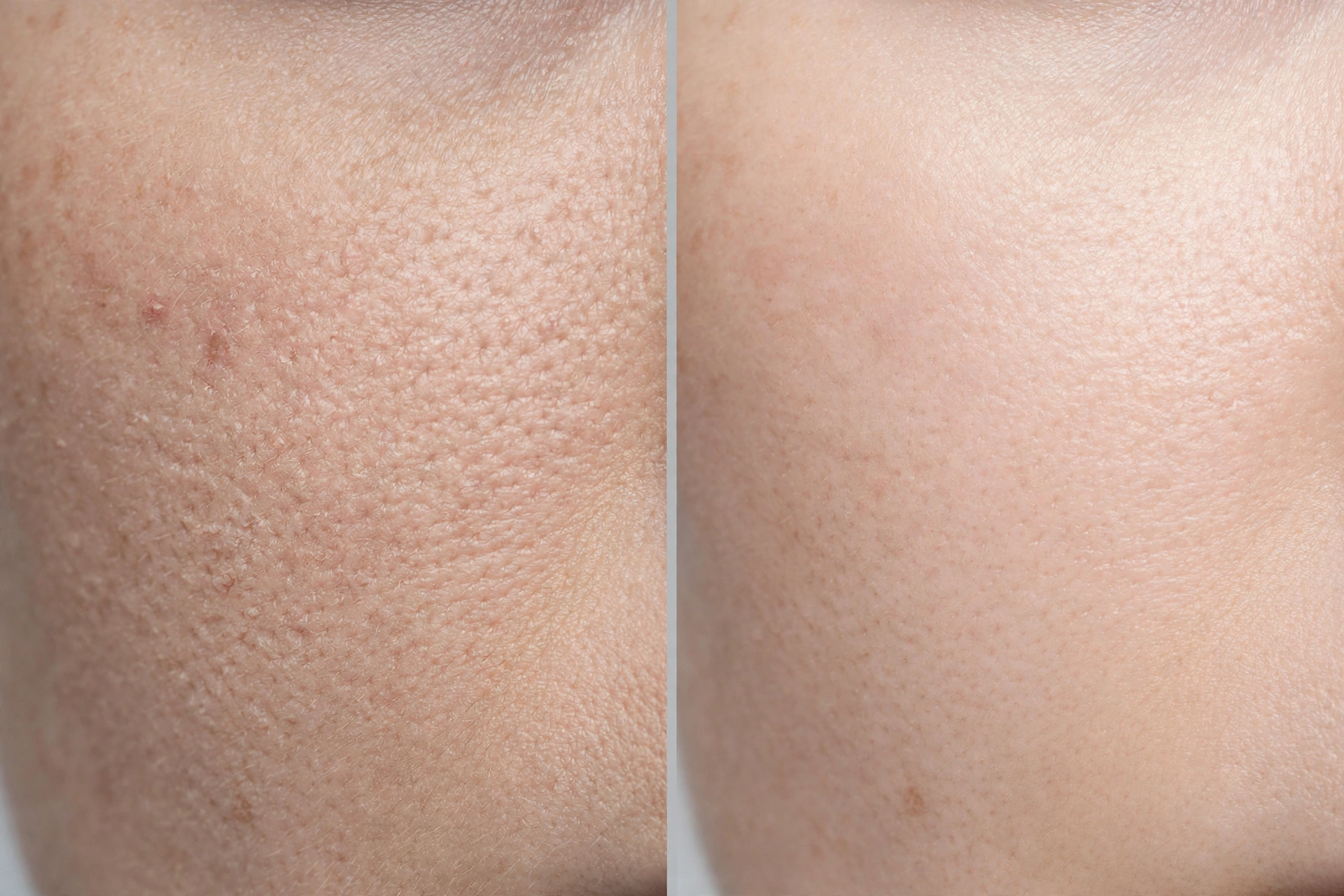
Before-and-after galleries are the single most persuasive asset a med spa website can have — and the one most clinics underuse. Publish them with proper written consent, keep the lighting and angles consistent so the results are believable, and label what’s shown honestly.
On pricing: publish clear ranges. “Lip filler starting at $X” won’t scare away serious buyers; it qualifies them. The fear is always that competitors will undercut you or that you’ll anchor too high. In practice, hiding prices costs you the consultation entirely — prospects who can’t find pricing assume the worst and bounce to a clinic that was upfront. Ranges with a “final quote at consultation” note give you the best of both.
And keep your page fast on mobile. Most “near me” searches happen on phones, often on mediocre connections, and a slow treatment page bleeds exactly the high-intent visitors you paid — in effort — to attract.
Keep your marketing claims compliant
Aesthetics sits close enough to medicine that your copy needs restraint. Avoid outcome promises everywhere — in your Google Business Profile, in your ads, and on your site. “Guaranteed results,” “permanent,” “pain-free,” “best in the city”: these don’t just risk regulatory trouble, they erode the trust you’re trying to build. Google can also act against profiles with misleading claims.
The better posture is factual and specific: what the treatment does, who it’s for, what the experience is like, what recovery involves, what results typically look like and how long they last. Restrained copy converts better anyway — prospects in this industry have highly tuned hype detectors, and the clinic that sounds like a clinician earns the consultation over the clinic that sounds like a commercial.
Med spa SEO FAQs
How long does med spa SEO take to show results?
In practice, expect months of consistent work before organic rankings compound — local SEO is a momentum game, not a switch. That said, map pack movement can come faster than website rankings when you fix your Google Business Profile, build out services, and start earning reviews steadily. Anyone promising page one in 30 days is selling you something.
Should “Medical Spa” be my Google Business Profile primary category?
Yes. “Medical Spa” as the primary category is the clearest signal you can send Google about what your business is. Add secondary categories like Skin Care Clinic or Laser Hair Removal Service only for services you genuinely provide.
Do I need a separate page for every treatment I offer?
For your core revenue treatments, yes — one thorough page each, covering cost, candidacy, what to expect, and recovery. For minor add-ons, a well-organized section on a parent page is fine. Don’t create thin pages just to have more pages; one excellent treatment page outperforms five shallow ones.
How do I get more Google reviews for my med spa?
Build it into the visit: ask at checkout after a good outcome, then follow up the next day by text or email with a direct link to your Google review page. Ask every client evenly, never offer incentives, and respond to every review you receive. The full system is broken down in our review generation guide.
Can I publish before-and-after photos on my website?
Yes, with proper written consent from the client — get it in writing, not verbally. Keep lighting and angles consistent so results are believable, label what’s shown honestly, and avoid implying guaranteed outcomes in captions or nearby copy.
Is SEO or Google Ads better for med spas?
They do different jobs. Ads buy speed — you’re visible tomorrow, at a notoriously high cost per click in aesthetics, and the leads stop when the budget stops. SEO builds durable visibility in the map pack and organic results that keeps booking consultations month after month. Most thriving clinics run both, and let SEO carry a growing share over time.
If your appointment book isn’t as full as it should be, the fastest way to find out why is a proper audit of what’s actually happening — your map pack presence, your reviews, your treatment pages, and where prospects drop off. Contact SEOelinks for a med spa SEO audit and we’ll show you exactly where the gaps are.