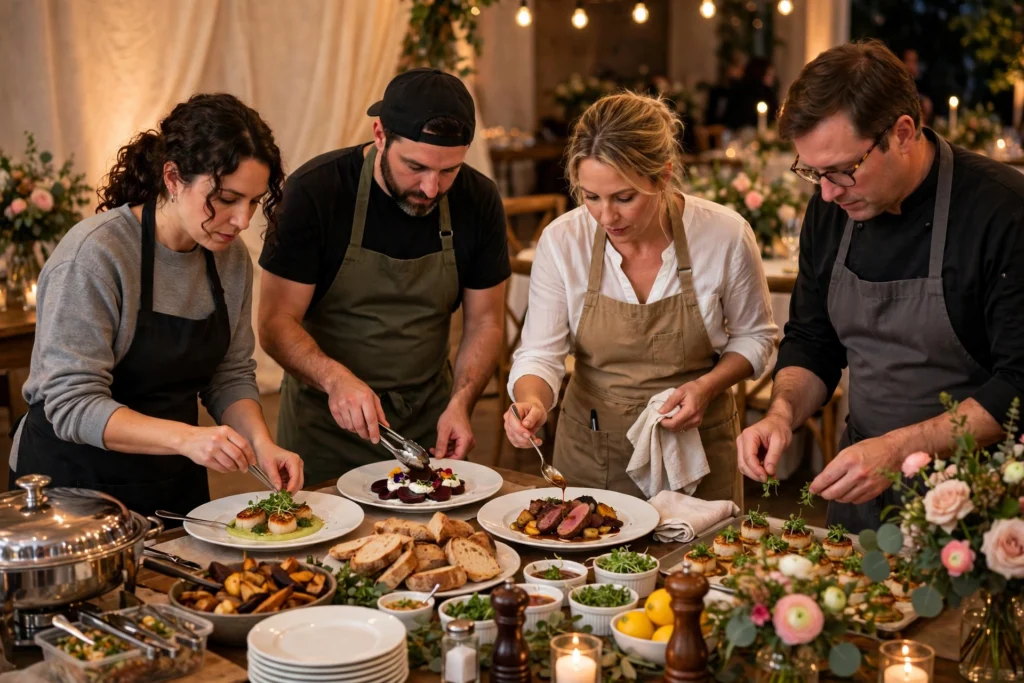
Booking a caterer is rarely a casual search. A couple types “wedding caterer near me” or “South Asian wedding catering Brampton” a year before the date; an office manager searches “corporate lunch catering” on a Tuesday and needs an answer by Friday. Different buyers, same pattern: they compare a shortlist built entirely from search results, photos and reviews — and they enquire with the two or three caterers whose websites answer their exact event, not catering in general.
This guide covers SEO for caterers in 2026: the event-type pages that match how people actually search, seasonal menus that get stronger every year instead of being rebuilt, and turning searches into the conversion that matters — a tasting booked.
1. Start with the map: local searches bring the enquiries
Catering is hired locally, delivered locally and reviewed locally, so Google leans hard on local results. Your Google Business Profile decides whether you appear when someone nearby searches “caterer near me” — and whether you look like a serious operation or a side hustle.
- Categories: “Caterer” as primary. Add “Wedding Service” or “Corporate Caterer”-style secondary categories only where they honestly match the work you take.
- Service area, set honestly: list the towns and venue districts you genuinely serve, including delivery and setup. Enquiries from outside your real area waste everyone’s tasting slots.
- Photos of real events: your plated dishes, your buffets, your team in service — not supplier stock shots. Event photos are the single biggest trust-builder a profile can carry.
- Menus and links: link the profile to your menus and your tasting or enquiry page, and keep phone, email and service area identical to your website.
- Seasonal posts: post when books open for wedding season, holiday parties and summer corporate events — profile posts put timely offers in front of searchers at decision time.
2. One page per event type: weddings are not corporate lunches
A single “our catering services” page tries to speak to a bride, an HR manager and a 50th-birthday host in the same breath — and convinces none of them. Build a full page for each event type you want more of:
- Weddings: your most considered buyers. Real wedding galleries, the venues you know, how tastings and timelines work, and menu styles from plated to family-style to late-night stations.
- Corporate events: a different language entirely — reliability, invoicing, dietary handling at scale, early-morning and lunch delivery windows. Speak to the organiser’s risks, not the food alone.
- Private parties: birthdays, anniversaries, backyard celebrations. Smaller minimums, flexible formats and clear “how it works” steps lower the barrier to enquiring.
- Funeral and sympathy catering, if you offer it: searched under stress, booked fast. A calm, clear page with simple packages and quick response promises serves families well.
It’s the same lesson event trades keep relearning — occasion-specific pages beat one general page, the way seasonal occasion pages do in our guide to SEO for florists.
3. Menus, dietary pages and the tasting funnel
Menus are content. Publish your real menus as readable web pages — not just a PDF a phone struggles with — organised the way buyers search: by event type, by format (buffet, plated, stations, boxed), and, where you genuinely offer them, by dietary and cuisine need. If your kitchen truly delivers halal, vegan or South Asian menus, say so on dedicated pages with actual dishes and how you handle preparation; if you don’t offer them, don’t claim them — a conditional, honest page (“tell us your requirements and we’ll confirm what we can do”) always beats an empty promise. Every menu page should end at the same conversion: the tasting. Frame it clearly — what a tasting includes, who should come, how far ahead to book one, and what happens next. A tasting booked is a sale half-closed; treat its form like your checkout, short and friction-free.
What this looks like in Brampton
Brampton runs on celebrations. A long wedding season fills the banquet halls along the city’s east side and the golf-club and garden venues around Bramalea, Castlemore and Springdale, and many celebrations are large, multi-day and multigenerational — events where guest counts, mixed menus and dietary requirements across a whole family are the norm, not the exception. A caterer whose pages honestly describe experience with big South Asian, Caribbean, Italian and mixed-tradition weddings — the formats, the service styles, the venues around the city they know well — matches searches that generic caterers can’t. Corporate demand has its own local shape too: the warehouses, offices and airport-corridor businesses toward the city’s edges need dependable weekday catering, early deliveries and straightforward ordering. Add the seasonal calendar — summer backyard parties in Heart Lake, December holiday parties everywhere — and a Brampton caterer who plans pages and menus around the city’s actual year stays visible while competitors post the same buffet photo everywhere.
4. Reviews and venue relationships: the trust engine
Catering is bought on trust — nobody tastings-tests five companies. Reviews do the heavy lifting: ask after the event, while the compliments are still being repeated, with a short message and a direct link. Reviews that name the event type, the venue and a dish (“guests are still talking about the live pasta station at our wedding”) sell the next booking better than any paragraph you could write. Venue relationships are the offline version of the same engine. Being a known, welcome caterer at local halls and venues earns referrals no search can buy — and online it compounds: venue pages, tagged event photos and reviews mentioning the same venues tie your name to the places couples search first. Photograph every event you serve (with the client’s permission), credit the venue, and keep a gallery of real events growing on your site and profile.
5. AI search: being recommendable for a specific event
Hosts increasingly ask AI assistants directly: “recommend a caterer near Brampton for a 200-guest wedding with vegan options” or “who does reliable corporate lunch catering near the airport.” Assistants answer from specific, consistent text — your event types, cuisines, dietary capabilities, service area and tasting process, stated plainly on your site and matching your profile. A caterer described as “great food for any occasion” is un-recommendable for a specific brief; a caterer with clear event and menu pages gets named. This is the steady work we do at SEOelinks from our base in Brampton, Canada, serving clients worldwide: making a caterer’s real strengths legible to Google, to AI assistants and to the humans doing the final choosing.
6. Your website: where searches become tasting bookings
Your website’s job is not to impress — it’s to get the right enquiry with the right details. The practical essentials:
- An enquiry form that asks event questions: date, venue or area, guest count, event type and dietary needs. Every field saves an email round-trip, and a date field alone lets you qualify instantly.
- Galleries of real events, organised by event type: a couple should see weddings like theirs within one click; an office manager should see boardroom-ready setups, not wedding cakes.
- Seasonal menus on permanent URLs: keep the same spring, summer and holiday menu pages every year and refresh them — new dishes, new photos, current enquiry prompts. An aged, updated seasonal page outranks a fresh upload each time the season returns.
- Speed and phones: most first visits are mobile, often from a venue tour or a family group chat. Compress food photography, name files descriptively (
plated-wedding-dinner-catering-brampton.jpg) and write alt text that describes the actual dish and setting. - Clear next steps: what happens after enquiries — reply timing, tasting, quote, deposit in general terms — stated on the contact page. Uncertainty is the main reason shortlists stall.
7. The monthly rhythm that keeps it working
Catering SEO runs on the event calendar. Monthly: photograph and post the best recent events to your gallery and profile; refresh the next season’s menu page while there’s still ranking time before it peaks; send review requests to the month’s happy clients; confirm your profile’s service area, hours and links still match reality; and check Search Console for which event types and menus are gaining impressions. Twice a year, do the bigger pass — wedding season and holiday season — updating galleries, menus and tasting availability in one go. An hour a month, plus two seasonal passes, keeps a caterer visible in every buying window the year offers.
8. What to measure so you know it’s working
Count tastings booked and enquiries received first — traffic is a means, not the goal. Then track calls from your profile, your map visibility for “caterer near me” and “wedding caterer [your city],” and Search Console impressions on each event-type page as its season approaches: wedding page impressions should climb through the winter booking season, holiday menus by early autumn. Note the source of every enquiry at first contact — Google, a venue referral, a past client — and review it quarterly. That simple log tells you whether search, venues or word of mouth is really filling your calendar, and where next season’s effort belongs.
9. Mistakes that quietly cost caterers their bookings
The usual suspects: one generic services page for every event type. Menus trapped in a single hard-to-read PDF, or last year’s seasonal menu deleted and rebuilt from scratch, throwing away its ranking. Claiming cuisines and dietary capabilities the kitchen doesn’t genuinely offer — the fastest way to lose a tasting and a reputation. Stock food photography that no client believes. No tasting information anywhere, so warm leads cool off. And reviews left unasked-for after flawless events, while competitors collect them weekly. None of these need a bigger budget — just pages and habits that match how people actually hire a caterer.
Frequently Asked Questions (FAQ)
Does a caterer need separate pages for weddings and corporate events?
Yes. The buyers, budgets, language and decision timelines are completely different. A dedicated page for each event type — with relevant galleries, menus and process — ranks for its own searches and converts far better than one general page.
Should catering menus be web pages or PDFs?
Web pages first: readable on phones, indexable by Google, and linkable from your profile. Keep a PDF as a download if clients like one, but never let it be the only version of a menu.
How do seasonal menus help SEO?
Keep seasonal menu pages on the same URLs year after year and refresh them. Search demand for holiday party or summer wedding menus returns on schedule, and an established, updated page outranks a brand-new one.
Should a caterer publish dietary and cuisine pages?
Only for what you genuinely offer. If your kitchen truly provides halal, vegan or specific cuisine menus, a dedicated page with real dishes earns high-intent enquiries. If you’re unsure, say so honestly and invite the conversation instead.
What is the main conversion goal for a caterer’s website?
The tasting booking — or, for corporate work, a qualified enquiry with date, headcount and venue. Every page, menu and gallery should lead clearly to that one next step.
Get a free SEO audit of your website
A 120 point crawl, a competitor gap map and a 90 day roadmap, ready in 48 hours. Free, with no obligation.

SEOelinks is a Brampton-based SEO agency helping service businesses across Canada and worldwide win organic search. Our strategists publish the same field-tested playbooks on technical SEO, local visibility and AI search that we run for clients every day.
More about SEOelinks →