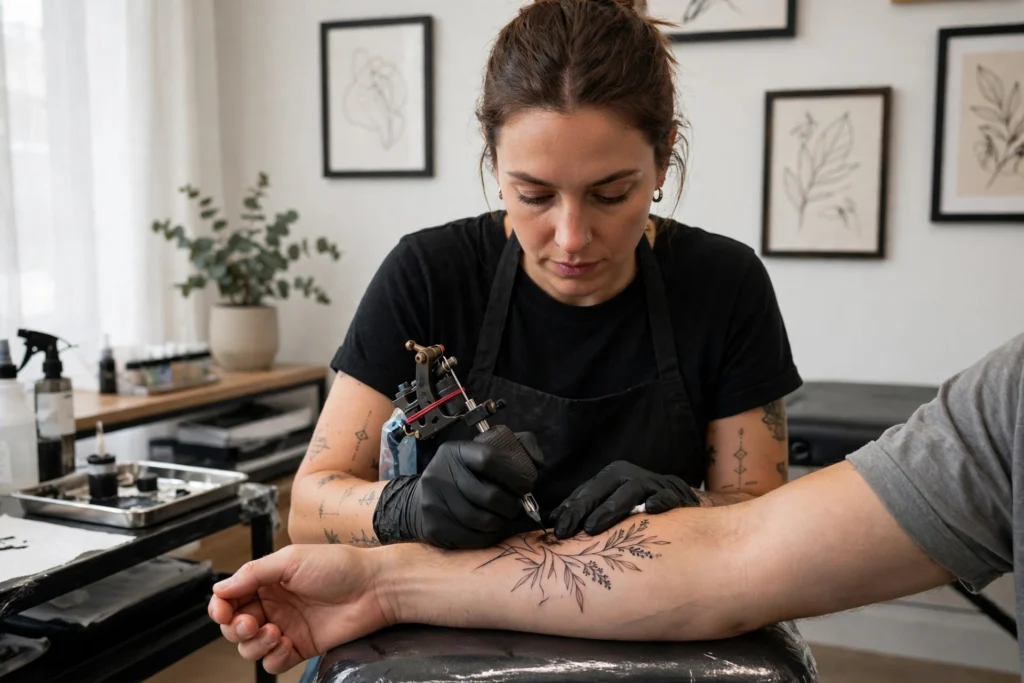
Nobody books a tattoo the way they book a haircut. The search starts weeks or months earlier — late-night scrolling, saving reference photos, typing things like “fine line tattoo near me,” “blackwork artist Brampton,” or “small floral tattoo cost” — and it almost always starts with the work itself, not the shop. People fall for a style, then hunt for the artist who does that style well, nearby, and only then ask about price, deposits and availability.
This guide covers SEO for tattoo studios in 2026: how to turn portfolio searches into real bookings, with one page per artist, style-based pages that match how clients actually search, and a clean, low-friction path from first click to paid deposit.
1. Start with the map: “tattoo shop near me” is only half the search
Plenty of tattoo work is local and spontaneous — walk-ins, a first small piece, a Friday-afternoon idea — and for those searches Google shows the map pack first. Your Google Business Profile is what gets you into it, and what a nervous first-timer checks before they trust you with their skin.
- Categories: “Tattoo Shop” as primary. Add “Body Piercing Shop” only if you genuinely offer piercing, and keep services listed individually — tattooing, consultations, cover-ups if you do them.
- Photos of the studio itself: clean stations, good light, tidy waiting area. Clients judge hygiene from photos before they ever read a word, so show the space as proudly as the work.
- Hours and booking notes: keep hours accurate, and say plainly in your description and posts whether you take walk-ins, book by appointment only, or both — and how far ahead books are typically open.
- Attributes and links: link the profile straight to your booking or consultation page, not just your homepage, and keep the phone number consistent with your website and socials.
- Fresh work, monthly: add healed and fresh pieces regularly. An active profile with recent work outranks a dormant one with a bigger back catalogue.
2. One page per artist: people book people, not shops
A studio website with one mixed gallery forces every visitor to dig for the artist whose work they like — and most won’t dig. Give each artist their own page: their name in the page title and heading, a short bio in their own voice, the styles they specialise in, and a gallery of only their work, fresh and healed. Each of those pages can rank on its own for searches like “[artist name] tattoo” and “best [style] artist Brampton,” and each gives a client one clear person to enquire with. Keep the page updated as books open and close — a simple line like “books open for spring, waitlist for larger pieces” saves everyone wasted emails. When an artist leaves, don’t delete the page overnight; update it honestly so clients searching for them find clear information rather than a dead link.
3. Build style pages for the searches clients actually make
Clients search by style long before they search by studio name. Build a genuine page for each style your studio actually does well:
- Fine-line: healed results matter most here — show how delicate work settles, and talk honestly about touch-ups and placement.
- Blackwork: bold, high-contrast galleries, dotwork and illustrative work shown large enough to judge line quality.
- Traditional: classic flash, bold colour healed photos, and the studio’s take on timeless designs.
- Realism: black-and-grey and colour realism need your largest, sharpest images — this audience zooms in.
- Cover-ups and small/first tattoos: two high-intent searches studios often ignore. Before-and-after cover-up galleries (with permission) and a reassuring first-tattoo page convert extremely well.
Each style page should name the artists who do that style, show their work, and end at the same booking path. This portfolio-first logic is exactly why image-led trades win with individual pages — the same principle behind our guide to SEO for photographers, where the portfolio, not the homepage, does the selling.
What this looks like in Brampton
Brampton clients are spoiled for choice and willing to travel for the right artist — across the city, into Toronto, or the other way. What keeps them local is trust and convenience: a studio that’s easy to reach from Bramalea, Springdale or Castlemore, with parking or a short walk from Bramalea City Centre and the downtown GO area, and artists whose work they can judge properly online. Brampton’s diversity shows up in the work itself, too — deep experience tattooing richly melanated skin well, and showing healed results on a real range of skin tones in your galleries, answers a question many clients are searching for and few studios address openly. Seasonal rhythm matters as well: healed-by-summer means spring books fill early, and gift-card and first-tattoo searches spike around the holidays and graduation season. Studios whose style pages and profiles are ready before those waves take the bookings; studios updating in a panic take what’s left.

4. Reviews: proof of the things clients can’t judge from photos
Reviews for a tattoo studio aren’t really about the artwork — clients can see that. They’re about everything a photo can’t show: Was the studio clean? Did the artist listen? Was pricing clear before the needle started? Did it heal well, and did they help when a question came up afterwards? Ask for the review at the moment that proof is freshest — at the healed-photo check-in, not at the till with a bandage still on. A short message with a direct link, sent when a client sends you their healed picture, is all it takes. When reviews mention the artist’s name, the style and the experience (“painless fine-line piece, studio spotless, deposit process clear”), they reinforce exactly the pages you’re trying to rank. Reply to all of them, and reply to criticism calmly and professionally — your response is read by every future client doing their homework.
5. AI search: being the studio an assistant can describe
More clients now start with an AI assistant: “recommend a blackwork artist near Brampton who takes consultations” or “where can I get a fine-line tattoo and how do deposits work.” AI answers are built from clear, consistent text — your styles, your artists, your booking process and your aftercare guidance, stated plainly on your site and matching your profile and socials. A studio described only as “quality tattoos, walk-ins welcome” gives an assistant nothing specific to recommend. A studio with named artists, described styles and a written booking process gets named. This is the steady work we do at SEOelinks, built in Brampton, Canada and serving clients worldwide: turning the craft a studio already has into clear pages both Google and AI assistants can confidently point clients to.
6. Your website: where portfolio views become paid bookings
A tattoo booking is a considered purchase, and your site has one job: move a client from “I love this work” to a consultation request with a deposit, without friction or doubt:
- Instagram-to-website funnel: most discovery happens on Instagram, but Instagram can’t take deposits or rank in Google. Every artist’s bio link should land on that artist’s page — not your homepage — and every post caption should point there. The website is where the booking closes; social is where the wanting starts.
- A consultation form that asks the right things: placement, approximate size, style, reference images, and preferred artist. State clearly that a deposit secures the appointment and how rescheduling works — general, plain terms build confidence; surprises destroy it.
- Trust signals, shown not claimed: photos of the clean studio, single-use equipment opened in front of clients as part of your described routine, artist credentials and years of experience, and a proper aftercare page. Professionalism is a ranking and conversion asset in a trade built on trust.
- Aftercare content that ranks: a thorough aftercare guide — the first days, moisturising, sun, swimming, warning signs to call about — is searched by every new client, including other studios’ clients. It earns traffic, links and trust long after the appointment, and it brings your own clients back to your site instead of a forum.
- Image discipline: compress galleries so pages load fast on phones, name files descriptively (
fine-line-floral-forearm-tattoo-brampton.jpg), and write alt text describing the actual piece, style and placement.
7. The monthly rhythm that keeps books full
Tattoo SEO is a habit, not a launch. Monthly: add each artist’s best new work — fresh and healed — to their page and the matching style page; update books-open and waitlist notes everywhere they appear; post one profile update (a healed piece, a flash day announcement, a guest artist visit); send review requests to the month’s healed clients; and check Search Console to see which styles and artists are gaining impressions, so you know what to photograph more of. An hour a month keeps the portfolio current — and in this trade, current work is the whole pitch.
8. What to measure so you know it’s working
Track consultation form submissions and deposits paid — not just traffic — plus calls and direction requests from your profile, and Search Console impressions for your style pages (“fine line tattoo,” “blackwork,” “cover-up tattoo” plus your city). Watch which artist pages grow: rising impressions on one artist’s page usually mean their style is trending locally, which is a hiring and flash-day signal, not just an SEO one. And ask every new client how they found you — Instagram, Google, or a friend’s healed tattoo — and note it at booking. Within a few months you’ll know exactly which channel fills which artist’s chair.
9. Mistakes that quietly cost studios their bookings
The common ones: one giant mixed gallery where no artist can be found or followed. Instagram as the only portfolio, rented land that search can’t rank and an algorithm can bury. No deposit or consultation information anywhere, so ready-to-book clients drift to a studio that makes it easy. Hygiene and professionalism left invisible — no studio photos, no aftercare page, nothing that answers a first-timer’s real anxiety. Stale “books closed” notices left up for a year. And healed work never photographed, so delicate styles look risky instead of proven. Every one of these is fixable with pages and habits, not ad spend.
Frequently Asked Questions (FAQ)
Should each tattoo artist have their own page?
Yes. Clients book artists, not shops. A page per artist — their styles, their gallery, their books status and their consultation link — ranks for artist and style searches a single shared gallery never will.
How do tattoo studios get found for specific styles?
Build a real page for each style you genuinely do well — fine-line, blackwork, traditional, realism — with that style’s best fresh and healed work, the artists who do it, and a direct booking path from the page.
Does Instagram replace a tattoo studio website?
No. Instagram is discovery; it doesn’t rank in Google, can’t take deposits, and buries old work. Link every profile to the matching artist page on your site, where consultations and deposits actually happen.
What should a tattoo consultation form ask?
Preferred artist, placement, approximate size, style, reference images and contact details — plus clear, general information about deposits and rescheduling so clients know what booking involves before they enquire.
Why does aftercare content help a studio’s SEO?
Every newly tattooed person searches aftercare questions. A thorough, responsible aftercare page earns that traffic, gets linked and saved, and builds the professionalism and trust that turn searchers into future clients.
Get a free SEO audit of your website
A 120 point crawl, a competitor gap map and a 90 day roadmap, ready in 48 hours. Free, with no obligation.

SEOelinks is a Brampton-based SEO agency helping service businesses across Canada and worldwide win organic search. Our strategists publish the same field-tested playbooks on technical SEO, local visibility and AI search that we run for clients every day.
More about SEOelinks →