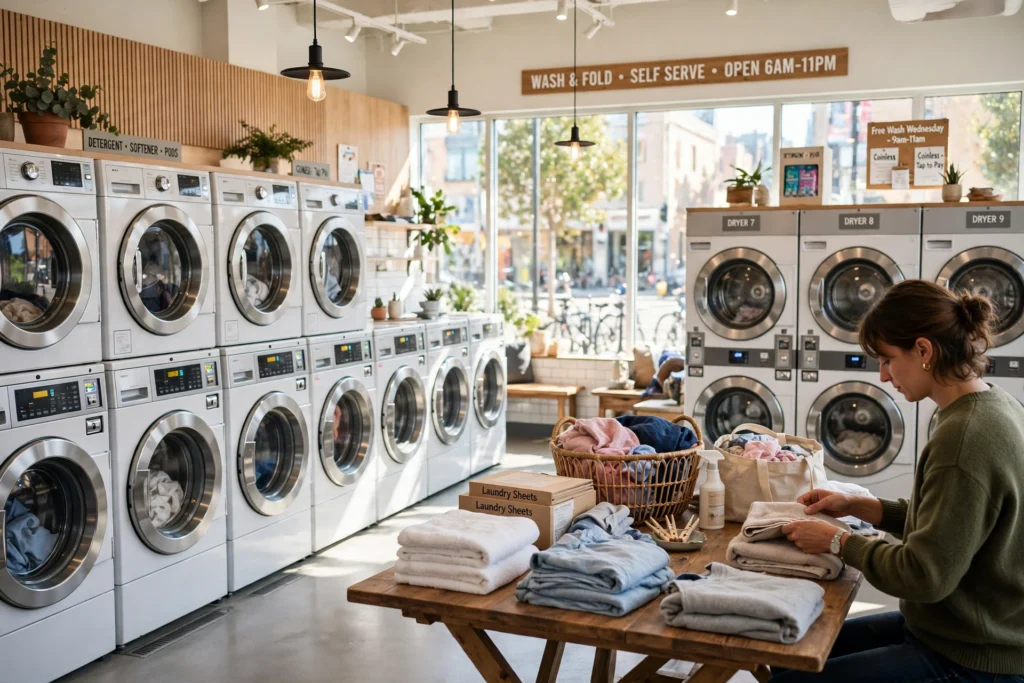
Nobody plans a laundromat visit days in advance. The hamper is full, the machine at home is broken, or the bedding is too big for a home washer — and then they search “laundromat near me,” glance at two or three options on their phone, and walk to the one that looks clean, open and easy. The decision is instant, local and practical: a neighbour choosing the laundromat they can reach in five minutes and trust with their clothes.
This guide covers SEO for laundromats in 2026: how wash-and-fold and self-serve intent works, how machine-size and pricing pages win the searches that matter, how neighbourhood pages capture the nearest customer, and how hours and amenity signals turn a first visit into a weekly habit.
1. Start with the map: the nearest clean laundromat wins on your profile
The shortlist for a laundromat forms on Google, mostly on a neighbour’s phone while the laundry piles up, in the minutes between deciding to go out and choosing where. Your Google Business Profile is where you make or miss that shortlist:
- Categories: “Laundromat” as primary, with “Laundry service” or “Dry cleaner” added only where you genuinely offer them.
- Services named the way customers search: self-serve laundry, wash-and-fold, large-capacity machines and dry cleaning drop-off listed as distinct services, so you appear for each service search, not only “laundromat near me.”
- Photos from the real store: clean rows of machines in daylight, folding tables, the wash-and-fold counter. Nobody picks a laundromat on a logo; they pick on how clean the place looks.
- Hours kept current: opening and closing times, last-wash times and holiday hours updated on the profile before they change anywhere else.
- Directions in one tap: the address pinned exactly, parking and entrance notes included, and the phone number current, so a customer carrying a laundry bag can find you without a second search.

2. Wash-and-fold vs self-serve: two different searches, two different pages
A customer choosing between wash-and-fold and self-serve is not browsing — they are deciding how much of their Saturday to spend on laundry. Wash-and-fold and self-serve are two different searches, two different budgets and two different kinds of customer, and each deserves its own page:
- Wash-and-fold pages: written to the customer who wants the laundry done for them — drop-off and pickup, turnaround time, how items are sorted and folded, and what it costs per load.
- Self-serve pages: written to the customer who wants to wash it themselves — the machine sizes, the wash and dry cycles, how payment works, and how long a typical load takes.
- Commercial pages: written to the small business or landlord with regular volume — restaurants, salons, Airbnb hosts and property managers who need a reliable weekly wash.
- Comparison content: an honest wash-and-fold-versus-self-serve page that answers the exact question most customers type before they ever visit.
Each page carries photos of the real machines and the real counter, the steps a visit follows, and the next step to book or drop off. It’s the same page-per-search discipline behind our guide to SEO for cleaning companies — customers comparing local services reward the business that answers their exact question, for their exact load, first.
Don’t blur the services on one page. A customer weighing wash-and-fold against self-serve wants a straight answer, not a paragraph that mentions both and explains neither. Separate pages let each visitor — and each search — land exactly where they belong.
3. Machine-size and pricing pages: the load-size question, answered before the visit
The question every laundromat customer asks before leaving home is simple: will my load fit, and what will it cost? A comforter, a week’s laundry for a family of five, a duvet that swallowed a home washer — these are load-size searches, and they are won by pages that answer them plainly. List your machine sizes by capacity, say which loads each one suits, and show the wash and dry cycle times beside them.
Pricing deserves the same honesty. State the per-load price for each machine size, the wash-and-fold rate, and how payment works — coins, cards or an app — before the customer arrives with a bag of laundry and no change. Add the details customers actually ask about: detergent included or bring your own, the large machines for bedding, and the dryers that finish a load properly. A pricing page that reads like a clear menu converts; one that hides the numbers sends the customer to the laundromat that states them.
What this looks like in Brampton
Brampton’s laundromat demand follows its housing: apartment buildings and townhouses across Springdale, Castlemore, Fletcher’s Meadow, Mount Pleasant and Bramalea, where many homes have no in-unit laundry and the nearest clean laundromat is a weekly stop, plus families with large loads and students who need a fast, reliable wash between classes. The weekend is the strategy — visits peak on Saturday and Sunday mornings, and the laundromats that are visible, open early and easy to find fill their machines before noon.
Machine size is the local conversation: large-capacity washers for bedding and family loads, quick cycles for the customer in a hurry, wash-and-fold for the neighbour who would rather drop off than wait. Brampton customers ask neighbours first, and reviews that name the neighbourhood (“clean machines in Fletcher’s Meadow, comforter done in an hour”) are the deciding evidence for the next laundry bag on the street.
4. Neighbourhood pages: win one block at a time
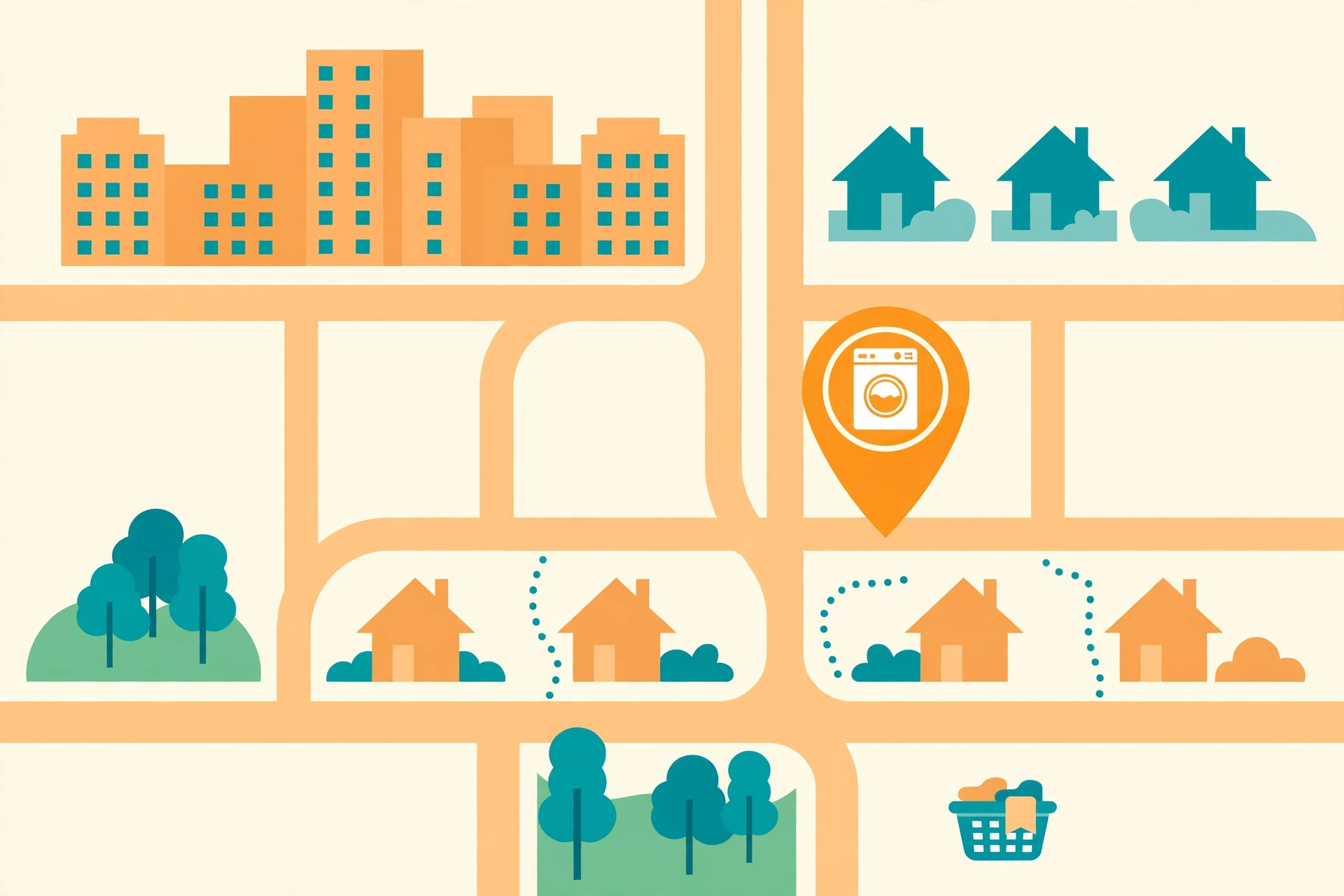
Laundry is a neighbourhood search through and through, and the map is won block by block. A page for each neighbourhood you genuinely serve — naming the streets, the apartment buildings and the typical customers there, and the machines and services you offer — ranks for “Brampton laundromat” while a single “areas we serve” list ranks for nothing. Keep each page honest and specific: the walk from the nearest bus stop, the parking, a photo of the real storefront.
Thin pages copied neighbourhood to neighbourhood with only the name swapped do not rank and do not convert; one genuine page per neighbourhood does both. Link each neighbourhood page from your main service pages and your profile’s service area, so a visitor — and a search engine — can follow the map from your laundromat to their building.
5. AI search: the assistant recommending your laundromat
Customers increasingly start with an AI tool: “best laundromat near me,” “laundromat open now near me,” “wash and fold near me prices,” “laundromat with large machines near me.” The answers are assembled from complete, consistent content — service pages with honest guidance and what each service includes, your neighbourhoods and hours stated the same everywhere, and reviews that mention the area and the service. Laundromats with real pages get summarised accurately and recommended by neighbourhood; laundromats with a one-page site leave the assistant nothing accurate to say, and it says something about a competitor instead.
6. Your website: built to get them through the door
A laundromat website has one job — move a visitor from a full hamper to a visit today:
- Visit in one tap: address, hours and last-wash time visible on every page, working on a phone in under a minute, with the questions answered on the spot (machine sizes, payment options, wash-and-fold turnaround).
- Pricing without fog: per-load prices by machine size, or at minimum how pricing works. Vague pricing is the leading cause of abandoned visits and customers arriving unprepared.
- Photos on every service page: the machines, the folding tables, the clean floor beside the pitch, not buried on a separate page nobody visits.
- Trust signals up front: clean machines, working dryers, attendant hours and a satisfaction promise stated plainly, because a customer is trusting you with everything they wear.
7. Hours and amenity trust signals: the details that decide the visit
A laundromat visit takes an hour of a customer’s day, and the small details decide whether they come back. State the hours plainly — opening time, last-wash time, closing time — and keep them current everywhere, because a customer who arrives to a closed store does not return. Then name the amenities that make the hour pleasant: free Wi-Fi, seating, folding tables, vending machines, and whether an attendant is on site.
These details are trust signals, and they belong on your pages and your profile, not hidden in a footnote. A customer choosing between two laundromats picks the one that tells them the dryers work, the machines are cleaned daily, and someone is there to help if a machine jams. Amenity pages also rank: “laundromat with free Wi-Fi near me” and “laundromat open late” are real searches, won by the laundromat that states its amenities in plain language.
8. What to measure so you know it’s working
Measure visits per service and per neighbourhood: wash-and-fold bookings from each service page, your visibility for “laundromat near me” and “wash and fold Brampton,” and the split between self-serve and wash-and-fold customers. Track which pages bring the customers who actually return — a weekly wash-and-fold customer is worth more than a dozen one-off visitors. Repeat visits are the metric underneath all of it: SEO that fills the machines with neighbours who come back every week shows up next quarter as steady revenue, not a full inbox.
Weekends are the other quiet signal. Note which hours the Saturday surge actually starts and how holidays move demand — then publish next season’s hours and service content two weeks earlier, and let your pages and reviews speak to those neighbourhoods by name.
9. Mistakes that quietly cost laundromats the weekly customer
The recurring ones: one generic “laundry services” page for wash-and-fold, self-serve and commercial, so service searches land nowhere. No machine-size or pricing page, so the bedding customer goes to the laundromat that states them. Hours out of date on the profile, so customers arrive to a closed store. Neighbourhoods listed as a paragraph instead of real pages per area. Prices hidden or vague, breeding abandoned visits. Amenities never mentioned, so the customer assumes the worst. And silence between seasons — no new photos, reviews or posts — so each year starts from zero against laundromats that never stopped.
Frequently Asked Questions (FAQ)
How do laundromats rank for “laundromat near me”?
With a complete Google Business Profile — self-serve and wash-and-fold listed separately, real photos of clean machines and steady reviews — backed by a dedicated page for each service and each neighbourhood, each with current hours and a one-tap directions path.
Should wash-and-fold and self-serve have separate pages?
Yes. Customers choose a service before they choose a laundromat, and each service has different questions, costs and customers. Separate pages rank for each service search and convert far better than one combined laundry services page.
Do machine-size pages really help a laundromat rank?
They help everywhere it counts: they rank for “large capacity laundromat near me” and bedding searches, they raise click-through from your profile and pages, and they convert hesitant visitors who need to know their load will fit before they leave home.
What should a laundromat put on its neighbourhood pages?
The streets and apartment buildings nearby, the walk from the bus stop, parking, the exact hours, the machine sizes at that store, and a photo of the real storefront. Neighbours searching on foot need answers in seconds, and a page that gives them is the one that gets the visit.
How do hours and amenities affect laundromat SEO?
Directly. “Open now” and amenity searches — late hours, free Wi-Fi, large machines — are decided by the details on your profile and pages. A laundromat that states its hours and amenities plainly wins those searches and the repeat visits behind them.
Get a free SEO audit of your website
A 120 point crawl, a competitor gap map and a 90 day roadmap, ready in 48 hours. Free, with no obligation.

SEOelinks is a Brampton-based SEO agency helping service businesses across Canada and worldwide win organic search. Our strategists publish the same field-tested playbooks on technical SEO, local visibility and AI search that we run for clients every day.
More about SEOelinks →