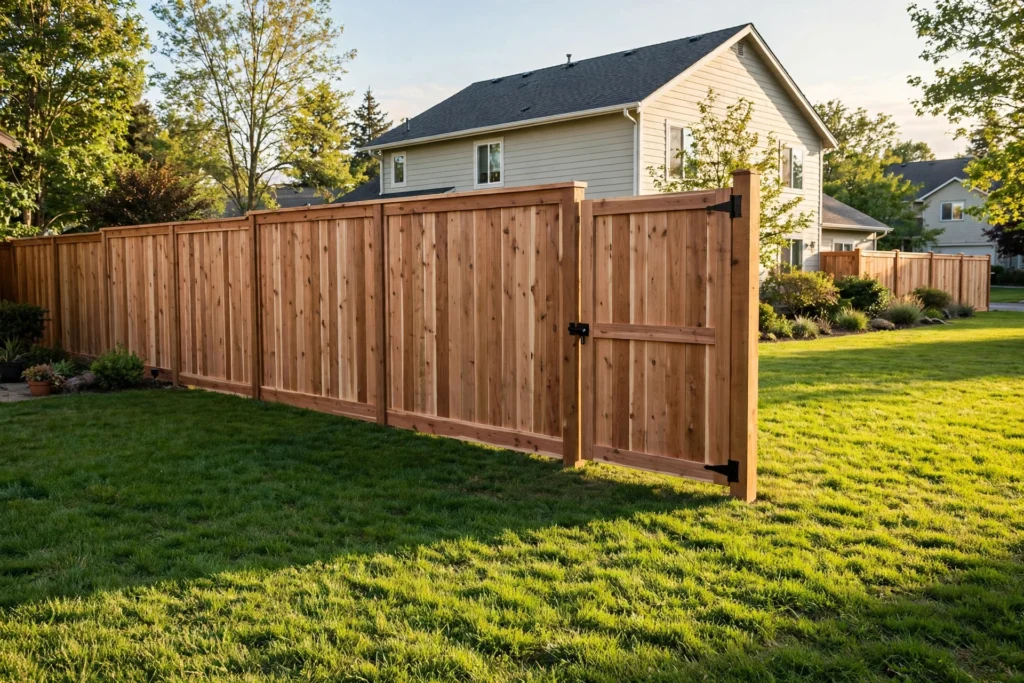
Nobody wakes up planning to buy a fence. They notice the neighbour’s dog in their garden one too many times, or the backyard feels exposed every time they sit out in it, or a new pool, a new dog or a new baby makes the open yard feel unfinished — and they search “fence installers near me,” compare two or three local companies on their phone, and call the one that looks professional, trustworthy and available this season. For a property manager or a builder, the trigger is different but the search is the same: a boundary that needs to be secure, tidy and finished on schedule.
This guide covers SEO for fence installers in 2026: how privacy and security searches split, how material and height pages win the exact job, how HOA and permit guidance builds the trust that closes the quote, and how to turn a finished installation into the next five enquiries.
1. Start with the map: the fence quote is won on your profile
The shortlist for a fence installer forms on Google, mostly on a homeowner’s phone in the evening, in the weeks when the weather turns and outdoor projects come back onto the list. Your Google Business Profile is where you make or miss that shortlist:
- Categories: “Fence contractor” as primary, with “Fence supply store” or “Deck builder” added only where you genuinely offer them.
- Services named the way customers search: privacy fences, security fences, pool fences, gates and fence repair listed as distinct services, so you appear for the exact job, not only “fence installers near me.”
- Photos of real finished fences: straight lines, clean posts, level gates — the work itself, photographed in daylight. Nobody books a fence installer on a logo; they book on proof they can see.
- Seasonal posts: spring installation availability, summer pool-fence reminders, and fall repair slots, posted while the demand is live.
- Quote path in one tap: phone and quote-request link current, and the service area stated identically on your profile and your website.

2. Privacy vs security: two intents, two sets of pages
A homeowner who wants privacy and a homeowner who wants security are not the same customer, and they do not search the same way. Build for both:
- Privacy pages: written to homeowners who want their backyard back — tall solid panels, wood and vinyl options, how high a fence can go, and what it looks like from the garden side. These searches are emotional: seclusion, quiet, a space that feels like theirs.
- Security pages: written to owners who want a boundary that holds — sturdy posts and footings, locked gates, pool-safety fencing, and commercial perimeters. These searches are practical: strength, height, locks and durability.
- Repair and replacement pages: leaning posts, rotted boards, storm damage and full tear-outs — each searched separately, each worth a page if you genuinely do the work.
- Service-area pages: one page per town you actually serve, naming the neighbourhoods and the work you do there. A homeowner in the next town searches with that town’s name, not yours.
Each page carries pricing guidance or how quotes work, the areas served, and the booking next step. It’s the same page-per-search discipline behind our guide to SEO for landscapers — homeowners comparing local trades reward the company that answers their exact question, for their exact property, first.
Don’t blur the two intents on one page. A homeowner dreaming of a quiet garden does not want to read about commercial perimeters, and a property manager reading about garden privacy wonders whether you can secure a site at all. Separate pages let each visitor — and each search — land exactly where they belong.
3. Material and height pages: wood, vinyl, chain-link and more
Fence searches are specific: the material and the height are usually in the query itself. A page for each material — wood, vinyl, chain-link, aluminum and wrought iron — ranks for “[material] fence installation” while a single “fences” page ranks for nothing in particular. Each page should answer the questions a buyer actually asks: how it looks, how long it lasts, what upkeep it needs, how tall it can be built, and how quotes work. Height deserves its own treatment too: privacy heights, pool-code heights and the rules that limit them, explained plainly so the homeowner arrives at the quote already informed. Photos matter enormously here — a gallery of each material installed in a real garden, with filenames and alt text that name the material and the town, ranks in image search and sells the look before a word of copy is read.
Material pages also protect you from the cheapest competitor. Anyone can claim to install fences; a library of real wood, vinyl and chain-link installations across houses, schools and commercial sites cannot be faked cheaply. Photograph every finished job, note the material and height, and build the gallery as you work — by spring, it is your best salesperson, working every hour your phone is not answered.
What this looks like in Brampton
Brampton’s fence demand follows its housing: detached homes across Springdale, Castlemore, Fletcher’s Meadow, Mount Pleasant and Bramalea, where a fenced backyard is close to a standard expectation, plus new subdivisions where every second house seems to be booking a fence the summer after moving in. The spring rush is the year’s biggest wave — homeowners booking as the weather turns, new owners fencing a fresh lot, and pool owners ordering code-compliant pool fencing before the swim season.
The calendar is the strategy: quotes surge from spring into early summer, installations carry through the warm months, and fall brings repairs and replacements before winter. Brampton homeowners ask neighbours first, and reviews that name the street or the neighbourhood (“new privacy fence in Castlemore, straight lines and on time”) are the deciding evidence for the next house on the street.

4. HOA and permit guidance: the trust content that wins the quote
Few purchases come with as much paperwork anxiety as a fence. Height limits, property lines, permits and homeowners’ association rules all sit between the homeowner and the job — and the installer who explains them plainly wins the quote before price is even discussed. Publish clear, honest guidance: when a permit is typically needed, how height limits usually work, what to check with the HOA or the municipality, and how you handle the survey and the property line. This content ranks for the exact questions homeowners search before they call, and it positions you as the company that will not leave them arguing with a neighbour over six inches of fence. Keep it general and honest — rules vary by town, so explain the process and point readers to confirm the local detail, rather than stating rules you cannot guarantee.
5. AI search: the assistant recommending your crew
Homeowners increasingly start with an AI tool: “best fence installer near me,” “how tall can a privacy fence be,” “wood vs vinyl fence cost,” “do I need a permit for a fence.” The answers are assembled from complete, consistent content — material and height pages with honest guidance on cost and upkeep, your service area stated the same everywhere, and reviews that mention the town and the job. Companies with real pages get summarised accurately and recommended by neighbourhood; companies with a one-page site leave the assistant nothing accurate to say, and it says something about a competitor instead.
6. Your website: built to book the install
A fence installer’s website has one job — move a visitor from comparing to a booked quote:
- Quote in one tap: phone number and quote form visible on every page, working on a phone in under a minute, with the questions answered on the spot (material, length, height, gates).
- Pricing without fog: per-foot guidance or how quotes work, at minimum. Vague pricing is the leading cause of abandoned enquiries and haggling at the gate.
- Gallery on every material page: the proof beside the pitch, not buried on a separate page nobody visits.
- Trust signals up front: insurance, warranty on workmanship, and a clear statement of who handles permits and property lines — stated plainly, because strangers are coming to someone’s home.
7. The review engine at job completion
A fence is finished in a single visible moment — the last panel goes up, the gate swings level, and the homeowner sees their backyard transformed. That is the moment to ask for a review, while the result is in front of them. Make it a habit on every job: a one-tap link sent before the crew leaves, a gentle prompt to name the town and the material, and a short reply to every review that comes in. Reviews that say “vinyl privacy fence in Mount Pleasant, finished in two days” do double work — they convince the next homeowner and they tell search engines exactly what you do and where. A steady flow of these, job after job, is worth more than any single campaign, because every completed fence becomes the advertisement for the next one.
8. What to measure so you know it’s working
Measure booked jobs per material and per town: quote requests from each material page, your visibility for “fence installers near me” and “[material] fence Brampton,” and the split between privacy, security and repair enquiries. Track which pages bring the jobs that actually get built — a privacy fence that books in one call is worth more than a dozen tyre-kicking enquiries. Repeat and referral work is the metric underneath all of it: SEO that fills the diary with customers who recommend you to the next street shows up next season as a full schedule, not a full inbox.
Seasonality is the other quiet signal. Note which weeks the spring rush actually starts in each town — then publish next year’s spring content two weeks earlier, and let your pages and reviews speak to those towns by name.
9. Mistakes that quietly cost fence installers the job
The recurring ones: one generic “fence installation” page for every material, height and intent, so specific searches land nowhere. No photos of finished fences, so the pitch is words against a competitor’s gallery. Permit and HOA questions left unanswered, so the homeowner calls the company that explained them. Prices hidden or vague, breeding abandoned enquiries. A spring surge met with a winter-stale profile and no posts. And silence between jobs — no new photos, reviews or posts — so each rush starts from zero against companies that never stopped.
Frequently Asked Questions (FAQ)
How do fence installers rank for “fence installers near me”?
With a complete Google Business Profile — privacy, security, pool fencing and repair listed as distinct services, real photos of finished fences and steady reviews — backed by a dedicated page for each material, height and town served, each with pricing guidance and a one-tap quote path.
Should privacy and security fences have separate pages?
Yes. Privacy buyers and security buyers search differently, want different proof and book on different terms. Separate pages rank for each audience’s searches and convert far better than one combined services page.
Do I need a permit or HOA approval for a fence?
It depends on the town, the height and the property. Height limits, permits and HOA rules vary, so check with your municipality and association before building — and choose an installer who explains the process and handles the survey and property-line checks with you.
Wood, vinyl or chain-link — which fence is best?
It depends on the job: wood suits a natural privacy look, vinyl suits low upkeep and a clean finish, and chain-link suits security and budget. A good installer will walk the property, explain the trade-offs honestly, and quote each option rather than pushing one material.
How do fence installers get reviews that help?
Ask at the moment of completion — when the homeowner sees the finished fence and the level gate — with a one-tap link, and make it easy to name the town and the material. Reply briefly to all of them, and never buy reviews.
Get a free SEO audit of your website
A 120 point crawl, a competitor gap map and a 90 day roadmap, ready in 48 hours. Free, with no obligation.

SEOelinks is a Brampton-based SEO agency helping service businesses across Canada and worldwide win organic search. Our strategists publish the same field-tested playbooks on technical SEO, local visibility and AI search that we run for clients every day.
More about SEOelinks →