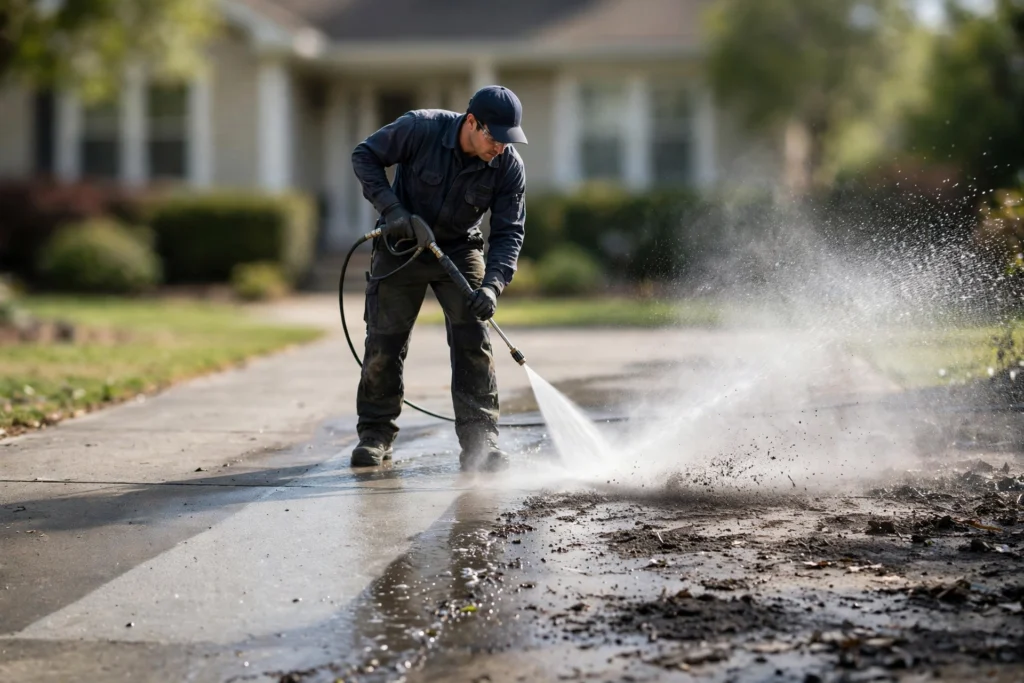
Nobody books a pressure washing company because of a clever slogan. They search because the driveway looks grey, the deck has gone green, or the siding is streaked — then they type “pressure washing near me,” “driveway cleaning Brampton,” or “deck pressure washing cost” and judge three companies in about ninety seconds: photos, reviews, price signals, and how fast someone answers. The company whose before-and-after photos look like the customer’s own home wins the call.
This guide covers SEO for pressure washing companies in 2026: how surface-based pages capture the exact job a homeowner needs, how seasonal demand shapes your calendar, and how before-and-after galleries rank in image search and sell the job before you ever pick up the phone.
1. Start with the map: the shortlist forms on a phone in the driveway
Most pressure washing enquiries start outside, on a phone, while the homeowner is staring at the thing that needs cleaning. Your Google Business Profile is where your company makes or misses that shortlist:
- Categories: “Pressure washing service” as primary, with related services such as “Deck builder” only where they accurately describe work you genuinely do.
- Every surface listed as a service: driveways, decks, siding, roofs, patios, walkways and fences — named individually, so you appear for the surface search, not only “pressure washing near me.”
- Before-and-after photos, always: real jobs, same angle, same light where possible. Homeowners compare your photos to their own driveway; a gallery of genuine transformations is your strongest ranking and selling asset.
- Quote path in one tap: phone number current, and a simple quote request form that asks for the surface, rough size and photos — the fewer fields, the more quotes.
- Hours that match the season: extended spring and summer availability stated accurately, because that’s when the searches surge.

2. Surface pages: one page per surface, not one page for everything
Nobody searches for “exterior cleaning services.” They search by surface and by problem. Build for both:
- Driveway pages: concrete, asphalt and interlock — oil stains, tyre marks and moss, what the process looks like, how long it takes, and how long the clean lasts.
- Deck and patio pages: wood, composite and stone — green algae, grey weathered boards, and the difference between pressure washing and soft washing where the material demands gentleness.
- Siding pages: vinyl, brick and stucco — streaks, mildew and oxidation, and honest guidance on pressure versus soft wash for each material.
- Roof pages: shingle-safe soft washing, moss and black streaks, and why high pressure never belongs on a roof.
Each page carries the surface’s common problems, your method, realistic pricing guidance, and a photo pair from a real job. It’s the same page-per-search discipline behind our guide to SEO for landscapers — homeowners comparing local outdoor services reward the company that answers their exact surface question first.
Don’t forget the smaller surfaces, either. Walkways, fences, garage floors, pool surrounds and retaining walls are all searched separately, often by homeowners already planning a bigger job. A strong section for each, with photos and a price range, turns a one-surface quote into a full-property clean — and tells search engines your company handles the whole exterior, not just driveways.
3. Before-and-after galleries: the photos that rank and sell
Pressure washing is the most visual trade in local search, and your photos are content, not decoration. A before-and-after pair, properly named and captioned — surface, problem, neighbourhood — ranks in image search, gets shared in local groups, and answers the only question a homeowner really has: will my driveway look like that? Publish galleries per surface, keep the framing honest (same angle, no filters that oversell the result), and let the transformation do the persuading. A company whose gallery shows twenty real driveways will outrank and outsell a company whose gallery shows one stock photo of a wand.
Photos carry a second, quieter benefit: proof of care. A gallery that shows protected plants, taped-off fixtures and a tidy finish tells a homeowner you respect their property — which is exactly what they worry about when a stranger arrives with a machine that can strip paint. Caption that care, in plain words, on the page. It ranks, and it reassures.
What this looks like in Brampton
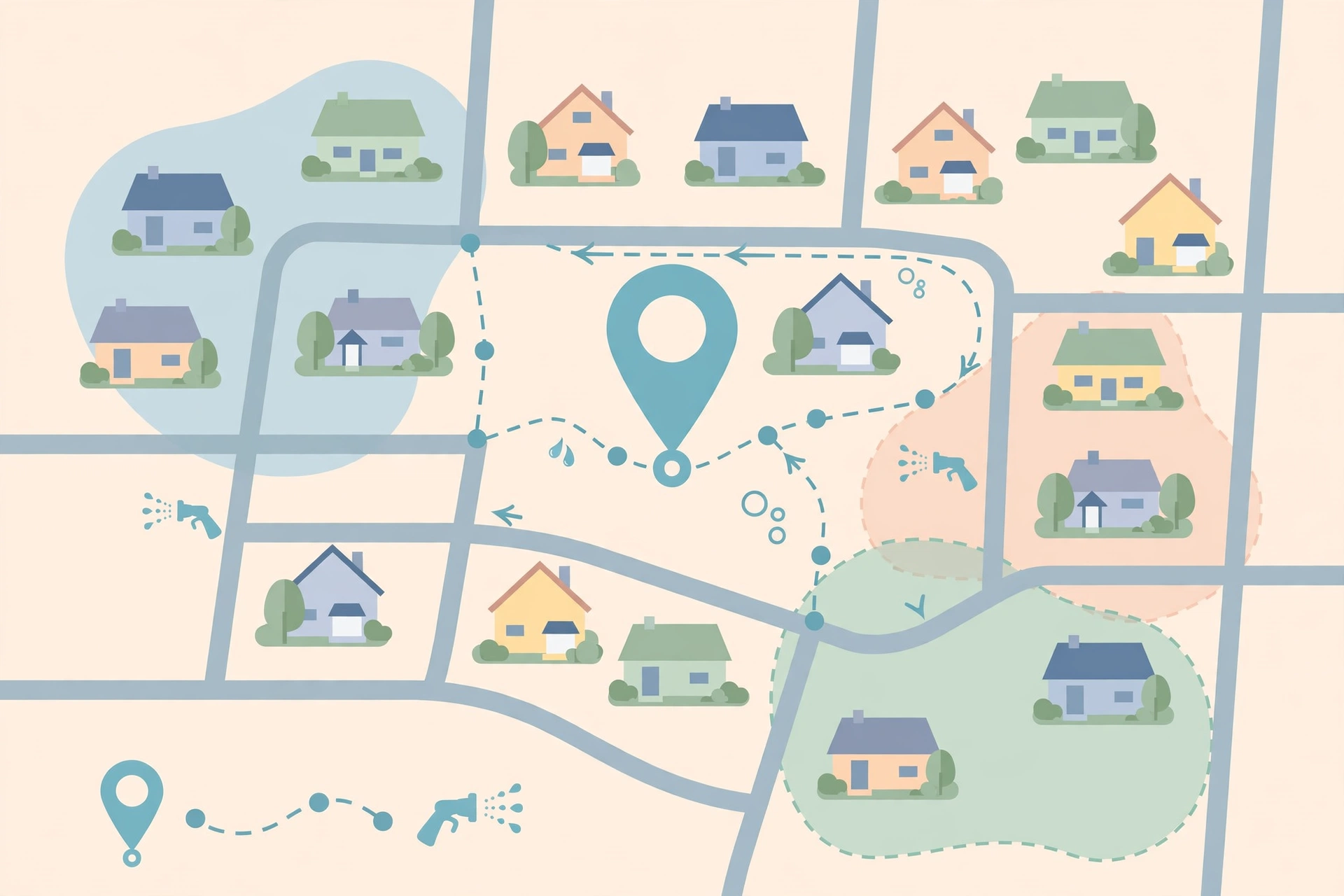
Brampton’s pressure washing demand follows its housing: long concrete driveways across Springdale, Castlemore, Fletcher’s Meadow, Mount Pleasant and Bramalea, backyard decks built for long summers, and vinyl siding that shows every winter’s grime by April. Homeowners here search by surface and by season — driveway cleaning in spring, deck washing before patio season, roof moss after the thaw — and they compare photos against homes that look like theirs, on streets that look like theirs.
The calendar is the strategy: the spring surge when the snow melts and the grime shows, the early-summer deck rush, and the autumn clean-up before winter sets in. Brampton homeowners ask neighbours first — driveway conversations and community groups are powerful here — and reviews that name the surface and the result (“driveway looks new, took two hours, no mess left behind”) are the deciding evidence for the next house on the street.
4. Reviews: proof written in driveways and decks
Pressure washing is a one-visit, high-trust job: a stranger, a powerful machine, and a homeowner watching from the window. Reviews are how the next customer decides you’ll be careful. The asking moment is the walk-around at the end of the job, when the homeowner is standing on a clean driveway — a short message with a one-tap link, sent before you leave. Reviews naming the surface and the result answer the next homeowner’s precise question. Reply briefly to every one; your tone in replies is read as your company’s care, by people deciding whether to hand you their home’s exterior.
5. AI search: the assistant recommending the cleaner
Homeowners increasingly start with an AI tool: “how much does driveway pressure washing cost,” “can you pressure wash a wood deck,” “soft wash vs pressure wash for siding.” The answers are assembled from complete, consistent content — surface pages with methods and price guidance stated honestly, service areas named, and the same prices and terms on your site, profile and directories. Companies with real surface pages get summarised accurately and recommended by surface and neighbourhood; companies with a one-page site leave the assistant nothing accurate to say, and it says something about a competitor instead. The same applies to voice search on a phone in the driveway — short, plain answers on your pages (“yes, composite decks can be washed, at low pressure”) are the ones that get read aloud, and they reach the homeowner before your competitor’s truck ever drives past.
6. Your website: built to book the quote
A pressure washing website has one job — move a homeowner from comparing photos to a booked quote:
- Quote request in one tap: visible on every page, working on a phone in under a minute, with photo upload so the homeowner can show you the surface instead of describing it.
- Pricing without fog: honest ranges per surface, or at minimum the structure — per square foot versus flat rate, and what changes the price. Surprise quotes are the leading cause of lost bookings and bad reviews.
- Galleries linked from every surface page: the homeowner researching deck cleaning should see your deck transformations in one click.
- Booking that respects the weather: stated plainly — rain policy, rescheduling, and how quickly you confirm a date. A stale or vague schedule quietly reads as an unreliable company.
7. The seasonal rhythm that keeps the calendar full
Pressure washing SEO runs on the seasons. Late winter: surface pages, galleries and profile posts live before the spring surge. Spring: review asks after every driveway job, while pride is fresh; deck content ready before patio season. Summer: roof and siding pages, plus commercial work — storefronts, parking lots and restaurant patios — published while businesses refresh. Autumn: clean-up content and next-spring booking opened while the results are still visible. Companies that run this calendar spend May washing, not wondering where the enquiries went.
8. What to measure so you know it’s working
Measure quotes and bookings per surface: quote requests from each surface page, your visibility for “[surface] pressure washing near me” and “pressure washing [your area],” and which surfaces bring repeat customers — a homeowner who books the driveway in spring often books the deck in summer. Track quote-to-booking by surface for a season and you’ll see which searches bring customers who come back every year. Repeat business is the metric underneath all of it: SEO that fills quotes with well-matched homeowners shows up in autumn as a full calendar, not a full inquiry inbox. A surface page that quietly books the same driveways every spring is worth more than a viral post that books nothing twice.
Geography is the other quiet signal. Homeowners will cross a city for a trusted crew but not for an ordinary wash, so note which neighbourhoods your jobs actually come from — then let your pages and reviews speak to those areas by name.
9. Mistakes that quietly cost pressure washing companies their spring
The recurring ones: one generic “pressure washing” page for every surface, so specific searches land nowhere. A gallery of stock photos, or no gallery at all, in the most visual trade in local search. Prices hidden or vague, breeding the lost quotes companies blame on competition. A quote form that asks for an essay on a phone. A spring surge met with winter’s outdated hours. And silence between seasons — no new photos, reviews or posts — so each surge starts from zero against companies that never stopped.
Frequently Asked Questions (FAQ)
How do pressure washing companies rank for “driveway cleaning near me”?
With a complete Google Business Profile — surfaces listed individually, real before-and-after photos and steady reviews — backed by a dedicated page for each surface, each with method detail, pricing guidance and a photo gallery.
Does each surface really need its own page?
Yes. Homeowners search by surface and problem (“deck pressure washing,” “roof soft wash cost”). A page written for that exact search ranks for it and converts far better than one combined services page.
Should before-and-after photos be on the website or just social media?
Both, but the website matters more for search. Named, captioned photo pairs on your surface pages rank in image search and sell the job to homeowners comparing companies — social posts vanish, pages keep working.
When should a pressure washing company publish seasonal content?
Before each surge: spring content live in late winter, deck pages before patio season, autumn clean-up content by late summer. Visibility takes weeks to build; publishing during the surge misses it.
How do pressure washing companies get reviews that help?
Ask at the end-of-job walk-around, when the homeowner is standing on the clean surface, with a one-tap link, and make it easy to name the surface and the result. Reply briefly to all of them, and never buy reviews.
Get a free SEO audit of your website
A 120 point crawl, a competitor gap map and a 90 day roadmap, ready in 48 hours. Free, with no obligation.

SEOelinks is a Brampton-based SEO agency helping service businesses across Canada and worldwide win organic search. Our strategists publish the same field-tested playbooks on technical SEO, local visibility and AI search that we run for clients every day.
More about SEOelinks →