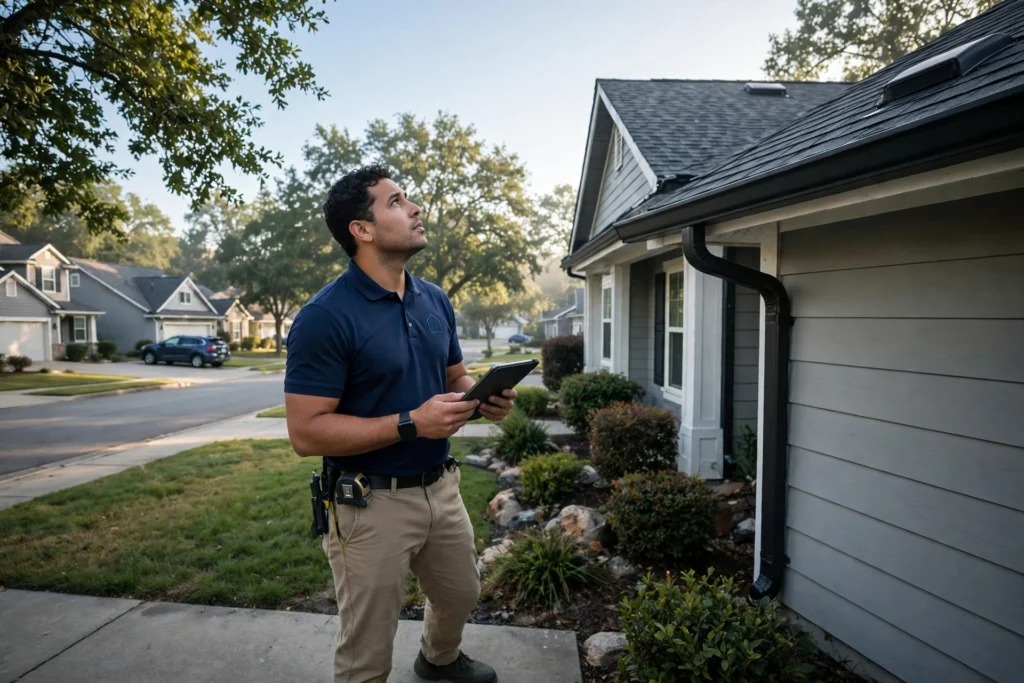
Nobody plans a home inspection for fun. A buyer has an offer accepted, the clock is running on their conditions, and they need someone thorough, available this week, and easy to book — right now. That search is almost always local and urgent: “home inspector near me,” “home inspection Brampton,” or a quick ask to their real estate agent for a name they trust. If you don’t appear in that moment, in the map results and as the obvious next call, the booking goes to the inspector who does.
This guide covers SEO for home inspectors in 2026: winning the map pack, building the service and town pages that match how buyers and agents search, and turning report speed, availability and reviews into steady bookings.
1. Start with the map: most inspections are won locally
Home inspection is a trust purchase made under time pressure, and Google treats it that way. For local searches, the map pack and Google Business Profile results get the first look and most of the calls. Your profile is not a listing chore — it is your booking desk, and it needs to answer three questions instantly: what do you inspect, where do you work, and how fast can you get there and get the report back?
- Categories: “Home Inspector” as primary. Add secondary categories only for services you genuinely offer and are qualified for, such as mould or radon testing where that applies — accuracy matters more than stuffing the list.
- Service area, set town by town: list every town and city you will actually travel to for an inspection. Buyers search by town, agents refer by territory, and your profile only matches the areas you have declared.
- Hours that reflect real availability: if you take evening and weekend inspections during peak season, say so. Conditional offers don’t respect office hours, and neither should your listing if you want the work.
- Real photos: you on site, your tools, your vehicle, you checking a roofline, furnace or electrical panel. No stock houses. Agents and buyers are judging whether you look established and careful.
- Services listed individually: pre-purchase, pre-listing, new-build and any add-on testing, each named on the profile so the profile itself matches specific searches, not just the generic one.
- Booking path: a working phone number, a link to online booking or a clear contact page, and prompt replies. In this trade a missed call during condition week is a lost inspection, every time.

2. One page per service, one page per town you serve
A single “services” page cannot rank for every job you do, because buyers, sellers and agents search for each job differently. Build a proper page for each core service, written for that reader and that moment:
- Pre-purchase inspections: your main revenue page. Explain what you check, how long it takes, when the report arrives, and what a buyer should do next if something major turns up. Speak to a nervous first-time buyer, not to another inspector.
- Pre-listing inspections: written for sellers and listing agents. The pitch is control — find problems before buyers do, price with confidence, and reduce surprises and renegotiations after an offer.
- New-build and warranty inspections: for buyers of new homes, including pre-delivery and warranty-deadline checks. These searches are less crowded and the clients plan ahead, so this page quietly books work months out.
- Add-on services: separate sections or pages for mould, radon, thermal imaging or sewer scope work where you offer it, with plain explanations of when each test is worth paying for. Honest guidance here builds the trust that gets you referred.
Then do the same for geography. Create one page per town you genuinely serve, and make each one genuinely local — housing ages and styles in that town, common issues you see there, how quickly you can usually get there. A thin page that just swaps the town name helps no one and Google can tell. Fewer, real town pages beat a grid of duplicates. If you want the broader framework behind this structure, our local SEO guide for small businesses walks through how service and location pages work together.
3. Sell what buyers actually choose on: speed and certainty
Two inspectors can look identical on qualifications. The one who wins the booking usually wins on logistics stated clearly. Report turnaround, same-week availability, easy booking and clear pricing guidance are not extras — for a buyer working against a condition deadline, they are the decision. Put them where a stressed buyer will see them in seconds: on your homepage, on every service page, and reflected in your profile posts during peak season.
Be specific and be honest. “Report delivered the same evening” is a promise you must keep, so only publish speeds and availability you can hold in your busiest month. Explain what the report actually contains — photos, plain-language summaries, prioritised issues versus maintenance notes — because buyers fear a 60-page document they can’t interpret as much as they fear a defect. A sample report (with the client’s details removed) linked from your service pages answers that fear better than any sales copy, and agents love sending it to clients because it makes their referral look good.
What this looks like in Brampton
Brampton’s housing mix is an inspector’s argument for local pages all on its own. You have older homes in Bramalea and downtown Brampton with decades of renovations behind them, large newer subdivisions in Springdale, Castlemore and Credit Valley where new-build and warranty inspections matter, and a constant flow of first-time buyers stretching into family homes across Heart Lake, Fletcher’s Meadow and Mount Pleasant. Each area has different typical concerns — age of roof and furnace in the older stock, drainage and grading in the new builds — and pages that speak to those realities read as expertise, because they are.
The market rhythm matters too. Spring and early summer bring bidding pressure and short condition windows, which is exactly when report speed and evening availability win bookings. Brampton also has a strong agent community whose repeat referrals can carry an inspection business — and agents refer inspectors whose reports are fast, clear and calm for their clients. Your Brampton page should make that easy to see: towns covered, typical turnaround, and how an agent can book you for a client in one step.

4. Reviews from buyers and agents: ask both, on purpose
For inspectors, reviews do double duty: they lift your map ranking and they reassure the next nervous buyer. Most inspectors only ever collect them by accident. Build two simple habits instead. For buyers, send a short thank-you with a review link the day the report lands, while relief is fresh. For agents, ask after a few smooth inspections together — an agent review that mentions your report clarity and turnaround is visible proof for every other agent who checks you out before referring.
Reply to every review briefly and professionally, including the rare difficult one. Never argue about findings in public. And remember that reviews naming the town, the service and the experience (“pre-listing inspection in Castlemore, report back the same night, agent was impressed”) carry far more local weight than a bare five stars.
5. AI search is now part of the referral chain
Buyers increasingly start with an AI assistant — “find me a home inspector in Brampton who can come this week and delivers reports fast” — and agents do the same when building a referral shortlist. AI answers are built from clear, consistent text: your services, towns, turnaround and qualifications stated plainly on your site and repeated consistently on your profile and directories. An inspector described vaguely as “thorough and reliable” is hard to recommend for a specific need. An inspector whose pages say exactly what they inspect, where, and how quickly, gets named.
This is the steady work we do at SEOelinks, built in Brampton, Canada and serving clients worldwide: turning what a good local business already does well into pages and profiles that search engines and AI tools can find, understand and recommend.
6. Your website: where searches become booked inspections
Your site doesn’t need to be fancy. It needs to convert a stressed buyer on a phone in under a minute:
- Booking above everything: phone number and booking link visible without scrolling, on every page. Every extra click between “I need an inspector” and a booked slot loses condition-week bookings.
- One clear page per service and town: as covered above, with the turnaround, what’s included and the next step stated on each — don’t make buyers hunt across three pages to assemble the picture.
- Credentials, presented plainly: your certifications, association memberships, insurance and experience, written in language a buyer understands. This is a regulated-trust purchase; quiet competence stated clearly beats hype.
- Fast and mobile-first: most inspection searches happen on phones, often from a driveway or an agent’s office. A slow site or an unreadable report sample quietly costs you the busiest season.
7. The monthly rhythm that keeps it working
Inspection SEO is a habit, not a launch. Each month: add fresh on-site photos to your profile, send review requests to that month’s buyers and any new agent relationships, post one profile update (peak-season availability, a seasonal maintenance reminder, a new town added), and check Search Console to see which service and town pages are gaining searches. Twice a year, re-read your town pages and update them for what you’re actually seeing in those homes. An hour a month keeps the map position, the pages and the referral story all moving in the same direction — and compounds through the spring market instead of being rebuilt in a panic every March.
8. What to measure so you know it’s working
Track a short list: calls and booking clicks from your Google profile, your map visibility for “home inspector near me” and “home inspection [your main towns],” and in Search Console, impressions and clicks for each service page — pre-purchase should lead, with pre-listing and new-build growing as those pages mature. At the desk, ask every client how they found you and log it simply: agent referral, Google, AI tool, past client. Within a season you’ll know whether search is becoming a real second pipeline beside referrals, and which towns deserve their own page next.
9. Mistakes that quietly cost inspectors bookings
The common ones are all fixable: a service area on the profile that no longer matches where you’ll actually travel. One generic services page trying to rank for everything. Availability and turnaround nowhere on the site, so buyers assume you’re booked solid and call someone else. Reviews left to chance. Town pages copied with only the name changed. And the quietest one — letting agent relationships live only in your phone, with a website that gives those agents nothing good to forward to a client. Your site should make your referrers look smart for recommending you.
Frequently Asked Questions (FAQ)
Do home inspectors really get bookings from Google, or is it all agent referrals?
Both. Referrals remain valuable, but buyers with no agent shortlist — and buyers whose agent gives them two or three names to choose from — check Google and compare profiles, reviews and report turnaround before booking. Search is where referral shortlists get decided.
How many town pages should a home inspector have?
One for each town you genuinely serve and can write about with real local detail — housing stock, common issues, your travel and turnaround there. Five honest pages beat twenty thin ones.
Should I publish my inspection prices online?
You don’t need a full price list, but clear guidance — what a typical inspection includes and what add-ons cost extra — reduces hesitation and unqualified calls. Buyers working to a deadline prefer the inspector who answers the price question up front.
How important is report turnaround for SEO?
Directly, it’s a conversion factor rather than a ranking factor — but stated clearly on your pages and reflected in reviews, it wins the click and the call once you rank. In condition week, speed is often the whole decision.
Can AI search really send inspection bookings?
Yes, increasingly. AI tools recommend inspectors whose services, towns and turnaround are stated consistently across their site and profiles. Precise, consistent information is what gets a business named in those answers.
Get a free SEO audit of your website
A 120 point crawl, a competitor gap map and a 90 day roadmap, ready in 48 hours. Free, with no obligation.

SEOelinks is a Brampton-based SEO agency helping service businesses across Canada and worldwide win organic search. Our strategists publish the same field-tested playbooks on technical SEO, local visibility and AI search that we run for clients every day.
More about SEOelinks →