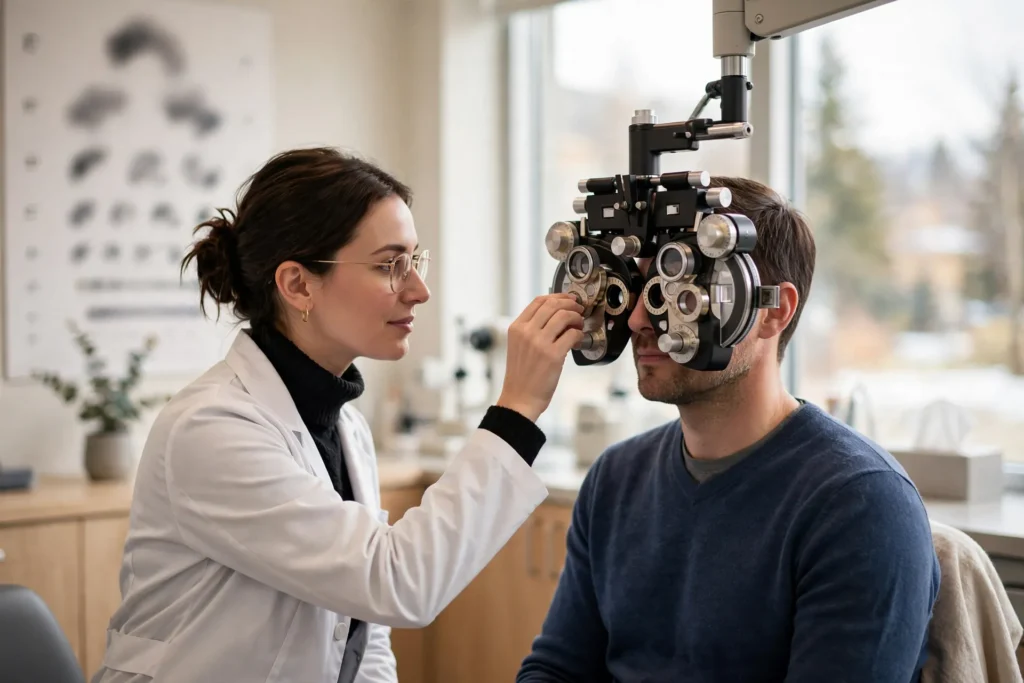
Nobody browses for an optometrist the way they browse for shoes. They search because something changed — a child squinting at the board at school, a prescription that suddenly feels wrong, a parent who needs a diabetic eye exam. We cover this in more detail in our guide to local SEO for dentists. The search is short, local and urgent: “optometrist near me,” “eye exam Brampton,” “kids eye doctor open Saturday.” The practice that appears in the map results with strong reviews and a clear booking path gets the appointment. Everyone else gets scrolled past.
This guide covers SEO for optometrists as it works in 2026: the Google Business Profile setup that drives bookings, the service pages that capture specialty searches, the review habits that keep you in the map pack, and how AI search is changing the way patients find eye care.
1. Local search is the whole game for eye clinics
Optometry is almost entirely a local purchase. Patients will drive twenty minutes for an eye exam, not two hours, so your competition is the handful of practices in your catchment area — not every clinic on the internet. You can also find SEOelinks on Clutch. That makes local SEO unusually winnable: you don’t need a huge website, you need to be the most complete, best-reviewed, most clearly described option within a few kilometres of the searcher.
Google Business Profile: where bookings actually start
For most practices, more new patients will see your Google Business Profile than your homepage. Set it up like it matters:
- Primary category: “Optometrist.” Add secondary categories that match what you actually do — “Eye Care Center,” “Contact Lens Supplier,” “Sunglasses Store” if you retail frames.
- Services, filled in properly: list each exam and specialty individually — comprehensive eye exams, pediatric eye exams, contact lens fittings, dry eye treatment, myopia management, emergency eye care. Each service is a search you can now match.
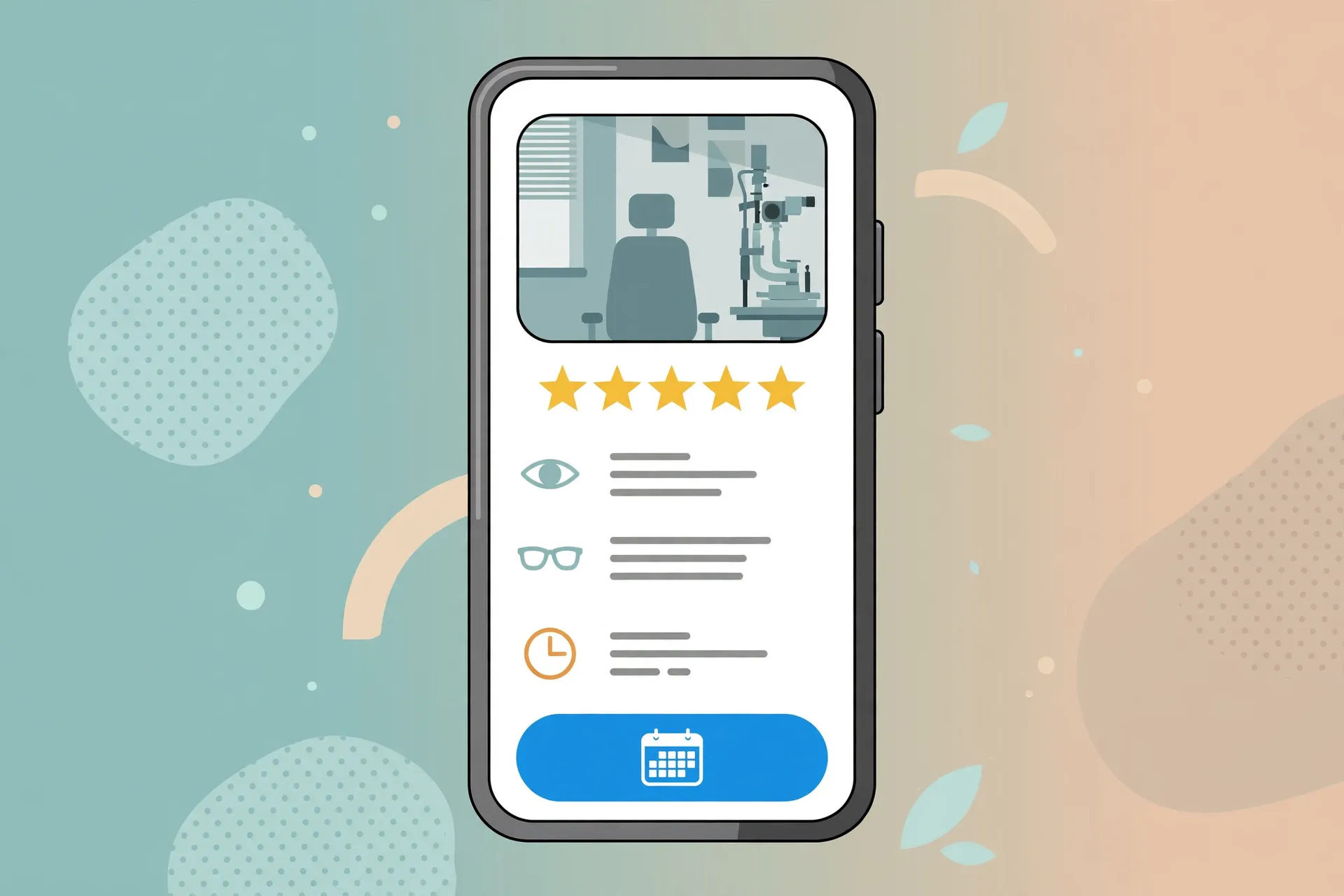
- Booking link: connect your online booking system directly to the profile. Every extra step between “found you” and “booked” costs patients.
- Photos: real photos of the clinic, the exam rooms, the frame wall and the team. Patients are choosing somewhere they’ll sit in a dark room with a stranger close to their face — familiarity lowers the barrier.
- Hours, including holidays: keep special hours updated. “Open Saturday” is a genuine differentiator for working families and a common search filter.
Insurance and coverage pages patients actually search for
A large share of eye-care searches are really coverage questions: “are eye exams covered by OHIP,” “optometrist that accepts [insurer],” “how much is an eye exam without insurance.” Publish plain-language pages that answer them — who qualifies for covered exams in your province (in Ontario, children 19 and under, seniors 65 and over, and people with specific medical conditions), which insurance plans you bill directly, and what an exam costs out of pocket. Cost uncertainty is the quiet reason people delay eye care; the practice that answers pricing questions honestly on its website removes it before the phone call.
2. Service pages that match how patients search
Most clinic websites have one generic “Services” page. Patients don’t search generically — they search for their specific problem. Give each meaningful service its own page:
- Pediatric eye exams: parents search differently from adult patients. Age-specific pages (“eye exams for kids,” “back-to-school eye exams”) capture the September rush and anxious first-exam questions.
- Dry eye treatment: a growing specialty search as screen time rises. Explain symptoms, causes and what your treatment actually involves.
- Myopia management: parents researching how to slow their child’s worsening prescription are high-intent and loyal once booked.
- Contact lens fittings and specialty lenses: scleral lenses, Ortho-K and multifocal fittings each deserve a page with the process explained.
- Emergency eye care: “something in my eye,” flashes and floaters, sudden vision loss — urgent searches where being findable and clearly open matters enormously.
Each page should cover what the appointment involves, how long it takes, what it costs or what’s covered, and who it’s for — in plain language, with a booking call to action. Add MedicalBusiness/Optometrist schema so search engines can read the details cleanly.
3. Reviews: ask at the right moment, every time
Eye care runs on trust, and reviews are how strangers borrow it. The pattern that works is boring consistency: ask every patient, at the moment they’re happiest — usually when they’re picking up new glasses and seeing clearly for the first time. A follow-up text or email the same day with a direct review link keeps the flow going.
Respond to every review, briefly and professionally, and never discuss anyone’s care in a response — privacy rules apply to your replies too, so keep them general. When a review mentions a specific service (“fitted my daughter for her first contacts”), that’s a relevance signal for that service search as well as social proof. Over a year, a steady two-to-four reviews a month will quietly outrank a competitor who collected fifty reviews once and stopped.
What this looks like in Brampton
Brampton is one of the youngest, fastest-growing cities in Ontario, and that shapes eye-care demand. Thousands of school-age kids means pediatric exams and myopia management are not side services here — they’re core searches every September. Large multi-generational households mean one happy patient often books three more family members, so a review that mentions the whole family carries real weight.
Practical implications for a Brampton practice: publish your OHIP coverage explanations prominently (many newcomers genuinely don’t know what’s covered), offer and advertise Saturday and evening hours, and build service pages around the city’s actual search patterns — “eye exam Brampton,” “optometrist near me” from neighbourhoods like Bramalea, Springdale and Mount Pleasant, and contact lens and dry eye pages for the city’s huge screen-working population. Practices near major retail corridors compete with chains; the independent practice wins on reviews, specialty services and clarity about insurance.

4. Showing up in AI search results
More patients now ask ChatGPT or Google’s AI Mode “which optometrist near me accepts my insurance and sees kids.” AI tools answer from text they can find and verify. Help them: keep your services, hours, insurance list and booking options written out in plain text on your site (not locked inside images or PDF flyers), keep the same details consistent across your profile and directories, and maintain FAQ content that answers real patient questions — how often to get an exam, what’s covered, when a child’s first exam should happen. Practices with clear, consistent, specific information get cited; vague “we care about your vision” copy gives AI nothing to work with.
5. The technical basics that quietly cost you patients
- Mobile speed: most local health searches happen on phones, usually while someone is already uncomfortable. A slow site is a closed door. Keep pages light and test on a real phone.
- Click-to-call and online booking visible without scrolling on every page.
- NAP consistency: your clinic name, address and phone identical on your site, Google profile, Apple Maps, and health directories like RateMDs and Healthgrades — mismatches dilute your local rankings.
- Search Console: verify it and check quarterly which searches actually bring patients. Clinics are often surprised which specialty page does the heavy lifting.
None of this requires a big budget. It requires completeness and consistency, maintained monthly. That’s the work we do at SEOelinks — an SEO agency built in Brampton, Canada, serving clients worldwide — and for a local practice, it’s the difference between being the clinic the neighbourhood finds and the one it never hears about.
6. Don’t forget the patients you already have: recall and reactivation
SEO isn’t only about strangers. A meaningful share of “new” bookings at most practices are returning patients who search for you by name — or worse, search generically because they can’t remember it. Someone whose last exam was three years ago will often type “optometrist near me” rather than your clinic’s name, and if a competitor’s profile outshines yours at that moment, a patient you already earned can quietly book elsewhere.
Two habits protect that base. First, make your branded search unmissable: when someone searches your clinic’s name, your profile, website and reviews should dominate the results with consistent information — that’s your recall safety net working in public. Second, treat reactivation as a search problem as well as an email problem: lapsed patients who receive a recall reminder frequently verify you on Google before booking, checking recent reviews and photos. The practice whose profile looks active and current converts its own recall list; the one with a two-year-old photo set and unanswered reviews leaks it. Keep both sides of the loop — outreach and presence — equally maintained.
7. A realistic first 90 days
- Weeks 1–2: claim and complete the Google Business Profile — categories, full service list, booking link, hours, twenty real photos. Fix NAP inconsistencies across your site, Apple Maps and health directories.
- Weeks 3–4: publish the coverage-and-pricing page and your two highest-value service pages (for most practices, pediatric exams and your strongest specialty).
- Month 2: set up the review routine — same-day text request after pickup, response habit, a monthly count. Publish the remaining service pages and an FAQ section on the homepage.
- Month 3: check Search Console for the searches already finding you, expand the pages that are close to ranking, and take your first local citation pass. Then settle into the monthly rhythm: photos, reviews, one page improved.
Ninety days of this won’t transform a practice in a competitive city on its own — but it builds the complete, consistent presence that everything else compounds on, and it’s achievable alongside actually running a clinic.
8. The one-page checklist
Profile complete with every service and a booking link. Coverage and pricing explained in plain language. A page per specialty service. Reviews requested the same day, answered every time. Photos refreshed monthly, hours never wrong. Listings identical everywhere. Search Console reviewed quarterly. If a practice does only that — no campaigns, no gimmicks — it will be better optimized than most of the clinics it competes with, because in local eye care, consistent completeness is still rare enough to be a strategy.
Frequently Asked Questions (FAQ)
How long does SEO take for an optometry practice?
Profile and review improvements usually lift map visibility within 4–8 weeks. Service pages for specialties like dry eye or myopia management typically take 3–6 months to rank and start producing bookings, then compound.
What is the most important ranking factor for optometrists?
A complete Google Business Profile with the correct primary category, every service listed, a working booking link, and a steady flow of recent reviews. It’s the first result patients see and the one most practices underuse.
Should optometrists publish their eye exam prices online?
Yes. Cost uncertainty is one of the main reasons people delay eye care. Publishing exam pricing and what insurance or provincial coverage applies turns a hesitant search into a booking.
Are eye exams covered in Brampton, Ontario?
In Ontario, OHIP covers eye exams for children 19 and under, adults 65 and over, and people with certain medical conditions such as diabetes. Most other adults pay privately or through workplace insurance — which is why a clear coverage page matters for Brampton practices.
How do Brampton optometrists compete with big optical chains?
By winning the searches chains ignore: specialty services (myopia management, dry eye, specialty contacts), Saturday hours, pediatric expertise, and a stronger, more personal review profile. Chains rank for their brand; independents can outrank them for services.
Get a free SEO audit of your website
A 120 point crawl, a competitor gap map and a 90 day roadmap, ready in 48 hours. Free, with no obligation.

SEOelinks is a Brampton-based SEO agency helping service businesses across Canada and worldwide win organic search. Our strategists publish the same field-tested playbooks on technical SEO, local visibility and AI search that we run for clients every day.
More about SEOelinks →