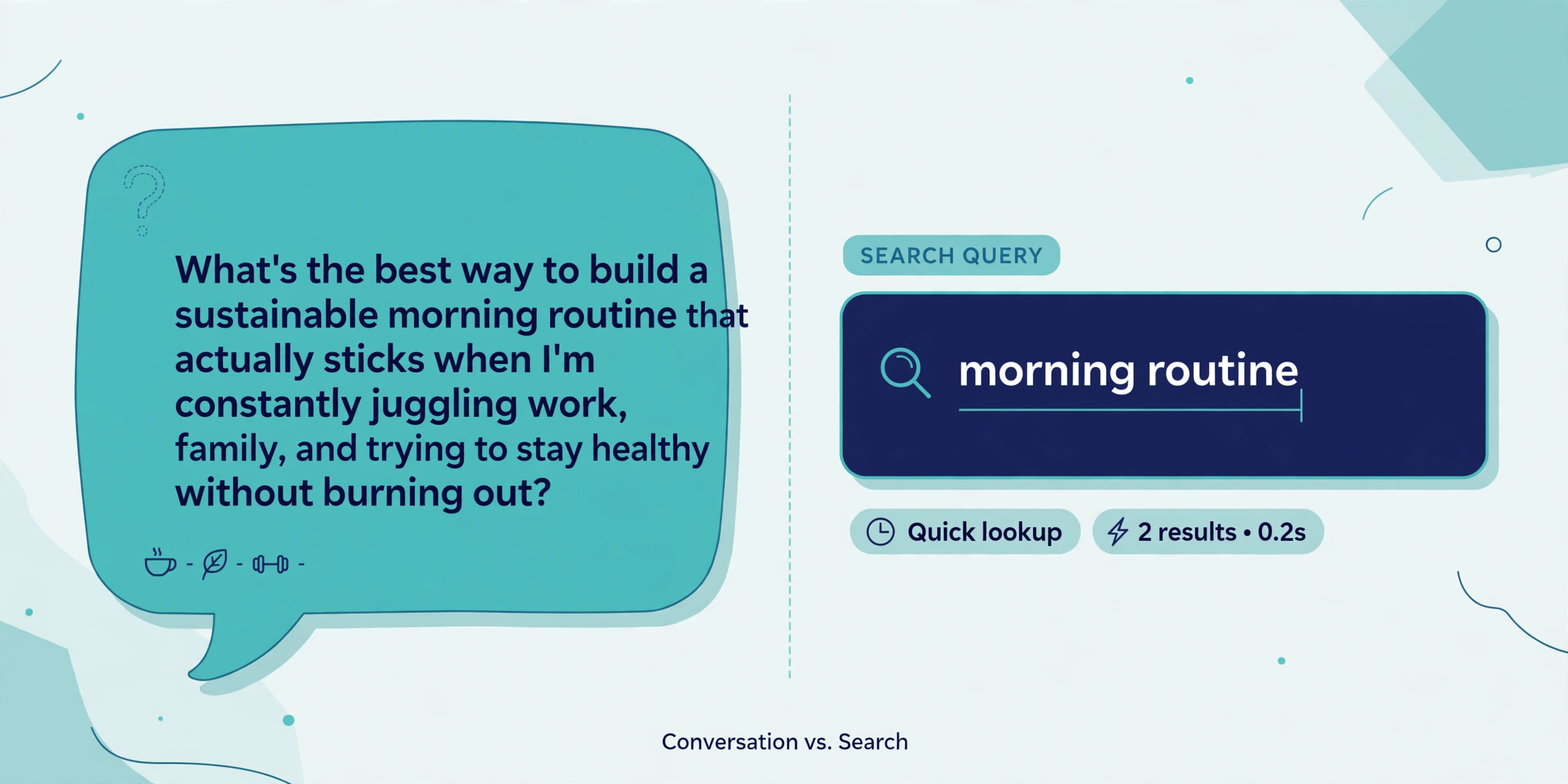
Nobody types the way they talk. A typed search is shorthand — “plumber brampton prices.” A spoken search is a full sentence — “Hey Google, how much does it cost to fix a leaking tap in Brampton?” In 2026 that spoken sentence rarely leads to a list of blue links. It leads to an answer: read aloud by an assistant, or written by an AI that picked one or two sources and cited them. If your business isn’t the source it picked, you don’t exist for that search.
Voice search optimization is really answer optimization: structuring your content so assistants and AI tools can find it, trust it, and say it out loud. This guide covers what changed, and the concrete work that gets you chosen.
1. What actually changed: assistants answer now, they don’t list
The old model of voice search was simple — the assistant read out the featured snippet or the top result. The 2026 model is different in three ways that matter for your SEO:
- AI generates the answer. Google’s AI Overviews and AI Mode, ChatGPT, Gemini and Perplexity compose answers from multiple sources. Being cited inside that answer is the new position one — and there is usually room for only a handful of sources.
- One answer wins. A screen shows ten results; a voice reply gives one. The gap between first and second is no longer a click-through difference — it’s everything or nothing.
- The query is a conversation. People ask follow-ups (“and how late are they open?”, “is that the one with parking?”). Assistants resolve those pronouns from context, which means they lean on structured business data — hours, attributes, services — not just page text.
The practical consequence: the tactics below aren’t a separate “voice strategy.” They’re the same work that wins featured snippets and AI citations, weighted toward how people speak and what assistants need to answer confidently.
2. Conversational keywords: write the way people talk
Voice queries are longer, question-shaped, and full of natural words that typed keywords strip out — who, what, where, when, how, near me, best, open now. Optimizing for them starts with research that listens instead of counts.
Find the questions your customers actually ask
- Mine the question surfaces: Google’s “People Also Ask” boxes, related searches, and autocomplete suggestions for your services are real phrasing from real searchers. Build a list per service.
- Use your own front line: the questions clients ask on calls, in your inbox, and at the counter are voice queries waiting to happen. Log them verbatim — “do you come to my house or do I bring it in?” is content gold.
- Check Search Console: filter your queries for question words and long phrases. You’ll find spoken-style queries you already nearly rank for — the cheapest wins available.
- Write both layers: keep your service pages targeting the core typed terms, then add sections and FAQ entries in the full conversational phrasing. You are not replacing keywords; you are adding the spoken layer on top.
Match the language of the answer
Voice answers are read aloud, so content written in stiff corporate prose loses to content written the way a knowledgeable person would say it. Short sentences. Direct answers first, detail after. If a paragraph sounds wrong read out loud, it will not be the paragraph an assistant chooses.
3. Featured snippets and AI Overviews: be the quotable source
Assistants and AI answers are built from passages that are easy to extract. Your job is to make your best answers extractable.
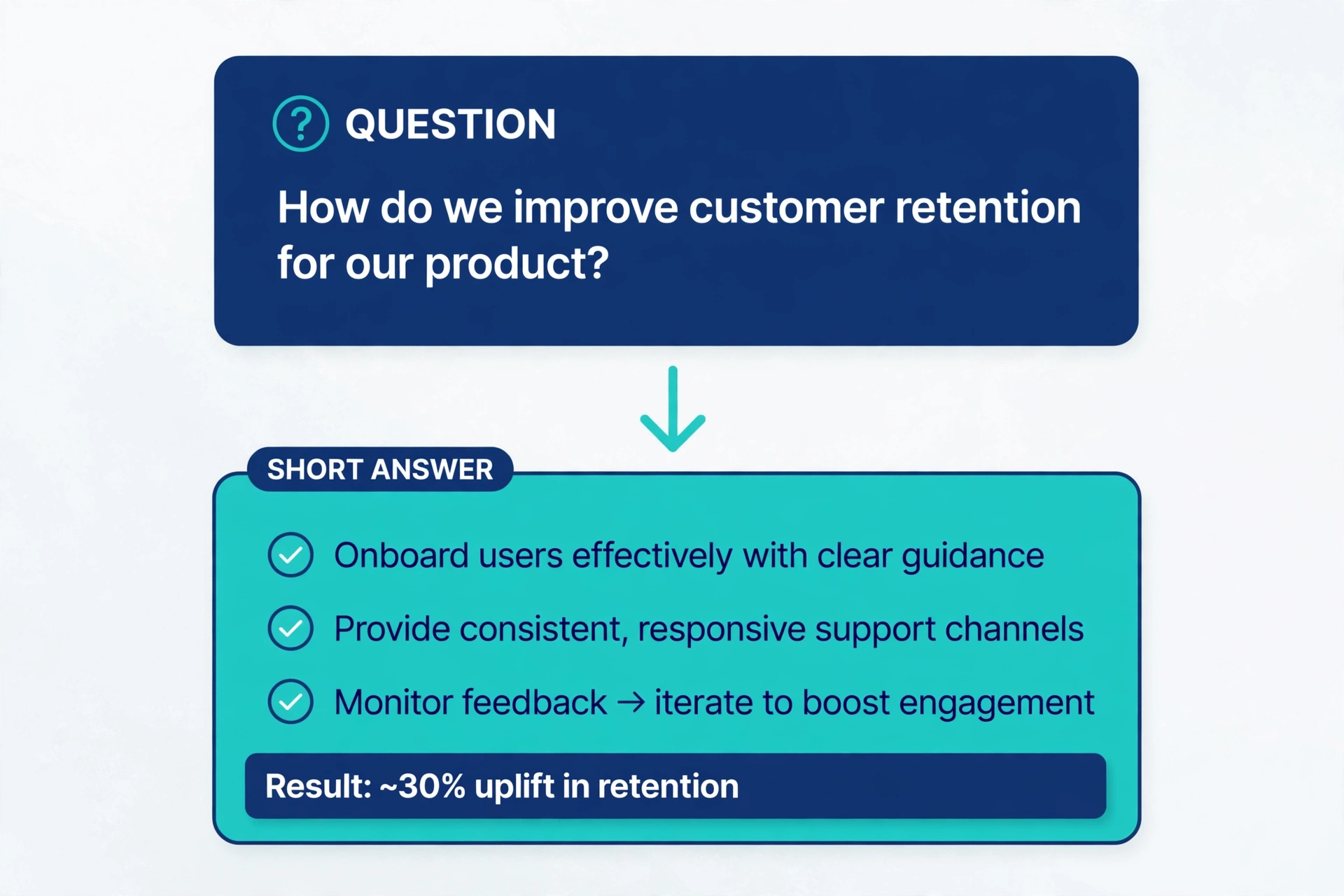
- Lead with the answer: put a direct, complete answer in the first one or two sentences after a question-style heading — roughly a short paragraph — then expand with detail below. Burying the answer in paragraph four is how competitors get quoted instead.
- Use question headings: phrase subheads the way people ask (“How much does a furnace tune-up cost?”) and answer immediately under them. This structure feeds featured snippets, AI citations and voice replies from the same block of content.
- Lists and steps for list questions: “what are the steps,” “what should I look for” queries are answered from numbered and bulleted lists. Format process content as actual steps, not prose that mentions steps.
- One idea per passage: each extractable block should answer one question fully and make sense standing alone, because it will be quoted standing alone — with your business as the source.
- Keep facts consistent and current: AI tools cross-check. Prices, hours and service details that disagree across your site and listings undermine the confidence that gets you cited.
4. Local “near me” queries: where voice search pays rent
A huge share of spoken search is local and urgent — “near me,” “open now,” “on my way home.” These queries are resolved almost entirely from business-profile data, not blog posts, and they convert because the person is ready to act.
Google Business Profile is the voice database
- Complete every field: categories, services with descriptions, hours (including holiday hours), attributes, and service area. When someone asks “who near me fixes furnaces on Sundays,” the assistant can only answer from data that exists.
- Reviews carry spoken weight: rating and review content feed the judgment behind “best” and “highest rated” queries. A steady flow of reviews that mention services and neighbourhoods helps you be the answer to “best dentist near me.”
- Photos and posts keep the profile fresh, which supports the same relevance signals assistants rely on.
Cover the other assistants too
Google isn’t the only voice in the room. Siri answers from Apple Maps data — claim Apple Business Connect so your name, hours and location are right for every iPhone user. Other assistant ecosystems pull from their own map and directory sources, which is one more reason your business name, address and phone number must be identical across every listing: assistants reconcile conflicting data by trusting someone else.
Build the pages behind the profile
“Near me” has no page to optimize — but the service-plus-city pages behind your profile (“emergency plumber in Brampton”) are what assistants and AI tools cite for anything beyond hours and directions. One genuine page per service per major service area, with the FAQ layer from section 5, is the foundation.
5. FAQ content: the highest-leverage format you can add
FAQs are the natural shape of voice search — a spoken question, a spoken answer — and FAQ-formatted content is the easiest material for search engines and AI tools to extract, which is why it earns featured snippets, AI citations and expandable results.
- Put FAQs where intent lives: 3–5 real questions on your homepage, each service page, and each location page. Not a single orphaned FAQ page nobody visits.
- Use real questions only: the ones from section 2 — pricing approach, response time, service area, guarantees, what to expect. If no customer has ever asked it, it doesn’t belong.
- Answer in speaking voice: two to four sentences, answer first. Write what your best employee would say on the phone.
- Mark them up: FAQPage schema tells search engines exactly where the questions and answers are, and powers the auto-detection that turns visible FAQs into rich results.
Refresh FAQs when your answers change — an assistant quoting last year’s prices does real damage.
6. Schema: hand the assistant your facts
Structured data is how you stop hoping an assistant parses your footer correctly and instead hand it labelled facts.
- LocalBusiness schema on your site: name, phone, address or service area, hours, geo, sameAs links to your profiles. This is the entity record assistants reconcile against your listings.
- FAQPage schema for the FAQ sections above.
- Service and Product schema where relevant, so what you sell — and where — is explicit rather than implied.
- Organization schema with consistent naming across the site ties it together. One business name, everywhere, spelled one way.
Schema doesn’t guarantee selection, but inconsistent or missing structured data is a quiet reason businesses get passed over: the assistant answers with the business it can verify.
7. Page speed: slow pages don’t get spoken
When an assistant answers, it answers now. Voice and AI results are drawn disproportionately from pages that load fast and render cleanly on mobile — and the device doing the asking is almost always a phone.
- Fix Core Web Vitals: largest contentful paint, interaction responsiveness and layout stability are the floor, not the ceiling. Compress images, cut heavy plugins and themes, and use fast hosting.
- Answer above the fold: the extractable answer block from section 3 should be early in the page’s HTML, not buried under sliders and pop-ups.
- Test on a real phone on real data, not office Wi-Fi. That is the environment your next voice customer is standing in.
8. Measure what matters
Voice and AI visibility won’t show up as a neat line in analytics, but you can track the signals: Search Console queries growing longer and more question-shaped; impressions on your FAQ and service pages; calls and direction requests from your Google Business Profile; and periodic manual checks — ask the assistants your top ten customer questions and note who gets cited. That audit, repeated quarterly, is your voice-search ranking report.
Frequently Asked Questions (FAQ)
Is voice search still worth optimizing for in 2026?
Yes — because it has merged with AI search. Assistants and AI Overviews now answer spoken and typed questions from the same pool of sources, so the work that wins voice replies is the same work that wins AI citations. Optimizing for one optimizes for both.
How do I optimize for “near me” voice searches?
Complete and maintain your Google Business Profile (categories, services, hours, service area), claim Apple Business Connect for Siri, keep your name, address and phone identical across all listings, build a steady review flow, and back the profile with genuine service-plus-city pages.
What’s the difference between optimizing for featured snippets and AI Overviews?
The mechanics overlap heavily: both reward a direct answer stated early, in an extractable format, from a credible source. AI Overviews synthesize several sources and cite them, so consistency across your site and listings matters more, and being one of the cited sources — not the single snippet — is the goal.
Do I need special schema for voice search?
There’s no single “voice schema,” but LocalBusiness, FAQPage and Organization structured data give assistants the verified facts they answer from. FAQPage schema in particular matches the question-and-answer shape of voice queries.
How should I write content so an assistant will read it aloud?
Write the way a good employee speaks: a direct answer in the first sentence or two, short sentences, plain words, then supporting detail. If a passage sounds awkward read out loud, rewrite it — assistants select passages that work as speech.

SEOelinks is a Brampton-based SEO agency helping service businesses across Canada and worldwide win organic search. Our strategists publish the same field-tested playbooks on technical SEO, local visibility and AI search that we run for clients every day.
More about SEOelinks →